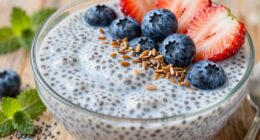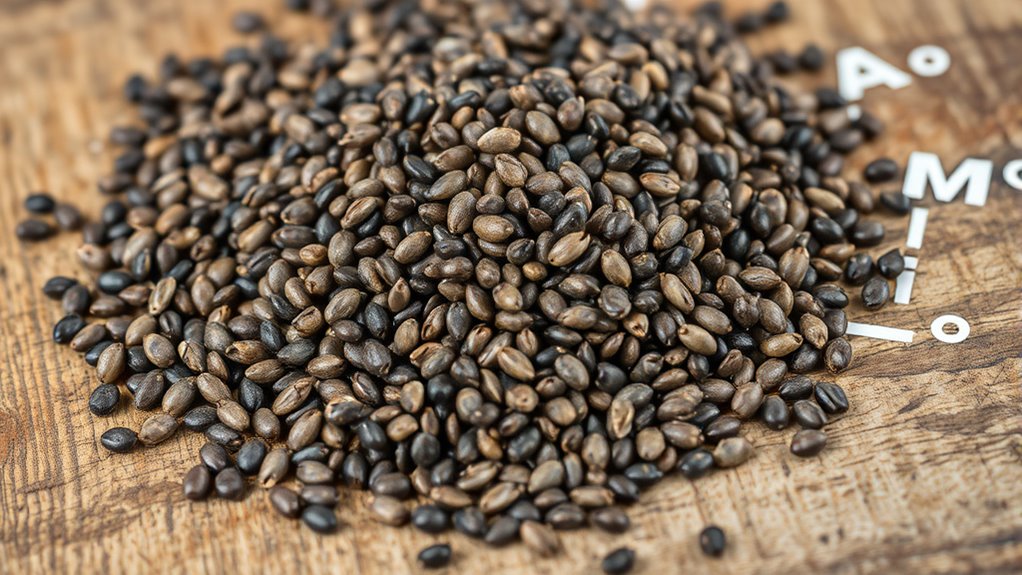
Chia seeds are a great plant-based source of complete protein, containing all nine essential amino acids your body needs. Their high-quality proteins support muscle repair, immune function, and overall health. Properly stored, they retain their nutritional value, and soaking them can improve digestibility and nutrient absorption. Even small servings can markedly boost your daily protein intake. If you want to discover more about how chia seeds can enhance your diet and health, keep exploring.
Key Takeaways
- Chia seeds provide a complete set of all nine essential amino acids.
- They are a rich plant-based source of high-quality protein supporting various health functions.
- Proper storage preserves chia seeds’ protein quality and nutrient integrity over time.
- Soaking enhances digestibility and amino acid bioavailability from chia seeds.
- Consuming small amounts regularly helps meet daily protein needs efficiently.
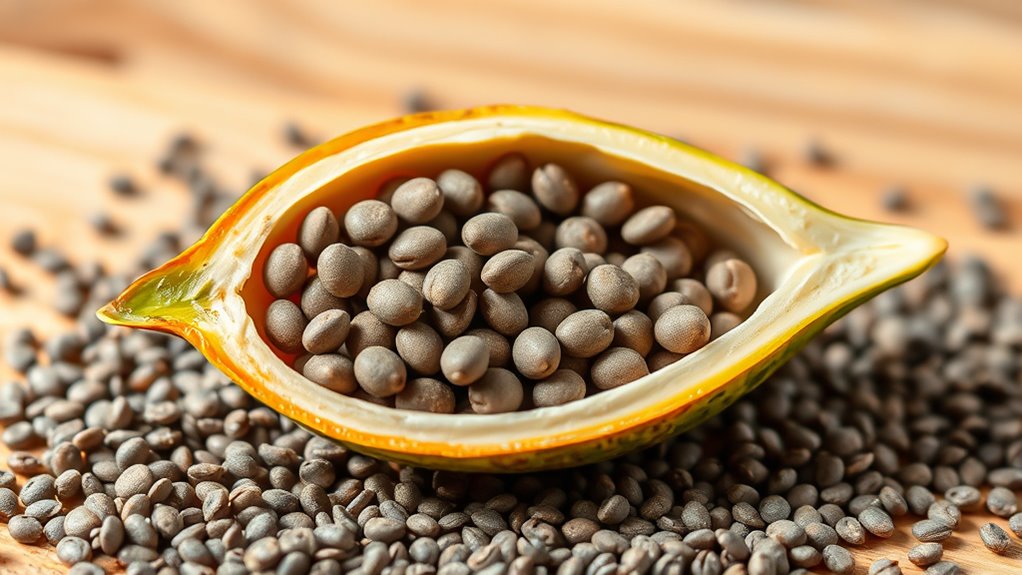
Chia seeds are a popular plant-based source of protein, making them an excellent addition to your diet. Their impressive nutritional benefits come from their high-quality protein content, which provides essential amino acids your body needs for muscle repair, immune function, and overall health. When you incorporate chia seeds into your meals, it’s important to think about proper seed storage to maintain their freshness and nutritional value. Keep them in an airtight container in a cool, dark place to prevent exposure to moisture, light, and heat, which can degrade their nutrients over time. Proper seed storage guarantees you maximize their nutritional benefits with every serving, keeping the proteins intact and available for your body to absorb.
The protein in chia seeds is notable because, unlike many plant-based sources, they contain a complete set of amino acids. This means they provide all nine essential amino acids that your body cannot produce on its own. Although chia seeds are often praised for their omega-3 fatty acids and fiber, the quality of their protein makes them stand out among other plant-based options. When you consume them regularly, you’re not just adding bulk to your diet; you’re enriching it with a nutrient-dense food that supports your body’s many functions. Their amino acid profile is especially beneficial for vegetarians and vegans seeking to meet their daily protein needs without relying on animal products.
Additionally, the way you prepare and incorporate chia seeds can influence how well you absorb their nutrients. Soaking them in water, milk, or plant-based milk allows the seeds to swell and become easier to digest, which can enhance the bioavailability of their amino acids. You can sprinkle them over oatmeal, blend them into smoothies, or stir them into yogurt. The versatility of chia seeds makes it simple to enhance your meals with their protein content without adding extra effort. Remember, because of their high-quality protein, even small amounts can contribute considerably to your daily intake.

VEVOR Vacuum Freeze Dryer Machine, 8.8-13.2 LBS/Batch Food Freeze Drying Machine with 4-Layer Trays, Vacuum Pump, Adjustable Timer and Temperature Control, for Fruits Vegetables Meat, White
Large Capacity: The freeze dryer utilizes an 8.8-13.2 lbs (4-6 kg) capacity with a 4-layer tray design, handling...
As an affiliate, we earn on qualifying purchases.
Frequently Asked Questions
Are Chia Seeds Suitable for People With Gluten Allergies?
Yes, chia seeds are suitable for people with gluten allergies because they are naturally gluten-free, offering gluten-free benefits. However, you should consider allergen considerations, as some products may be processed in facilities handling gluten, risking cross-contamination. Always check labels and choose certified gluten-free chia seeds to guarantee safety. Incorporating chia seeds into your diet can be a nutritious, safe choice if you have gluten sensitivities.
How Do Chia Seeds Compare to Other Plant-Based Protein Sources?
Compared to other plant-based proteins like beans or lentils, chia seeds pack a unique punch. While they offer a good amount of fiber and omega-3s, their protein content is lower, and they lack some essential amino acids. In a plant protein comparison, chia seeds excel in nutritional value analysis for healthy fats and fiber but fall short in protein diversity, making them a great supplement rather than a primary protein source.
Can Chia Seeds Support Muscle Building Effectively?
Yes, chia seeds can support muscle growth effectively because they provide a good source of plant-based protein with essential amino acids. Their protein absorption is efficient enough to aid muscle repair and development, especially when combined with other protein sources. Incorporating chia seeds into your diet helps guarantee you get enough nutrients for muscle building, making them a valuable addition to your post-workout or daily nutrition routine.
Do Chia Seeds Contain All Essential Amino Acids?
Yes, chia seeds contain all essential amino acids, making their amino acid completeness comparable to some plant protein sources. Their plant protein profile is quite balanced, providing a good mix of amino acids your body needs. While they’re a valuable part of a balanced diet, you might want to combine chia seeds with other protein sources to guarantee you’re meeting all your amino acid requirements for peak health and muscle support.
How Does Cooking Affect the Protein Quality in Chia Seeds?
Cooking chia seeds causes protein denaturation, which can slightly reduce their thermal stability. However, this process doesn’t markedly compromise their overall protein quality or amino acid profile. You might notice some changes in texture and digestibility, but the essential amino acids remain largely intact. So, while cooking may alter the proteins a bit, chia seeds still provide valuable nutrients and can be enjoyed in various recipes.

50 Mylar Bags for Food Storage, Airtight 7-Mil Thick Gusseted Zip Lock, Long Term, Reusable, Emergency Food Supply & Freeze Dryer Bags - 2 Quart 10.5x9.5 Inch
STORE FOOD LONG-TERM | At Sophos Survival, we are big fans of storing the food you actually eat....
As an affiliate, we earn on qualifying purchases.
Conclusion
You’ll be surprised to learn that chia seeds provide a complete plant-based protein, containing all nine essential amino acids. In fact, they offer about 4.7 grams of protein per ounce, making them a nutrient-dense choice for your diet. Incorporating chia seeds can boost your protein intake effortlessly. So, next time you’re looking for a versatile, healthful addition, remember that these tiny seeds pack a powerful punch of quality protein and amino acids.

Food Freeze Dryer Machine for Home,2025 New Digital Freeze Dryer,Multi-Layer Fruit Freeze Dryer,Adjustable Temperature Meat Freeze Dryer,Compact Food Dehydrator for Home Kitchen (White)
【2025 Digital Precision Control】Our upgraded touchscreen offers intuitive temperature and time adjustments,perfect for meats, fruits, and gourmet ingredients
As an affiliate, we earn on qualifying purchases.

Teflon Tray Liners for Harvest Right Freeze Dryer - 5 Pack, Medium Tray Size - Non-Stick PTFE Reusable Mats, Easy To Clean, BPA Free, Home Freeze Dryer Machine Accessories
NO MORE MESSES - Keep food from sticking to trays when baking or freeze drying. With Teflon tray...
As an affiliate, we earn on qualifying purchases.