TL;DR

Get garden gear delivered free with Prime
- Fast, free delivery on millions of items
- Prime Video, Amazon Music and more included
- Member-only deals all year
Amaryllis usually take about six to 10 weeks from planting to bloom, so timing and bulb type can affect whether flowers open by Christmas. Gardening expert Bryan Wu recommends starting with a healthy bulb, using a snug pot with drainage, watering cautiously and adjusting light as the shoot grows.
People hoping to have amaryllis in bloom at Christmas should check the bulb type and start timing now, according to seasonal guidance published by Ideal Home. Gardening expert Bryan Wu of the Palmstreet app says amaryllis typically take about six to 10 weeks from planting to flower, though variety and the bulb’s prior care can affect the schedule.
Wu’s first advice is to identify what kind of bulb is being grown. A waxed bulb is generally intended to flower without watering: follow its package instructions and place it in warmth and light. The report says wax coating can prevent roots from developing or taking up water and nutrients, and these bulbs are often treated as a one-season decoration. A stored bulb from a previous year may need an eight- to 12-week rest in a cool, dark place after flowering; without that rest, it may not bloom on the desired schedule.
For a bulb that still needs planting, Wu recommends choosing one that is large and firm, with no signs of root rot. A pale green shoot can be a positive sign, and the report says larger bulbs tend to produce more flower stalks and blooms. Some common cultivars, including ‘Red Lion,’ may flower faster than double or specialty varieties, so gardeners should check the label if time is short.
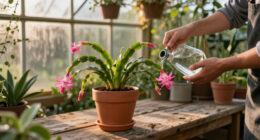
Use a pot only one to two inches wider than the bulb, with drainage holes and a well-draining potting mix. A heavy container can help support a plant that becomes top-heavy. Wu advises keeping newly planted soil barely moist, and not watering until a shoot appears unless the soil has become very dry. Once growth is established, water more regularly but let the top inch of soil dry between waterings, and do not leave the pot standing in water.
Timing the Christmas Flowering Window
The six- to 10-week estimate gives growers a practical planning window, but it is not a guarantee that every bulb will flower by a particular date. Planting time, cultivar and previous dormancy all matter, making a late start or an un-rested bulb a potential obstacle to Christmas blooms.
The care advice also addresses common causes of failure. Too much water can encourage bulb rot, while inadequate light after the shoot emerges can affect growth. Keeping the pot out of reach of cats and dogs is another relevant household consideration: the source report warns that amaryllis plants and bulbs are toxic to both.
Products Worth Considering

Instant Pot Pro 6-Quart 10-in-1 Electric Pressure Cooker, Black

Instant Pot 10‑Qt 7-in-1 Air Fryer with EvenCrisp Technology – Stainless Steel
Instant Pot Pro 8-Quart 10-in-1 Electric Pressure Cooker, Black
As an affiliate, we earn on qualifying purchases.
Bulb Type Shapes the Schedule
Amaryllis are grown from bulbs and are popular as indoor winter flowers because of their vivid, trumpet-shaped blooms. The report covers three starting points: a pre-potted plant, a waxed bulb bought ready to display, and a bulb kept from a previous year. Those options do not have identical care needs, particularly around watering and dormancy.
After a shoot appears, move the plant to a bright place with plenty of indirect light. Wu suggests turning the pot by a quarter turn every day or two because the stalk bends toward its light source. A stake or slender twig may help support a growing stalk. A balanced liquid fertilizer can be started once leaves appear, though Wu says it is not essential for the first bloom, since the bulb stores energy.
Once flowers fade, the report advises cutting off the spent flower stalk while keeping the leaves. Feeding the plant through spring and summer may help it grow for a possible rebloom the following year. The source does not present that future flowering as guaranteed.
“Amaryllis typically take about 6 to 10 weeks from planting to bloom, so when to plant bulbs is key.”
— Bryan Wu, gardening expert at the Palmstreet app, quoted by Ideal Home
Bloom Dates Vary by Bulb
The six- to 10-week flowering estimate is a general guide, not a fixed timetable for every plant. The report does not specify an exact planting date that guarantees blooms on Christmas Day, and it gives no precise schedule for each cultivar. Variety, bulb condition and prior rest can change how quickly flowers appear. Waxed bulbs also have their own package directions, which should take precedence over care instructions for planted bulbs.
Track Shoots as They Develop
After planting, check the bulb and soil regularly, watching for a shoot before increasing watering. Once growth begins, provide bright indirect light, rotate the pot to help the stalk grow straight and use support if needed. Wu advises checking progress weekly; he says a stalk can grow about an inch a day during its fast-growth phase, although the report does not say that rate applies to every plant.
When flowering ends, remove the spent stalk and keep the leaves in place. Gardeners seeking another bloom next year can continue caring for the foliage through spring and summer, then account for the bulb’s rest period before planning the next flowering season.
Key Questions
How long does an amaryllis take to flower?
Bryan Wu says amaryllis typically take six to 10 weeks from planting to bloom. The exact time varies with the bulb and variety.
Should I water a waxed amaryllis bulb?
According to the Ideal Home report, waxed bulbs need no water. Follow the instructions supplied with the bulb.
How much water does a planted amaryllis need?
Keep the soil barely moist at first and avoid watering before a shoot appears unless the soil is bone dry. As the plant grows, water when needed and let the top inch of soil dry between waterings.
Are amaryllis toxic to pets?
The report says amaryllis bulbs and plants are toxic to cats and dogs. Keep them out of pets’ reach.
Source: idealhome.co.uk