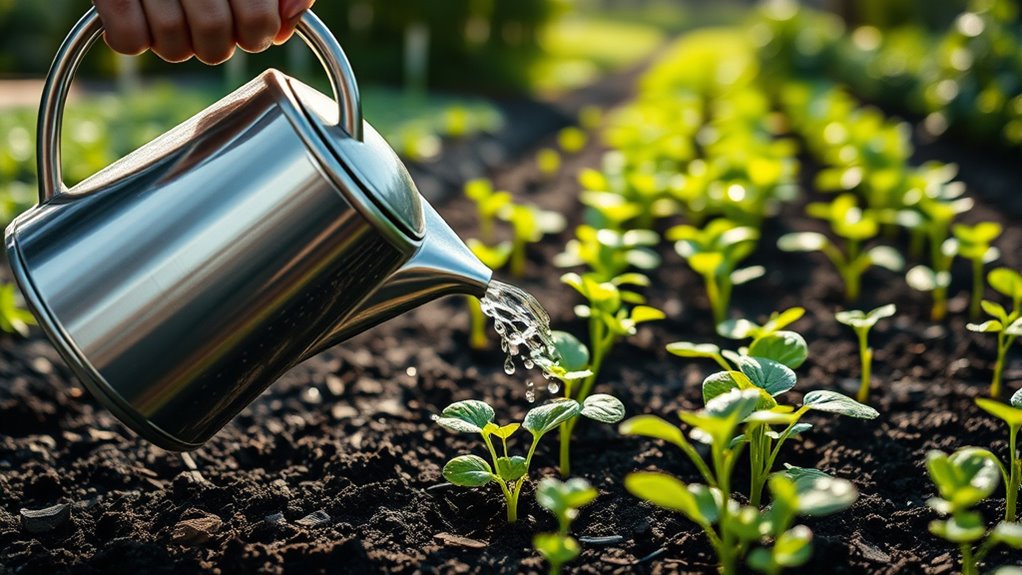

When watering seedlings and young plants, do make certain you water deeply and gently to promote strong root growth, preferably in the early morning. Avoid overwatering, which can cause root rot, or underwatering, leading to drought stress; check soil moisture daily with your finger. Use proper drainage and monitor for signs of stress, adjusting your watering habits accordingly. If you want to learn more about efficient techniques, keep exploring the essential tips for healthy seedlings.

Get garden gear delivered free — and shop member deals
- Fast, free delivery on millions of items
- Access to Prime Big Deal Days deals on October 6–7
- Prime Video, Amazon Music and more included
Key Takeaways
- Do water seedlings gently with a fine spray to prevent displacement and damage.
- Don’t overwater; ensure soil remains moist but not soggy to avoid root rot.
- Do check soil moisture daily and water only when the top inch feels dry.
- Don’t water in the evening to reduce the risk of fungal diseases.
- Do establish a consistent watering schedule tailored to weather and soil type.
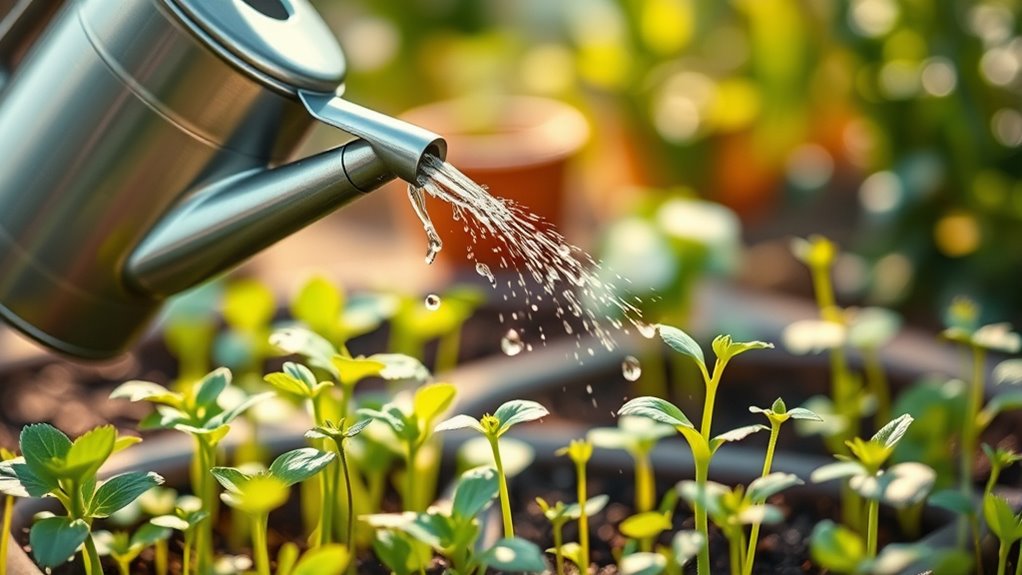
Watering seedlings and young plants is a essential step in ensuring healthy growth, especially since they are more vulnerable to drought and overwatering alike. Proper watering helps maintain ideal soil moisture, which is critical for root development and nutrient uptake. If the soil dries out too much, your plants can become stressed, stunt their growth, or even die. Conversely, too much water can lead to root rot and other diseases, so striking the right balance is necessary. Developing a consistent watering schedule allows you to monitor soil moisture levels more effectively, ensuring your plants receive just what they need without excess.
Watering seedlings ensures healthy growth by maintaining balanced soil moisture for roots and nutrients.
A good rule of thumb is to check the soil daily, especially during warm or windy weather, as these conditions can cause moisture to evaporate quickly. Stick your finger about an inch into the soil; if it feels dry at that depth, it’s time to water. This simple test helps you avoid over- or under-watering. When watering, do so slowly and deeply, encouraging roots to grow downward and develop a sturdy foundation. Shallow watering often leads to weak roots and makes your plants more susceptible to drought stress. Ensuring proper drainage is also vital to prevent excess water from stagnating around roots and causing rot.
Timing your watering sessions is equally important. Early morning is generally the best time, as it allows excess moisture on the foliage to evaporate during the day, reducing disease risk. If you water in the evening, moisture can linger on leaves overnight, creating a perfect environment for fungi and mold. Establishing a consistent watering schedule based on weather conditions, soil type, and plant needs helps you keep soil moisture levels stable. For example, sandy soils drain quickly and may require more frequent watering, while clay soils retain moisture longer.
Pay attention to the signs your plants give you. Wilting or yellowing leaves often indicate water stress—either too little or too much. Adjust your watering accordingly, but always prioritize maintaining even soil moisture. Remember, young plants are especially sensitive during their initial growth stages, so err on the side of slightly more frequent, light watering if you’re unsure. Use watering cans or hoses with gentle spray heads to avoid washing away seedlings or compacting the soil surface.
Ultimately, your goal is to keep the soil consistently moist but not soaked. This balance promotes healthy root growth and robust development. By sticking to a reliable watering schedule and regularly checking soil moisture, you help your seedlings establish strong roots and set the foundation for vigorous growth. Proper watering isn’t just about quenching their thirst; it’s about creating the right environment for your young plants to thrive.
As an affiliate, we earn on qualifying purchases.
Frequently Asked Questions
How Often Should I Water Seedlings During Different Seasons?
You should adjust your watering schedule based on the season and drought considerations. During warmer months, water more frequently to keep seedlings moist, but avoid overwatering. In cooler seasons, reduce watering to prevent root rot. Always check the soil’s moisture level before watering, and consider local weather conditions to prevent drought stress. Proper seasonal watering helps seedlings thrive without risking water waste or damage from excess moisture.
Can Overwatering Cause Root Rot in Young Plants?
They say, “Too much of a good thing can be bad,” and that’s true with watering. Overwatering can cause root rot in your young plants, so you should be careful with your watering frequency and techniques. Consistently soggy soil deprives roots of oxygen, leading to decay. To prevent this, water only when the topsoil feels dry, and use well-draining soil to keep roots healthy and avoid root rot.
What’s the Best Time of Day to Water Seedlings?
You should water your seedlings early in the morning, as it aligns well with your watering schedule and allows the water temperature to be close to the ambient temperature. This reduces stress on young plants and helps prevent diseases. Watering in the morning also ensures the soil dries out slightly during the day, giving your seedlings the best chance to thrive. Avoid watering late in the day to prevent prolonged moisture exposure.
How Do I Water Seedlings in Sandy or Clay Soil?
You might think sandy or clay soil needs special watering, but it’s true—soil amendments can help! In sandy soil, water drains quickly, so you should increase watering frequency and use organic matter to improve water retention. For clay soil, water tends to stay put, so water more slowly and less often. Always investigate your soil type first, then adjust watering and amendments accordingly for healthy seedlings.
Are There Specific Watering Tools Recommended for Seedlings?
For seedlings, you want tools that offer gentle, precise watering. A small watering can with a fine spout works well, allowing you to control the flow and avoid overwatering. Alternatively, spray bottles are excellent for delicate seedlings, giving a light mist that prevents soil displacement. Both tools help you maintain consistent moisture without damaging fragile roots, ensuring your young plants establish strong, healthy growth.
As an affiliate, we earn on qualifying purchases.
Conclusion
So, next time you think you’re giving your seedlings a gentle drink, remember—overwatering can drown their hopes faster than drought. It’s funny how a little water can turn into a flood, just like how a small mistake can wipe out your garden dreams. Keep the balance, and you’ll see those tiny plants thrive instead of drowning in your good intentions. After all, sometimes doing less really is more—except when it’s watering!
garden spray nozzle for seedlings
As an affiliate, we earn on qualifying purchases.
As an affiliate, we earn on qualifying purchases.
drip irrigation kit for young plants
As an affiliate, we earn on qualifying purchases.
As an affiliate, we earn on qualifying purchases.
Fall yard work Picks
leaf blowers
As an affiliate, we earn on qualifying purchases.