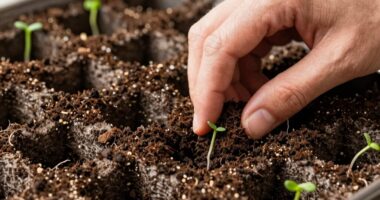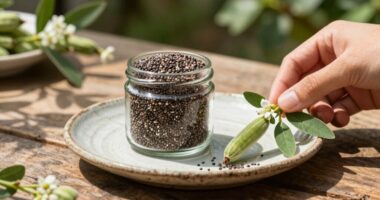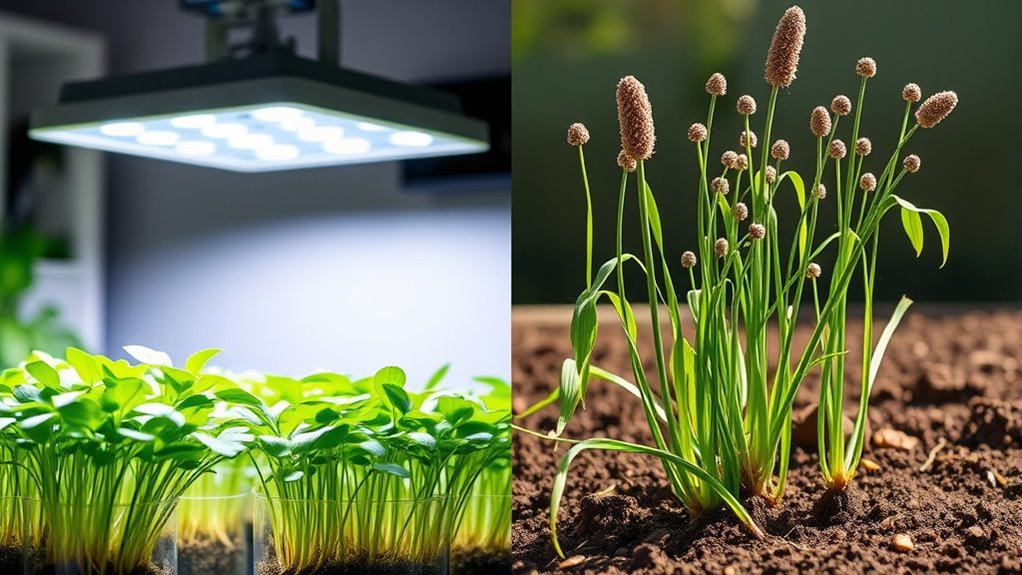

Growing chia indoors gives you better control over watering and pests, making it easier to prevent issues like root rot and insect damage. Outdoor growing provides abundant natural sunlight, which can lead to stronger plants, with less need for artificial lights. However, outdoor plants face more challenges from weather variability and pests. Want to find out which method suits your space best? Keep exploring to discover more detailed tips and insights.

Get garden gear delivered free with Prime
- Fast, free delivery on millions of items
- Prime Video, Amazon Music and more included
- Member-only deals all year
Key Takeaways
- Indoor growing offers better control over watering, light, and humidity, reducing pest and disease risks.
- Outdoors provides natural sunlight and a more forgiving environment, but exposes plants to pests and weather variability.
- Indoor chia requires artificial lighting and consistent watering, while outdoor chia depends on rainfall and natural conditions.
- Pest management is simpler indoors, whereas outdoor plants need regular monitoring for insects and pests.
- Indoor cultivation generally demands less ongoing effort, but may require more attention to humidity and airflow.
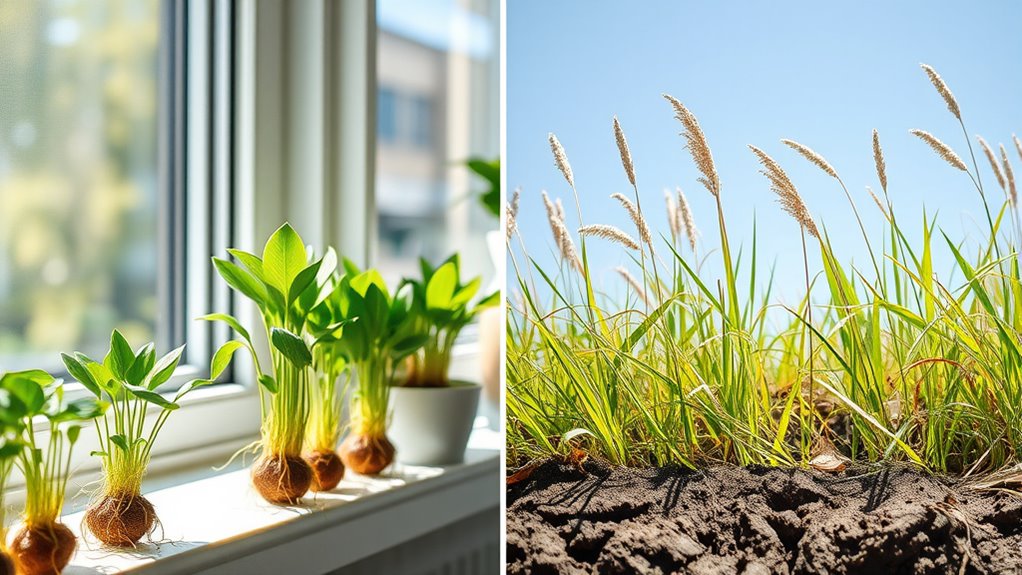
Are you wondering whether growing chia indoors or outdoors is the better option? The choice depends on several factors, including your environment, available space, and how much effort you want to put into caring for your plants. When growing chia indoors, you’ll have more control over watering needs and pest control. Since you can monitor moisture levels closely, it’s easier to keep the soil consistently moist without overwatering. This helps prevent root rot and encourages healthy germination. Plus, indoor environments usually mean fewer pests like aphids or mites, so you won’t need to worry as much about pest management. However, indoor chia plants can be more vulnerable to issues like mold or fungal growth if humidity levels are too high or if there’s poor air circulation. Regularly checking your plants and ensuring good airflow can help keep these problems at bay.
Growing chia outdoors offers different advantages. Sunlight is naturally abundant, which promotes stronger growth and more vibrant, nutritious seeds. Outdoors, you don’t need to worry about providing supplemental grow lights, saving energy and effort. However, watering needs can become more unpredictable. Rainfall might be sufficient during certain seasons, but during dry spells, you’ll need to water more diligently. Overwatering or underwatering can both threaten your plants’ health, so consistent watering becomes essential. Pest control can also be more challenging outside. Nature introduces a variety of insects and pests that can feed on chia plants, requiring you to stay vigilant and possibly use organic pest management methods. You’ll need to inspect your plants regularly for signs of pests or disease and take action promptly to prevent damage.
Another consideration is the level of maintenance. Indoor growing tends to require less ongoing effort in terms of pest management and watering adjustments, making it a good option if you prefer a low-maintenance approach. Outdoors, the environment is more variable, and you’ll need to adapt your care routine to changing weather conditions. While outdoor chia can thrive with minimal intervention, it demands more attention to watering routines and pest prevention strategies. Ultimately, your choice will depend on how much time you want to dedicate to caring for your chia plants and the environment you have available. Both options can produce successful, healthy plants, but understanding these differences helps you make the best decision for your situation.
As an affiliate, we earn on qualifying purchases.
Frequently Asked Questions
Can Chia Plants Be Grown Year-Round Indoors?
You can grow chia plants indoors year-round if you control indoor humidity and maintain consistent temperature. Keep humidity levels moderate to prevent mold and pests, and use pest control strategies like proper ventilation and clean growing conditions. Make sure your chia gets sufficient light, either from windows or grow lights, and water it appropriately. With proper care, indoor chia cultivation is feasible throughout the year, providing fresh greens whenever you want.
What Pests Commonly Affect Indoor Chia Cultivation?
Pests can sneak into your indoor chia garden like uninvited guests at a party. Common pests include fungus gnats, aphids, and spider mites. To keep them at bay, practice pest prevention and pest identification early. Regularly inspect your plants, remove any affected leaves, and maintain proper humidity and airflow. Staying vigilant helps prevent infestations, ensuring your chia thrives indoors without the hassle of pests.
How Does Light Intensity Impact Chia Seed Production?
You should understand that light intensity directly impacts chia seed production by influencing photosynthesis efficiency. Higher light levels generally boost seed yields, but too much can stress the plant. You want to optimize the light spectrum to enhance photosynthesis, ensuring your chia plants produce healthy seeds. Using full-spectrum grow lights and adjusting intensity helps you achieve the best balance, maximizing seed quality and quantity.
Are There Specific Soil Types Better for Indoor Chia Growth?
Imagine discovering the perfect environment for your chia plants—are there specific soil types that unlock their full potential indoors? Soil compatibility is key; you want indoor soil choices that drain well yet hold enough moisture. Loamy, nutrient-rich soils with good aeration work best. Avoid heavy clay or sandy soils that could hinder growth. Choosing the right soil transforms your indoor chia garden into a lush, thriving oasis—don’t settle for less.
What Are the Environmental Benefits of Growing Chia Outdoors?
Growing chia outdoors offers environmental benefits like better soil nutrition and natural water requirements. When you grow outdoors, the soil naturally replenishes nutrients, reducing the need for synthetic fertilizers. Rainwater fulfills water needs, conserving resources and decreasing your water footprint. Plus, outdoor cultivation supports local ecosystems. You help maintain soil health and reduce energy use by avoiding artificial watering and soil amendments, making your chia farming more eco-friendly.
As an affiliate, we earn on qualifying purchases.
Conclusion
Whether you choose to grow chia indoors or outdoors, each path offers its own subtle charms and gentle challenges. Indoor growing lets you enjoy a controlled, cozy environment, while outdoor planting connects you more closely with nature’s rhythm. Whichever option you lean towards, trust your instincts and keep a tender eye on your chia. With time and patience, you’ll nurture a vibrant, thriving crop that rewards your care with every delicate leaf and tiny seed.
plant grow lights for indoor herbs
As an affiliate, we earn on qualifying purchases.
As an affiliate, we earn on qualifying purchases.
organic pest control for outdoor plants
As an affiliate, we earn on qualifying purchases.
As an affiliate, we earn on qualifying purchases.
Halloween Picks
halloween
As an affiliate, we earn on qualifying purchases.