After harvesting your chia seeds, guarantee they are thoroughly dry by air-drying in a well-ventilated area. Use airtight, opaque containers filled no more than three-quarters full to prevent spoilage and preserve nutrients. Keep the containers in a cool, dark, dry spot like a pantry, away from heat sources. Regularly check for signs of spoilage and rotate your stock. Want to learn more tips for maximizing freshness and storage life? Keep exploring for detailed guidance.

Get garden gear delivered free — and shop member deals
- Fast, free delivery on millions of items
- Access to Prime Big Deal Days deals on October 6–7
- Prime Video, Amazon Music and more included
Key Takeaways
- Use airtight, opaque containers filled no more than three-quarters full to protect seeds from moisture and light.
- Ensure chia seeds are thoroughly dried before transferring to storage to prevent spoilage.
- Store containers in a cool, dark, and dry place away from heat sources and temperature fluctuations.
- Label containers with harvest date and regularly check for signs of spoilage or rancidity.
- Rotate stock to use the oldest seeds first, maintaining freshness and nutritional quality over time.
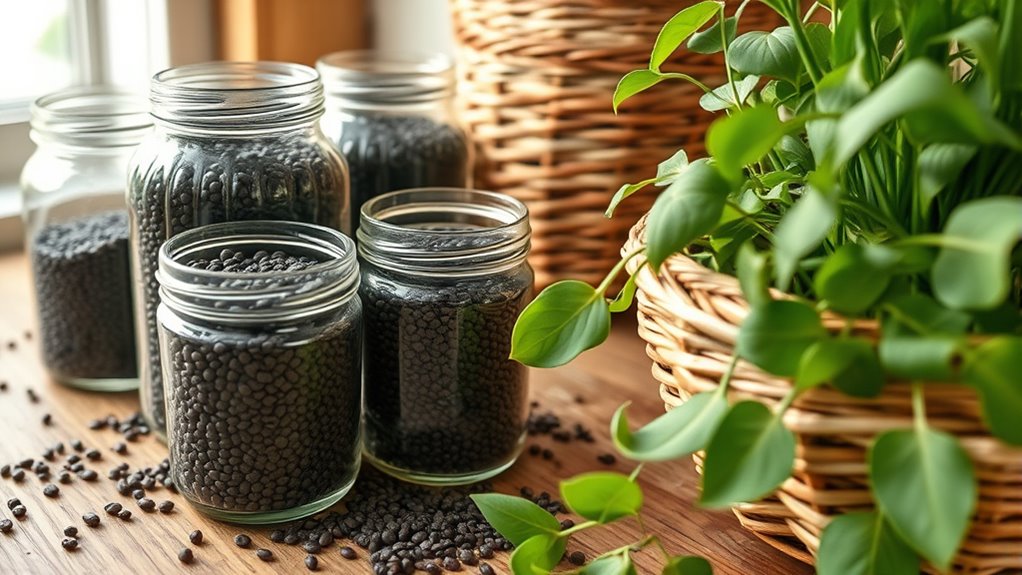
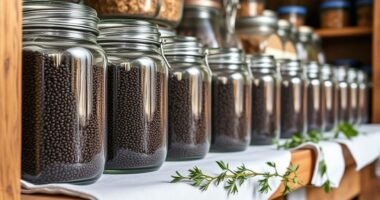
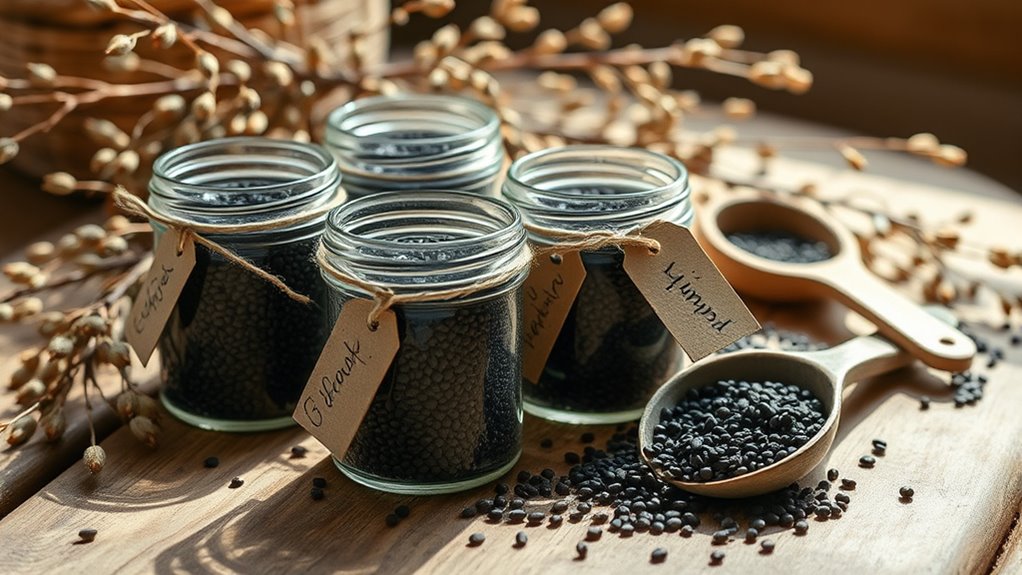
Storing homegrown chia seeds properly is essential to preserve their freshness and nutritional value. When you harvest your chia seeds, you want to ensure they stay as vibrant and nutrient-rich as when they were first collected. Good seed preservation starts with selecting the right storage containers. Using airtight containers is crucial because chia seeds are sensitive to moisture and air, which can cause them to spoil or lose their integrity over time. Glass jars with tight-fitting lids or BPA-free plastic containers work well for this purpose. These options prevent air from entering and keep out humidity, which can lead to mold or rancidity. When choosing storage containers, look for ones that are opaque or keep the seeds in a dark place, as exposure to light can degrade some of their nutrients.
Before transferring your chia seeds into storage containers, make sure they are thoroughly dry. Any residual moisture can accelerate spoilage and compromise seed preservation. Spread the harvested seeds out on a clean towel and allow them to air-dry in a well-ventilated area for a few hours or until completely dry. Once dry, transfer them carefully into your chosen storage containers, filling them no more than three-quarters full to allow for some airflow and to avoid overstuffing, which can cause pressure and potential damage to the seeds or the container. Label the containers with the date of harvest, so you always know how fresh your chia seeds are. This practice helps you keep track of seed shelf life and ensures you use the oldest seeds first.
Proper storage is vital for maintaining the quality and extending the shelf life of your homegrown chia seeds. Keep your containers in a cool, dark, and dry location, such as a pantry or cupboard, away from direct sunlight and heat sources. Avoid storing them near the stove or dishwasher, where temperature fluctuations and humidity are common. If you live in a particularly humid climate, consider adding a silica gel packet or a desiccant to your storage container to absorb excess moisture. Additionally, rotating your stock periodically by using the oldest seeds first helps maintain freshness and prevents waste. Regularly check your stored chia seeds for any signs of spoilage, such as a rancid smell or discoloration, and discard any seeds that seem off. By paying attention to seed preservation and choosing the right storage containers, you can enjoy the nutritional benefits of your homegrown chia seeds for months to come. Proper storage not only maintains freshness but also ensures your chia seeds stay safe and flavorful whenever you’re ready to use them.
As an affiliate, we earn on qualifying purchases.
Frequently Asked Questions
How Long Can Chia Seeds Be Stored Without Losing Freshness?
You can typically store chia seeds for up to 2-4 years without losing freshness if you maintain proper seed germination and moisture control. Keep them in an airtight container, away from light and humidity, to prevent spoilage. Proper storage slows down the natural degradation process, ensuring your seeds retain their nutritional value and sprouting ability. Regularly check for any signs of mold or off odors to ensure quality.
Can Homemade Chia Seeds Be Stored at Room Temperature Safely?
You can store homemade chia seeds at room temperature safely if you follow proper DIY drying and seed hygiene practices. Make sure they’re thoroughly dried to prevent mold and keep them in an airtight container away from direct sunlight and moisture. This way, your seeds stay fresh longer, and you avoid spoilage. Regularly check for signs of moisture or pests, maintaining good seed hygiene to preserve their quality over time.
What Are the Signs of Spoiled Chia Seeds?
Did you know that about 10% of stored food waste is due to mold growth? When checking for spoiled chia seeds, look for signs of moisture damage, such as clumping or a damp smell. Mold may appear as fuzzy spots or discoloration. If your seeds feel slimy, smell off, or show mold, it’s best to discard them. Proper storage helps prevent moisture damage and keeps your chia seeds fresh longer.
Do Chia Seeds Require Airtight Containers for Storage?
Yes, you should store your chia seeds in airtight containers. They help prevent moisture from getting in, which is essential for keeping your seeds fresh and extending their shelf life. Using airtight containers also protects against air and pests, ensuring your chia seeds stay dry and uncontaminated. Make sure you choose a container that seals tightly, so moisture prevention remains effective and your seeds stay fresh for longer periods.
How Do Storage Methods Affect Chia Seed Nutritional Value?
Think of storage as your chia seeds’ guardian, protecting their vibrant nutrients. When exposed to air or light, nutrient degradation and oxidation effects can quietly chip away at their health benefits. Using airtight containers and keeping them in a cool, dark spot creates a shield, preserving their power. Proper storage *guarantees* each spoonful delivers the full spectrum of omega-3s, fiber, and antioxidants you cherish in your homegrown harvest.
BPA-free plastic storage containers
As an affiliate, we earn on qualifying purchases.
As an affiliate, we earn on qualifying purchases.
Conclusion
So, now that your chia seeds are safely tucked away, you’re officially a seed storage expert. Just remember, the real test is resisting the urge to turn your pantry into a chia germination lab. Keep them airtight, cool, and dry—because nothing says “green thumb” like a moldy, forgotten seed stash. Congratulations, you’re ready to impress friends with your storage skills and maybe even sneak a seed or two into your next smoothie—just don’t tell the chia police.
silica gel packets for food storage
As an affiliate, we earn on qualifying purchases.
As an affiliate, we earn on qualifying purchases.
dark opaque seed storage containers
As an affiliate, we earn on qualifying purchases.
As an affiliate, we earn on qualifying purchases.
Halloween Picks
halloween
As an affiliate, we earn on qualifying purchases.