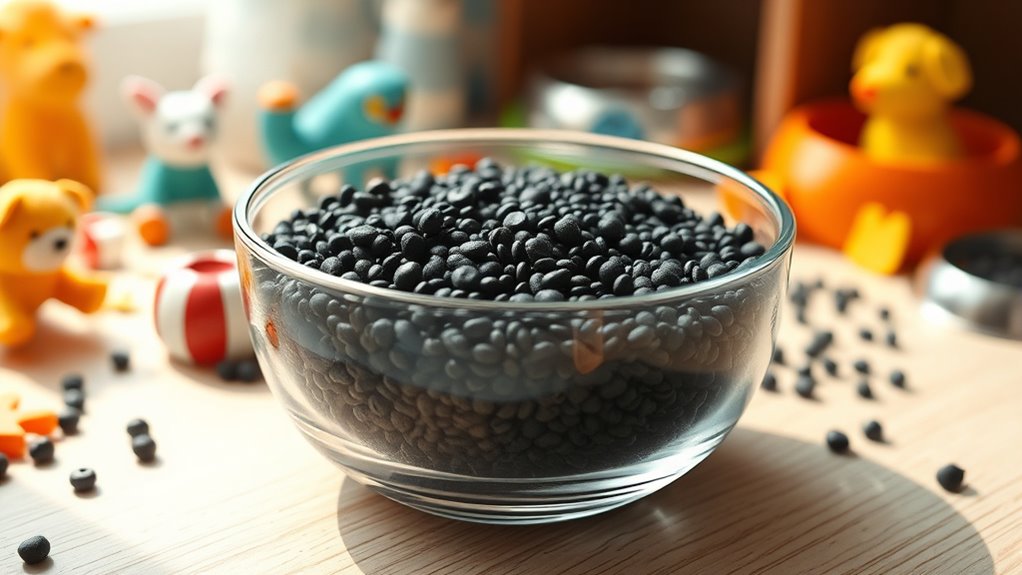

Chia seeds are generally safe for children and pets when introduced carefully and in moderation. You should serve soaked or ground seeds to improve digestion and reduce choking risks. Always start with small amounts and watch for any allergic reactions or gastrointestinal issues. Proper preparation and gradual introduction help make certain of safety. Keep in mind that individual sensitivities vary; staying informed will help you make the best choices for their health and well-being.
Key Takeaways
- Chia seeds are generally safe for children and pets when introduced gradually and served soaked or ground.
- They provide essential nutrients like omega-3s, fiber, and minerals that support growth and health.
- Allergic reactions are possible; monitor for symptoms such as skin rashes or gastrointestinal upset.
- Proper serving sizes and preparation are crucial to prevent choking and digestive discomfort.
- Consult healthcare providers before adding chia seeds to children’s or pets’ diets, especially if allergies or sensitivities are known.
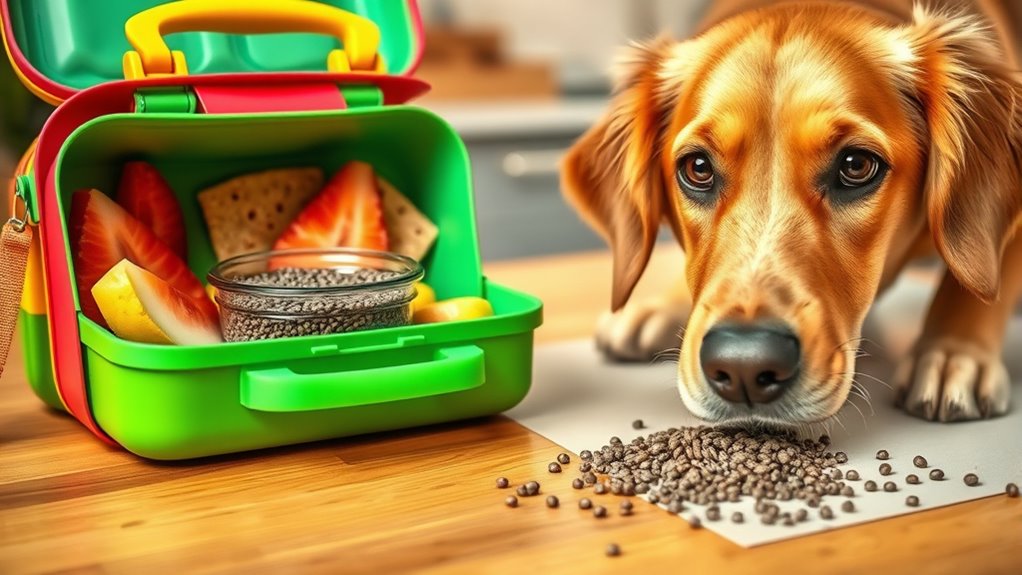
Are chia seeds safe for children and pets? This is a common question many caregivers and pet owners ask when considering adding this tiny superfood to their diet. Chia seeds are packed with nutritional benefits that can support growth, digestion, and overall health. They are rich in omega-3 fatty acids, fiber, protein, antioxidants, and essential minerals like calcium, magnesium, and phosphorus. These nutrients can promote healthy bones, improve digestion, and boost energy levels in children. For pets, especially dogs and cats, small amounts of chia seeds can offer similar benefits, supporting coat health and aiding digestion. However, it’s vital to understand how safe they really are and what precautions to take.
Chia seeds offer health benefits for children and pets but should be introduced cautiously and in moderation.
When evaluating the safety of chia seeds, you must consider potential allergies. While chia seeds are generally well-tolerated by many, some children and pets might experience allergic reactions. Symptoms can include skin rashes, itching, swelling, or gastrointestinal upset. If you notice any adverse signs after introducing chia seeds, stop feeding them immediately and consult a healthcare provider or veterinarian. It’s advisable to start with small quantities to observe any reactions, especially since some children or pets may have sensitivities. Keep in mind that allergies are individual and not everyone will experience them, but awareness and cautious introduction are key.
In terms of nutritional benefits, chia seeds can be a healthy addition to your child’s or pet’s diet when used properly. They are easy to incorporate into smoothies, oatmeal, yogurt, or homemade treats. When soaked in water or milk, chia seeds form a gel-like consistency that can be easier for children and pets to digest. This method also helps prevent choking or digestive blockages, which can occur with dry seeds. It’s important to remember that chia seeds are high in fiber, so serving moderation is essential. Too much fiber too quickly may cause gastrointestinal discomfort, especially for sensitive individuals or animals. Additionally, understanding the role of attention in preparing and serving chia seeds can significantly influence their safety and benefits.
As with any new food, consulting your pediatrician or veterinarian before adding chia seeds to your child’s or pet’s diet is wise. They can advise on appropriate serving sizes based on age, size, and health status. While chia seeds are a nutritious and generally safe option, understanding potential allergies and how to serve them safely guarantees that everyone reaps their benefits without unnecessary risks. Overall, with proper precautions, chia seeds can be a safe, healthful supplement that enhances nutrition for children and pets alike.

BBF Organic Chia Seeds 32 Oz, Omega-3 & Fiber, Pudding, Smoothies, Oatmeal
- Nutrient-Rich Superfood: High in omega-3 and fiber
- Organic and Non-GMO: Gluten-free, nut-free, low-carb
- Versatile Dietary Support: Vegan, keto, paleo friendly
As an affiliate, we earn on qualifying purchases.
As an affiliate, we earn on qualifying purchases.
Frequently Asked Questions
Can Chia Seeds Cause Choking in Young Children?
Chia seeds can pose choking hazards for young children if not prepared properly. When dry, they expand quickly with liquid, increasing the risk of choking if ingested whole. To minimize this, soak chia seeds before giving them to children, ensuring they’re soft and easier to swallow. Always consider dietary considerations and supervise young kids during meals to prevent choking, especially with small, sticky foods like chia seeds.
Are There Any Known Allergic Reactions to Chia Seeds in Pets?
You should be aware that pets can have seed sensitivities, and some may experience allergic reactions to chia seeds. Pet allergies to chia are rare but possible, causing symptoms like itching, swelling, or digestive issues. Always introduce new foods gradually and watch for any signs of adverse reactions. If your pet shows allergy symptoms, consult your veterinarian promptly to ensure their safety and well-being.
How Much Chia Seed Is Safe for a Toddler Daily?
A small sprinkle is enough—about one teaspoon of chia seeds daily for your toddler, like a tiny treasure chest of nutrients. Stick to proper portion sizes to avoid any digestive discomfort. Chia seeds pack a punch with fiber, omega-3s, and antioxidants, offering great nutritional benefits. Always introduce new foods gradually and consult your pediatrician to make certain it’s right for your little one’s unique needs.
Do Chia Seeds Interfere With Any Common Medications for Children or Pets?
Chia seeds can potentially interfere with medication interactions, especially if your child or pet takes blood thinners or diabetes medications. They may also trigger chia seed allergies in sensitive individuals. To stay safe, consult your vet or healthcare provider before adding chia seeds to your child’s or pet’s diet, especially if they’re on medication or have known allergies. Always monitor for any adverse reactions after introducing chia seeds.
Should Chia Seeds Be Introduced Gradually to Children’s Diets?
You should introduce chia seeds gradually into your child’s diet to give their digestive health a gentle boost. This approach helps them adjust to new foods and suits their taste preferences. Starting small prevents any tummy upset and allows you to monitor any reactions. Like a slow and steady race, a gradual introduction guarantees chia seeds become a healthy and enjoyable part of their diet without overwhelming their digestive system.

Chia Seed Packet, 5 Count (Chia pet not Included)
- Number of Seed Packets: Five seed packets included
- Planting Count per Packet: Suitable for 5 plantings
- Growth Time: Full growth in 1-2 weeks
As an affiliate, we earn on qualifying purchases.
As an affiliate, we earn on qualifying purchases.
Conclusion
Think of chia seeds as tiny treasures—powerful but requiring careful handling around children and pets. When introduced properly and in moderation, they can be a healthy addition to your loved ones’ diets. Just remember, like a delicate puzzle piece, they fit best when you pay attention to proper preparation and portion sizes. Keep safety as your guiding star, and you’ll guarantee everyone benefits from these nutritious seeds without any unexpected hiccups.

AFIL Food Sensitivity Test kit – 1000+ Foods, Drinks, Vitamins & Gut Health | At-Home Wellness Food Intolerance Test Kits for Adults & Kids – Non-Invasive Wellness Indicator | 1000+ Items Premium
- At-Home Testing Kit: Non-invasive hair sample analysis for wellness
- Comprehensive Item Coverage: Tests 1000+ foods, drinks, vitamins, household items
- User-Friendly Process: Simple 3-step at-home testing procedure
As an affiliate, we earn on qualifying purchases.
As an affiliate, we earn on qualifying purchases.

Apple Wood Feeding Bowl for Small Animals, Food Dish for Hamster, Guinea Pig, Chinchilla Rat Gerbils
- Material: Natural Apple Wood
- Size: Inner Diameter 2 inches
- Depth: Inner Depth 1.3 inches
As an affiliate, we earn on qualifying purchases.
As an affiliate, we earn on qualifying purchases.