Chia seeds are an excellent prebiotic food that feeds your gut microbiome. They’re packed with soluble fiber, which your beneficial bacteria ferment to produce helpful compounds. This process promotes the growth of good bacteria, supports gut barrier health, and improves digestion. Including chia seeds regularly can help maintain a balanced microbiome and soothe digestive issues. If you’re curious about maximizing their benefits for your gut health, there’s more to discover that can make a real difference.
Key Takeaways
- Chia seeds contain soluble fiber that ferments in the gut, supporting beneficial bacteria growth.
- The fermentation of chia’s fiber produces short-chain fatty acids that nourish gut cells.
- Regular chia seed consumption acts as a prebiotic, enhancing overall microbiome diversity.
- Chia’s fiber helps maintain gut barrier integrity and reduces inflammation.
- Incorporating chia seeds into meals promotes a healthy, balanced gut microbiome over time.
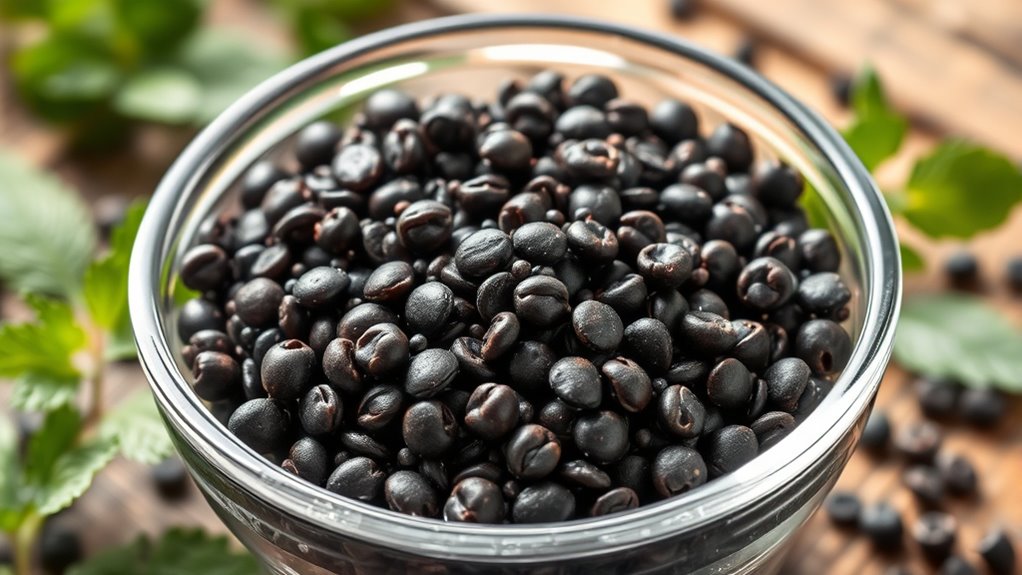
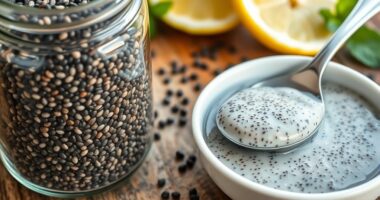
Have you ever wondered how chia seeds can support your gut health? These tiny seeds pack a powerful punch when it comes to improving digestion and nurturing your microbiome. One of their most notable features is their high fiber content, which plays a fundamental role in promoting healthy digestion benefits. When you incorporate chia seeds into your diet, you’re giving your digestive system a gentle boost, helping to regulate bowel movements and prevent constipation. The soluble fiber in chia seeds absorbs water, forming a gel-like substance that moves smoothly through your digestive tract, easing the passage of waste and reducing discomfort. Additionally, this fiber acts as a prebiotic, feeding the beneficial bacteria in your gut, which is essential for maintaining a balanced microbiome.
Chia seeds boost digestion with high fiber, easing waste passage and nourishing beneficial gut bacteria.
As you add chia seeds to your meals—whether in smoothies, oatmeal, or yogurt—you’re not just increasing your fiber intake; you’re supporting the growth of good bacteria that help digest food more efficiently. These friendly microbes ferment the soluble fiber, producing short-chain fatty acids that nourish your intestinal cells and strengthen your gut barrier. This process enhances your overall digestion benefits, making it easier for your body to absorb nutrients and eliminate toxins. The fiber content in chia seeds also helps stabilize blood sugar levels and keeps you feeling full longer, which can contribute to better weight management and metabolic health.
Chia seeds are versatile and easy to incorporate into your daily routine. Because they absorb liquid and expand, they create a satisfying texture in both sweet and savory dishes. This not only makes your meals more filling but also encourages consistent fiber intake, which is essential for ongoing digestion benefits. Consuming chia seeds regularly can also help reduce inflammation in your gut, as their antioxidants and omega-3 fatty acids work together to soothe irritated tissues. This anti-inflammatory effect further promotes a healthy gut environment, supporting your body’s natural defenses against digestive issues.
In short, the fiber content of chia seeds is a key factor in their ability to support digestion benefits. By feeding your beneficial gut bacteria, they help maintain a thriving microbiome, which is vital for overall health. Their gentle, natural way of enhancing digestion makes chia seeds a smart, simple addition to your diet. So, if you’re looking to improve your gut health, start sprinkling chia seeds into your meals and enjoy the many benefits they bring to your digestive system.
Adding a balanced microbiome can significantly improve your overall health and well-being.

BetterBody Foods Organic Chia Seeds 2 lbs, 32 Oz, with Omega-3, Non-GMO, Gluten Free, Keto Diet Friendly, Vegan, Good Source of Fiber
NUTRIENT POWER: This omega powerhouse is full of other useful nutrients that will help men and women live…
As an affiliate, we earn on qualifying purchases.
As an affiliate, we earn on qualifying purchases.
Frequently Asked Questions
Can Chia Seeds Replace Probiotic Supplements Effectively?
Chia seeds can’t fully replace probiotic supplements, but they serve as effective prebiotic alternatives. Unlike probiotics, which introduce beneficial bacteria directly, chia seeds feed your existing gut microbiome, promoting diversity and health. For a well-rounded approach, combine chia seeds with probiotic-rich foods or supplements. This prebiotic comparison shows that while chia seeds support your gut, they work best when paired with probiotics to maximize gut health benefits.
How Much Chia Seeds Should I Consume Daily for Gut Health?
You should aim for a daily intake of about 1 to 2 tablespoons of chia seeds, which is within the recommended servings for gut health. Incorporate them into your diet by adding to smoothies, yogurt, or oatmeal. This amount provides enough prebiotic fiber to support your gut microbiome without overdoing it. Remember to drink plenty of water, as chia seeds absorb liquid and can cause digestion issues if consumed excessively.
Are There Any Side Effects From Eating Too Many Chia Seeds?
Ever wondered if too many chia seeds could cause problems? Eating excessive amounts might lead to excess fiber intake, causing bloating, gas, or constipation. In rare cases, some people may experience chia seed allergies, resulting in allergic reactions. To stay safe, start with small servings, drink plenty of water, and listen to your body’s signals. Moderation guarantees you enjoy the benefits without any uncomfortable side effects.
Do Chia Seeds Benefit Everyone Equally, Regardless of Health Conditions?
Chia seeds don’t benefit everyone equally because individual health differences and dietary restrictions can affect how your body responds. If you have conditions like allergies, digestive issues, or are on specific medications, you might need to limit or avoid them. Always listen to your body and consult with a healthcare professional before adding large amounts of chia seeds to your diet, especially if you have special health considerations.
Can Chia Seeds Help With Specific Digestive Issues Like Bloating?
Think of chia seeds as tiny superheroes fighting your bloating. Their high fiber content helps regulate your digestion, easing discomfort and promoting regularity. Plus, their anti-inflammatory properties can soothe irritated gut tissues, reducing bloating caused by inflammation. Incorporating chia seeds into your diet might just help calm your digestive system and keep things running smoothly, making you feel lighter and more comfortable throughout the day.

Better Place Supplements Chia Seed Oil, 500mg – 60 Capsules | Non-GMO Formula with Omega 3,6,&9 (1)
Omega 3, 6 & 9: This supplement is packed with omega fatty acids, which are long known for…
As an affiliate, we earn on qualifying purchases.
As an affiliate, we earn on qualifying purchases.
Conclusion
Now, consider this: could incorporating chia seeds into your diet truly boost your gut health? While research shows they act as a prebiotic, feeding beneficial bacteria, more studies are needed to confirm long-term effects. But don’t dismiss the idea outright—adding a sprinkle of chia might just support your microbiome naturally. So, why not experiment and see if these tiny seeds can make a big difference in your digestive wellness?
BetterBody Foods Organic Chia Seeds 2 lbs, 32 Oz, with Omega-3, Non-GMO, Gluten Free, Keto Diet Friendly, Vegan, Good Source of Fiber
NUTRIENT POWER: This omega powerhouse is full of other useful nutrients that will help men and women live…
As an affiliate, we earn on qualifying purchases.
As an affiliate, we earn on qualifying purchases.
BetterBody Foods Organic Chia Seeds 2 lbs, 32 Oz, with Omega-3, Non-GMO, Gluten Free, Keto Diet Friendly, Vegan, Good Source of Fiber
NUTRIENT POWER: This omega powerhouse is full of other useful nutrients that will help men and women live…
As an affiliate, we earn on qualifying purchases.
As an affiliate, we earn on qualifying purchases.