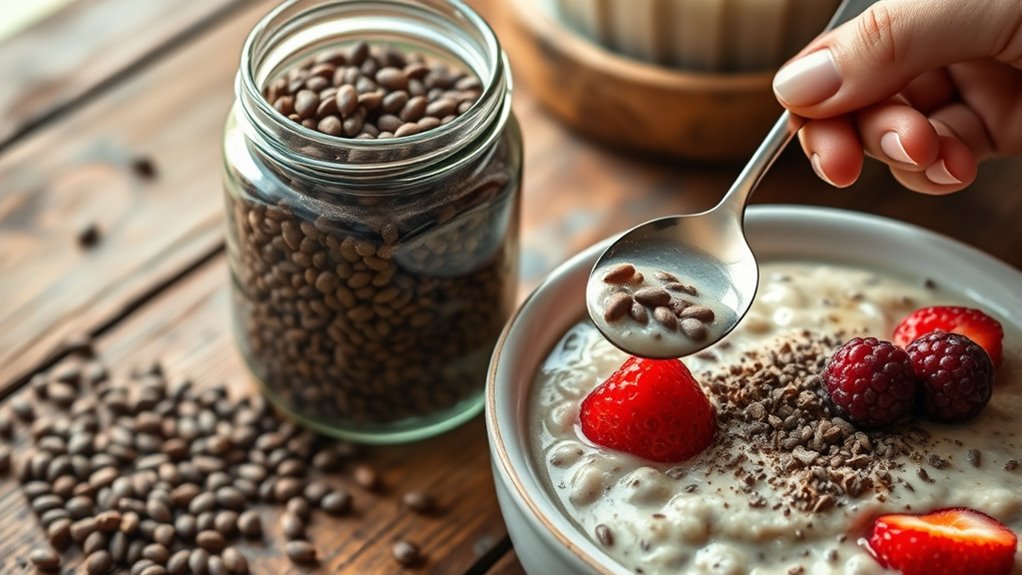
To manage digestive side effects when increasing chia intake, start with small amounts like a teaspoon and gradually increase over several days. Soaking chia in water before eating can make it easier to digest and reduce bloating. Drinking plenty of water alongside chia helps prevent discomfort and supports fiber absorption. Giving your gut time to adjust will minimize gas and bloating. If you want to learn more effective strategies, keep exploring ways to introduce chia safely into your diet.
Key Takeaways
- Start with small chia portions and gradually increase to allow your gut to adjust.
- Soak chia seeds before consuming to reduce gel formation and improve digestibility.
- Drink plenty of water when consuming chia to help fiber move smoothly through your digestive system.
- Introduce chia alongside other fiber-rich foods to promote microbiota adaptation.
- Monitor your body’s reactions and reintroduce chia slowly if bloating or discomfort persists.
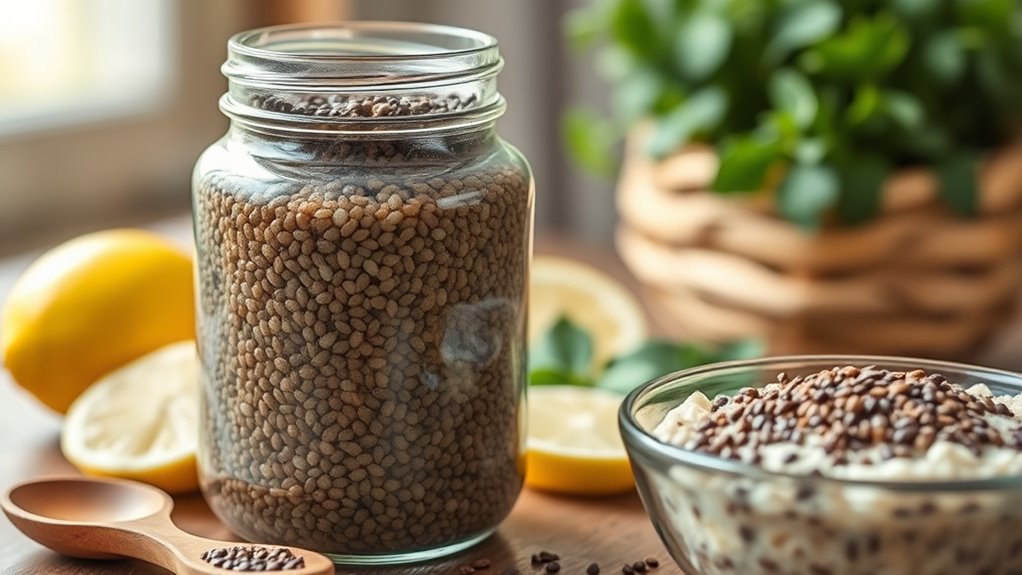
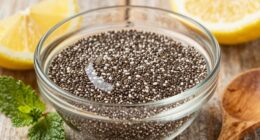
Chia seeds are celebrated for their health benefits, but they can also cause digestive side effects in some people. One common issue involves the way chia affects your digestion, especially as you increase your intake. When you consume more chia, you’re adding a significant source of fiber to your diet. This fiber is essential for healthy digestion, but it can also temporarily disrupt your gut if your body isn’t used to it. Specifically, chia’s high soluble fiber content influences fiber absorption by forming a gel-like substance in your stomach and intestines. This gel slows down digestion, which is generally good for controlling blood sugar and supporting satiety, but too much too quickly can lead to bloating, gas, or discomfort. To manage this, it’s best to gradually introduce chia into your meals rather than jumping in with large amounts. This allows your gut microbiota—the community of microorganisms in your digestive system—to adjust and enhance their ability to process the increased fiber.
Additionally, gut microbiota plays a pivotal role in breaking down the fiber from chia. When you eat chia regularly, it becomes a prebiotic food that can nourish beneficial bacteria in your gut. These bacteria ferment the fiber, producing short-chain fatty acids that support your overall gut health. However, if your microbiota isn’t accustomed to high fiber levels, the fermentation process can produce excess gas, leading to bloating and discomfort. To promote a healthy balance, start with small portions of chia, perhaps a teaspoon or tablespoon, and gradually increase your intake over several days. Drinking plenty of water alongside chia also helps facilitate fiber absorption and prevents the fiber from causing constipation or excessive bloating.
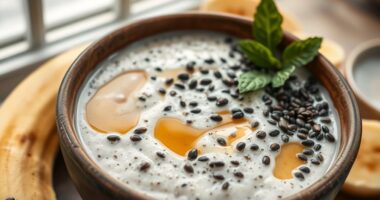
Another effective way to reduce digestive discomfort is to soak chia seeds before eating them. Soaking helps break down the seed’s outer layer, making the fiber easier to digest and reducing the risk of fiber clumping in your gut. When you soak chia in water or milk for at least 10-15 minutes, it expands and forms a gel, which can be easier on your digestive system. Be mindful of your body’s signals—if you notice persistent bloating or cramps, cut back on your chia intake and reintroduce it gradually. Incorporating chia into a balanced diet with other fibers from fruits, vegetables, and whole grains can also help your gut microbiota adapt more comfortably.

Navitas Organics Chia Seeds – For Chia Pudding, Smoothies, Baking, Salads & More – Omega 3, Fiber, Minerals – USDA Organic, Non GMO, Kosher, Gluten Free, Keto (16oz. Bag, 15 Servings)
SALVIA HISPANICA: Chia seeds are harvested from a variety of mint native to South and Central America, where…
As an affiliate, we earn on qualifying purchases.
As an affiliate, we earn on qualifying purchases.
Frequently Asked Questions
Can Chia Cause Allergic Reactions in Some Individuals?
Yes, chia can cause allergic reactions in some individuals. You might experience chia allergies or seed sensitivities that lead to symptoms like itching, swelling, or difficulty breathing. If you notice these signs after consuming chia, stop eating it and consult a healthcare professional. Being aware of seed sensitivities helps you avoid potential allergic reactions and enjoy chia’s benefits safely.
How Long Does It Take to Notice Digestive Improvements?
Ironically, your digestive system often takes its sweet time to adapt. Usually, you’ll notice improvements in digestion within a few days to a week, thanks to digestive adaptation. Symptom onset varies, but patience pays off. If you stick with gradual chia increases, your gut will thank you, and you’ll start feeling the benefits sooner rather than later. Keep track and stay consistent for the best results.
Are Chia Seeds Suitable for People With IBS?
Chia seeds can be suitable for people with IBS, but you should consider their high fiber content and your individual tolerance. The fiber helps regulate digestion, but it’s essential to stay well-hydrated, as chia absorbs water and can cause bloating if you don’t drink enough. Start with small amounts, monitor your symptoms, and increase gradually to see how your body responds.
What Are Alternative Ways to Enjoy Chia Without Bloating?
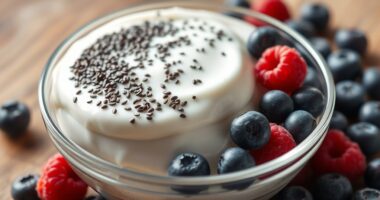
To enjoy chia without bloating, try flavor combinations like adding berries or honey to make it tastier. You can also modify the texture by soaking chia seeds in a smaller amount of liquid first, then gradually increasing. Mixing chia into smoothies or yogurt helps reduce bulk, easing digestion. These methods help you enjoy chia’s benefits while minimizing bloating, making your experience more comfortable and delicious.
Is It Safe to Consume Chia Daily in Large Amounts?
Yes, it’s generally safe to consume chia daily in moderation, but large amounts can cause bloating or digestive discomfort. To optimize chia seed hydration and nutrient absorption, soak your seeds before eating. This helps reduce bloat and guarantees you get the most benefits from their nutrients. Remember to listen to your body and gradually increase your intake to avoid digestive issues and get the best health benefits.

Vitafusion Fiber Well Gummy Vitamins, 90 Count (Packaging May Vary)
5 grams of fiber to support regularity and support digestive health*
As an affiliate, we earn on qualifying purchases.
As an affiliate, we earn on qualifying purchases.
Conclusion
As you navigate the chia seas, remember that patience is your steady compass. Like tending a delicate garden, gradually increasing your intake allows your digestive system to bloom without storms. Embrace the journey, trusting that with gentle steps, you’ll harvest the benefits of chia’s nourishing waves. So, stay mindful, listen to your body’s whispers, and soon, you’ll sail smoothly into a vibrant, healthy horizon where chia’s riches flourish effortlessly within you.

Glass Water Bottles Set of 3, 18 oz, Reusable Water Bottle with Lids, Juice Glass Bottles for Juicing, LeakProof, BPA Free, Container Bottle for Refrigerator, Suitable for Beverage, Soda (Clear)
The Most Beautiful Juice Bottle for your Kitchen: Enhance the presentation of your freshly squeezed juices both on…
As an affiliate, we earn on qualifying purchases.
As an affiliate, we earn on qualifying purchases.

Benefiber Daily Prebiotic GLP-1 Friendly Fiber Supplement Powder for Digestive Health, Unflavored – 250 Teaspoons (17.6 Ounces)
WHAT'S INCLUDED: One 17.6-ounce bottle of unflavored Benefiber Daily Prebiotic Fiber Supplement Powder for Digestive Health (1)
As an affiliate, we earn on qualifying purchases.
As an affiliate, we earn on qualifying purchases.