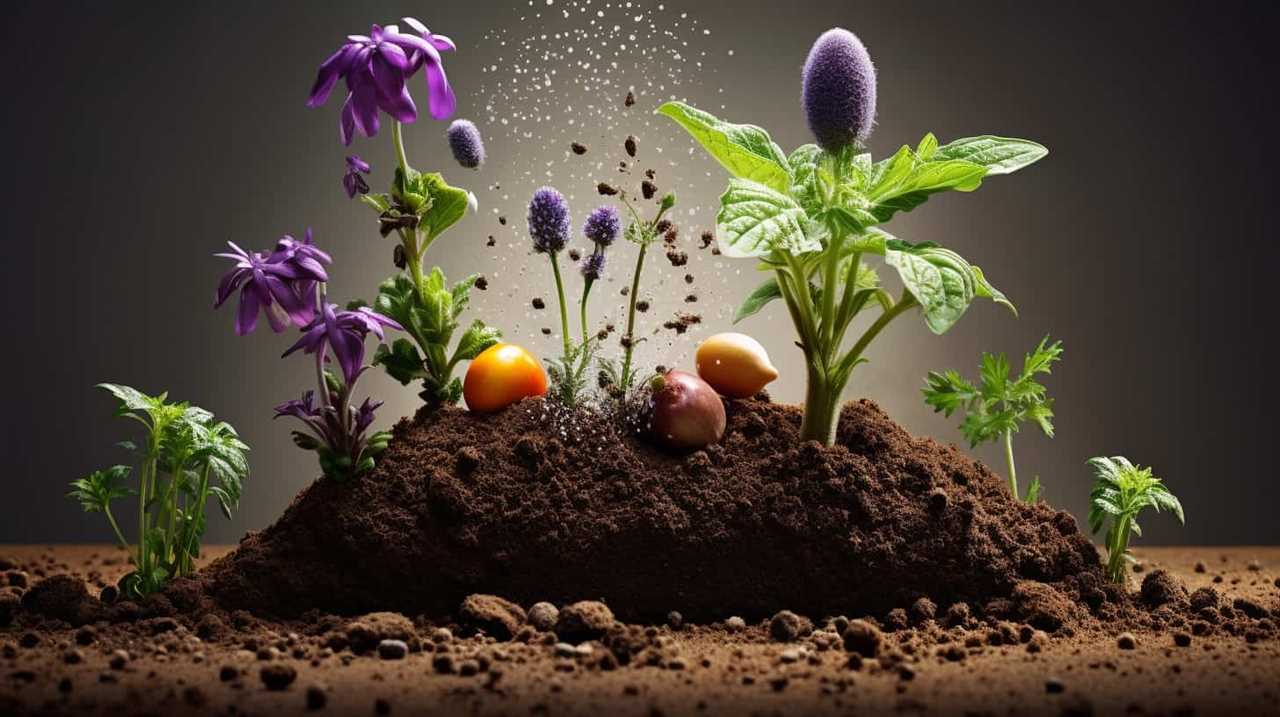
Organic standards shape modern chia farming by guiding you to focus on soil health through compost, cover crops, and crop rotation, all without synthetic fertilizers. You’ll avoid chemicals and use natural pest controls like beneficial insects and companion planting, creating a balanced ecosystem. This approach promotes healthier seeds, better crop resilience, and environmental sustainability. If you want to see how these practices lead to high-quality, eco-friendly chia, you’ll find more insights by exploring further.
Key Takeaways
- Organic standards prohibit synthetic fertilizers, promoting soil health practices like compost and crop rotation in chia farming.
- They restrict chemical pesticides, encouraging natural pest management methods such as beneficial insects and companion planting.
- Certification requirements emphasize biodiversity and ecosystem health, enhancing resilience and pest resistance in chia fields.
- Organic standards require ongoing soil monitoring and minimal tillage, supporting sustainable soil structure and fertility.
- They ensure chia production aligns with environmental and consumer health priorities, emphasizing eco-friendly and nutrient-rich crops.
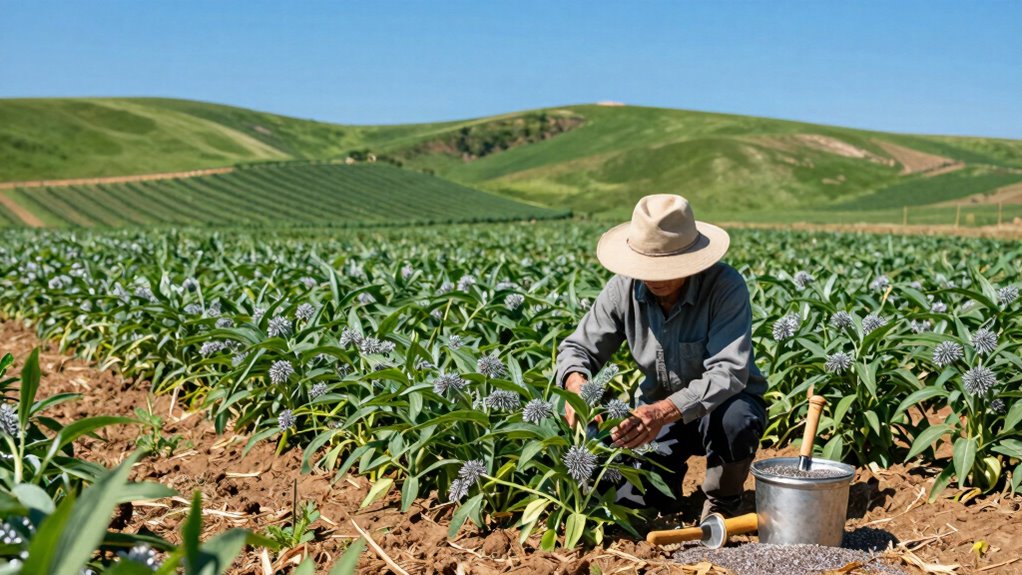
Organic standards play a crucial role in shaping sustainable and healthy chia farming practices. When you farm organically, you prioritize soil health, understanding that rich, balanced soil is the foundation for producing high-quality chia seeds. Instead of relying on synthetic fertilizers, you use compost, green manure, and crop rotations to nurture your soil. This approach not only improves soil fertility but also enhances its structure, moisture retention, and microbial activity. Healthy soil allows your chia plants to grow stronger and more resilient, reducing the need for external inputs and supporting long-term farm sustainability.
Pest management is another critical aspect influenced by organic standards. You avoid chemical pesticides and instead adopt integrated pest management (IPM) strategies. You might introduce natural predators, such as ladybugs or predatory beetles, to control pest populations. Companion planting is also effective; planting aromatic herbs like basil or marigolds nearby can deter pests naturally. You focus on maintaining a balanced ecosystem, which helps keep pest levels in check without harming beneficial insects or the environment. This method aligns with organic principles, emphasizing prevention rather than reactive chemical interventions, and ultimately results in healthier chia crops.
Organic standards guide you to be more attentive to the overall health of your farm ecosystem. You monitor soil conditions regularly, adjusting practices to prevent erosion, compaction, or nutrient depletion. This ongoing process encourages you to adopt cover cropping and minimal tillage techniques, which protect soil integrity and prevent pest outbreaks caused by disturbed soil habitats. By fostering biodiversity on your farm, you create a resilient environment where pests are less likely to become problematic, reducing the need for intervention. Additionally, understanding vulnerabilities in devices helps you implement better security measures to protect your farm’s digital systems.
Furthermore, organic standards influence your decision-making regarding pest management by emphasizing prevention and natural controls over chemical solutions. You understand that healthy soil contributes to plant vigor, making your chia plants less susceptible to pests and diseases. This holistic approach ensures that every aspect of your farm, from soil to pest control, works together to produce a sustainable, high-quality harvest.
In essence, organic standards shape your chia farming practices by prioritizing soil health and natural pest management strategies. This creates a farming system that’s not only environmentally friendly but also more resilient to pests and stressors. By adhering to these standards, you contribute to a healthier planet while cultivating nutrient-rich chia seeds that consumers increasingly seek. Your commitment to organic principles ensures your farm remains productive, sustainable, and aligned with the values of eco-conscious farming.

7PCS Mini Handheld Seed Spreader Set with Adjustable Speeds and 12-Hole Dibber Tool, Multifunctional Sowing Seeds Dispenser Planter Kit for Lawn Garden Farm Yard
- Complete Gardening Tool Set: Includes seed dibber, dispensers, and planters
- Durable ABS Material: Lightweight, shatter-resistant for long-lasting use
- Ergonomic Design: Comfortable grip reduces fatigue during use
As an affiliate, we earn on qualifying purchases.
As an affiliate, we earn on qualifying purchases.
Frequently Asked Questions
How Do Organic Standards Differ Between Countries?
You’ll find that organic standards differ between countries due to variations in international regulations and certification requirements. These differences influence how farmers grow and certify chia as organic, affecting certification consistency worldwide. You might notice some countries have stricter rules, while others are more lenient. This variability impacts product quality and market trust, making it essential for consumers and producers to understand local standards to guarantee genuine organic chia.
Are Organic Chia Seeds More Nutritious Than Conventional Ones?
Organic chia seeds are often more nutritious than conventional ones because they typically have higher nutrient density. This is due to organic farming practices that avoid synthetic fertilizers and pesticides, encouraging healthier soil and better seed quality. By choosing organic, you support farming methods that enhance nutrient content naturally, making your chia seeds richer in omega-3s, antioxidants, and fiber, which benefits your health and promotes sustainable agriculture.
What Are the Major Challenges Faced by Organic Chia Farmers?
You face major challenges like maintaining healthy soil, managing pests naturally, and ensuring consistent crop yields. You work hard to improve soil management practices, avoiding synthetic chemicals and preserving soil health. Pest control becomes a constant battle, relying on organic methods instead of harsh pesticides. You balance these efforts with weather unpredictability and market demands, aiming to produce high-quality organic chia seeds while protecting the environment and sustaining your farm’s future.
How Does Organic Certification Impact Chia Seed Prices?
Organic certification impacts chia seed prices by introducing pricing fluctuations due to certification costs and market demand. When you pursue organic certification, you face higher expenses, which can lead to increased prices for your chia seeds. These costs are often passed on to buyers, but fluctuations may occur based on market trends and consumer preferences for organic products. As a result, organic chia seed prices tend to be higher and more variable.
Can Organic Standards Evolve to Include New Farming Practices?
Yes, organic standards can evolve to include new farming practices. Organic certification bodies regularly review and update guidelines, encouraging farming innovations that improve sustainability and crop health. As you adopt new techniques, these standards may adapt, ensuring your chia farming remains compliant while benefiting from advancements. Staying informed about certification updates helps you implement innovative practices that meet organic criteria, ultimately supporting sustainable and efficient chia cultivation.

Farming with Native Beneficial Insects: Ecological Pest Control Solutions
- Publisher: Storey Publishing
- Language: English
- Book Title: Farming with Native Beneficial Insects
As an affiliate, we earn on qualifying purchases.
As an affiliate, we earn on qualifying purchases.
Conclusion
As you navigate the fields of chia, the gentle embrace of organic standards guides your hands, nurturing tiny seeds into vibrant plants. With each careful step, you help cultivate a future where nature’s whispers are honored, and the land’s quiet integrity remains intact. In this dance of growth and care, you become a steward of purity, ensuring that every harvest reflects the harmony between earth and effort—an enduring symphony of sustainable life.

Chia Seeds for Planting, 1000+ Seeds Per Packet,Herb/Flower, (Isla's Garden Seeds), Non GMO & Heirloom Seeds, Scientific Name: Salvia hispanica, Great Gift
- Seed Type: Chia Seeds for Planting
- Seed Quantity: 1000+ Seeds Per Packet
- Plant Type: Herb/Flower Seeds
As an affiliate, we earn on qualifying purchases.
As an affiliate, we earn on qualifying purchases.

MySoil Soil Test Kit, Unlock Your Lawn & Garden Potential, Complete & Accurate Nutrient and pH Analysis with Recommendations Tailored to Your Soil and Plant Needs
- Professional Soil Testing Kit: Accurately measures nutrients and pH
- Fast Results: Receive analysis in 6-8 days
- Versatile Compatibility: Suitable for all soil types and plants
As an affiliate, we earn on qualifying purchases.
As an affiliate, we earn on qualifying purchases.