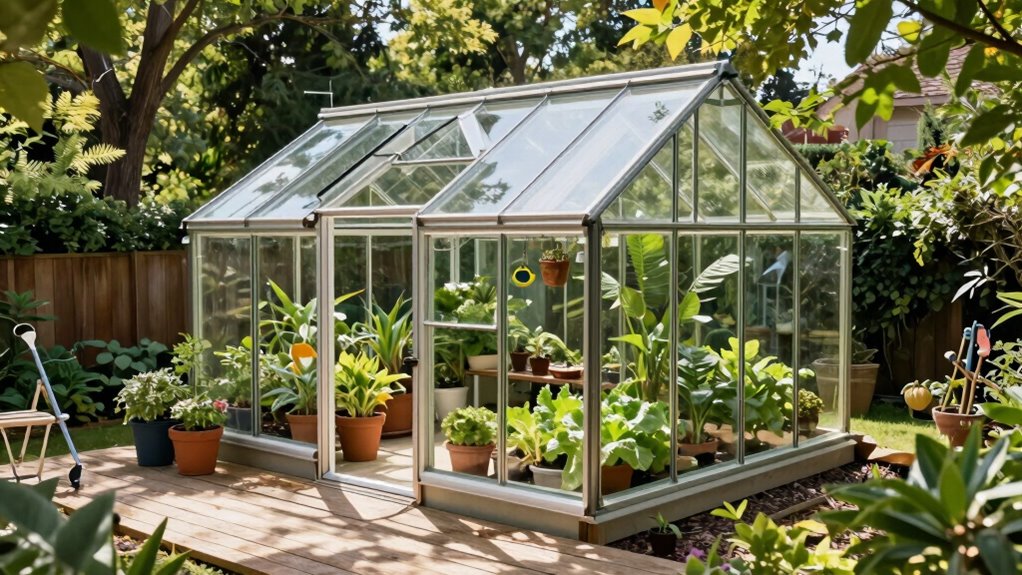

A walk-in greenhouse can turn your backyard into a year-round garden by extending your growing season and offering better climate control. It helps you grow healthier plants faster, thanks to features like hydroponic systems that maximize space and deliver nutrients directly to roots. Proper light and ventilation are essential to maintain a stable environment, reduce pests, and prevent diseases. Keep exploring to discover how to choose the right setup that fits your gardening goals and space.
Key Takeaways
- Choose a size that fits your available space and gardening needs for optimal use.
- Ensure proper ventilation, lighting, and climate controls for healthy plant growth.
- Consider hydroponic options to maximize space and accelerate plant development.
- Look for durable, weather-resistant materials to withstand outdoor conditions.
- Incorporate pest management and environmental controls for a productive, low-maintenance setup.
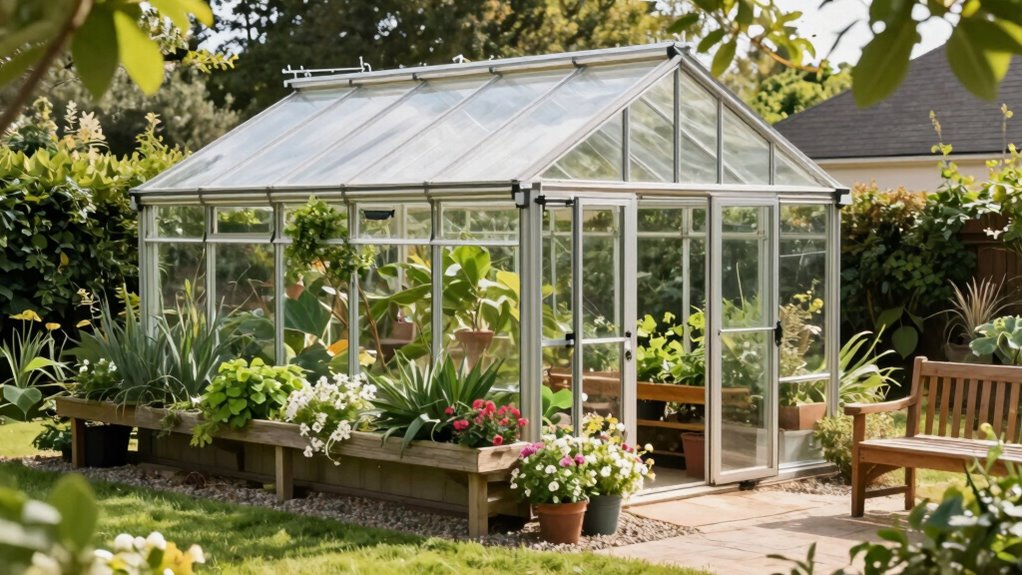
Creating a backyard greenhouse is a rewarding way to extend your growing season and nurture plants year-round. When you’re contemplating a walk-in greenhouse, it’s crucial to think about how you’ll maintain ideal conditions for your plants. A key aspect is choosing the right hydroponic systems, which can maximize space and accelerate growth. Hydroponics allows you to grow plants without soil, using nutrient-rich water solutions that deliver essential minerals directly to the roots. This method is especially beneficial in a greenhouse setting because it provides precise control over environmental factors, leading to healthier plants and higher yields. Additionally, hydroponic systems reduce the risk of soil-borne pests and diseases, making pest management easier and more effective. You’ll find that integrating these systems into your greenhouse simplifies maintenance and promotes faster plant development, even during colder months. Proper light management is also essential, as it ensures your plants receive adequate sunlight or supplemental lighting for optimal growth. To optimize your greenhouse environment, incorporating climate control systems can help maintain consistent temperature and humidity levels, further supporting healthy plant growth. Regular monitoring of these systems can prevent issues before they become serious, ensuring a smooth gardening experience. Understanding the importance of environmental stability can help you create a more resilient and productive greenhouse environment.
Hydroponics enhances greenhouse growth, boosts yields, and simplifies pest management through soil-free, nutrient-rich water systems.
Pest management is another critical element to take into account. In a walk-in greenhouse, pests can quickly become a problem if not managed properly. Fortunately, your greenhouse offers a controlled environment where you can implement preventative strategies. Keeping the space clean, inspecting plants regularly, and introducing natural pest predators are effective steps. You might also consider physical barriers like insect screens on vents and doors to keep unwanted visitors out. For more persistent pests, organic treatments such as neem oil or insecticidal soaps can be used without harming your plants or disrupting the ecosystem inside your greenhouse. The goal is to create a balanced environment where pests are kept in check without relying heavily on chemical pesticides.
In addition to managing pests, you should pay attention to ventilation, humidity, and temperature control. Good airflow reduces humidity that can encourage mold or pest proliferation. Installing fans, vents, or automated climate controls ensures that your plants stay in suitable conditions. Think about how the design of your walk-in greenhouse can facilitate these adjustments. A well-ventilated space not only supports healthy plant growth but also makes pest management easier by reducing the habitat for pests and pathogens. Incorporating environmental controls can further streamline this process and provide peace of mind. Maintaining a stable environment is essential for consistent plant growth and disease prevention.
Ultimately, your success with a backyard greenhouse depends on how well you integrate systems like hydroponics and pest management strategies. By choosing the right setup, you’ll create a thriving environment that supports year-round cultivation, minimizes pests, and maximizes your harvest. A walk-in greenhouse is a smart investment in your gardening journey, offering control, flexibility, and productivity you wouldn’t get with outdoor gardening alone.

GarveeHome 6X8 FT Greenhouse, Walk-in Greenhouse Kit with Aluminum Frame, Polycarbonate Panels, Adjustable Roof Vent, Sliding Door, Secure Lock for Outside Garden, Patio, Backyard
【Enhanced Frame Stability】 This Greenhouse for Outdoors features a reinforced aluminum frame and heavy-duty ground spikes, offering a…
As an affiliate, we earn on qualifying purchases.
As an affiliate, we earn on qualifying purchases.
Frequently Asked Questions
How Do I Prevent Pests in My Walk-In Greenhouse?
To prevent pests in your walk-in greenhouse, start by choosing pest-resistant plants that naturally deter pests. Keep your greenhouse clean and well-ventilated to reduce pest-friendly conditions. Use organic pest control methods like neem oil or insecticidal soaps when needed, avoiding harsh chemicals. Regularly inspect plants for signs of pests and remove affected foliage promptly. These steps create a healthy environment that minimizes pest problems effectively.
What Are the Best Plants for Beginner Greenhouse Growers?
For beginner greenhouse growers, choosing resilient plants like herbs, leafy greens, and radishes is ideal. Focus on easy plant selection that can handle various growth stages with minimal fuss. These plants grow quickly and adapt well, giving you confidence as you learn. As you gain experience, you can experiment with more complex plants, but starting with these guarantees steady success and helps you understand the basics of plant growth stages.
How Much Does a Walk-In Greenhouse Typically Cost?
A walk-in greenhouse typically costs between $1,500 and $5,000, depending on size and features. Think of it like planting a seed—your budget sets the foundation for growth. When planning, compare costs carefully, just as you’d compare plants’ needs. Budget planning helps you avoid surprises and guarantees your greenhouse fits your space and dreams. Remember, investing wisely now nurtures a thriving garden later.
Can I Install a Greenhouse on a Shaded Property?
You can install a greenhouse on a shaded property, but you’ll need to focus on shade tolerance and sunlight optimization. Choose shade-tolerant plants and consider using reflective surfaces or supplemental lighting to boost light. Position the greenhouse strategically to maximize sun exposure during peak hours. Proper ventilation and shading techniques can help create a suitable environment, ensuring your plants thrive even in less sunny areas.
What Are the Maintenance Requirements for a Walk-In Greenhouse?
Think of your greenhouse as a delicate dance—you need to keep it in step. You’ll regularly check soil preparation, guaranteeing your plants thrive, and stay vigilant with pest control to prevent infestations. Cleaning glass panels keeps sunlight flowing, and monitoring ventilation prevents mold. Seasonal upkeep, like replacing worn seals, ensures efficiency. Consistent attention turns your greenhouse into a thriving, lush sanctuary that rewards your care with abundant growth.

Ahopegarden Indoor Garden Hydroponics Growing System: 10 Pods Plant Germination Kit Herb Vegetable Growth Lamp Countertop with LED Grow Light – Hydrophonic Planter Grower Harvest Lettuce
High planting efficiency: Start an indoor herb garden with the Ahopegarden hydroponic growing system, which includes a water…
As an affiliate, we earn on qualifying purchases.
As an affiliate, we earn on qualifying purchases.
Conclusion
Now that you’re armed with this backyard buyer’s guide, your garden dreams are within reach. A walk-in greenhouse isn’t just a structure; it’s your personal glass sanctuary, nurturing growth and blooming potential. Think of it as planting seeds of success—each step you take cultivates a lush, vibrant paradise. With the right greenhouse, your outdoor space transforms into a living, breathing masterpiece, where every plant thrives and every season feels like spring.

iLIVING 12" Wall Mounted Shutter Exhaust Fan, Automatic Shutter, with Thermostat and Variable Speed controller, 0.6A, 960 CFM, 1400 SQF Coverage Area Silver (ILG8SF12V-ST)
POWERFUL AIR VENTILATOR – 960 CFM, 115V, 0.6A, 1/20 Horse Power, 1650 RPM, Coverage up to 1400 square…
As an affiliate, we earn on qualifying purchases.
As an affiliate, we earn on qualifying purchases.

BASF Pyrethrum TR Total Release Fogger – Botanical Insecticide – 6000 Sq Ft Coverage – Greenhouse Pest Control
For Use Only on Ornamental Crops and Growing Crops in Commercial Greenhouses
As an affiliate, we earn on qualifying purchases.
As an affiliate, we earn on qualifying purchases.