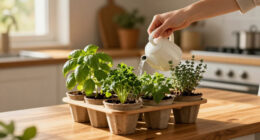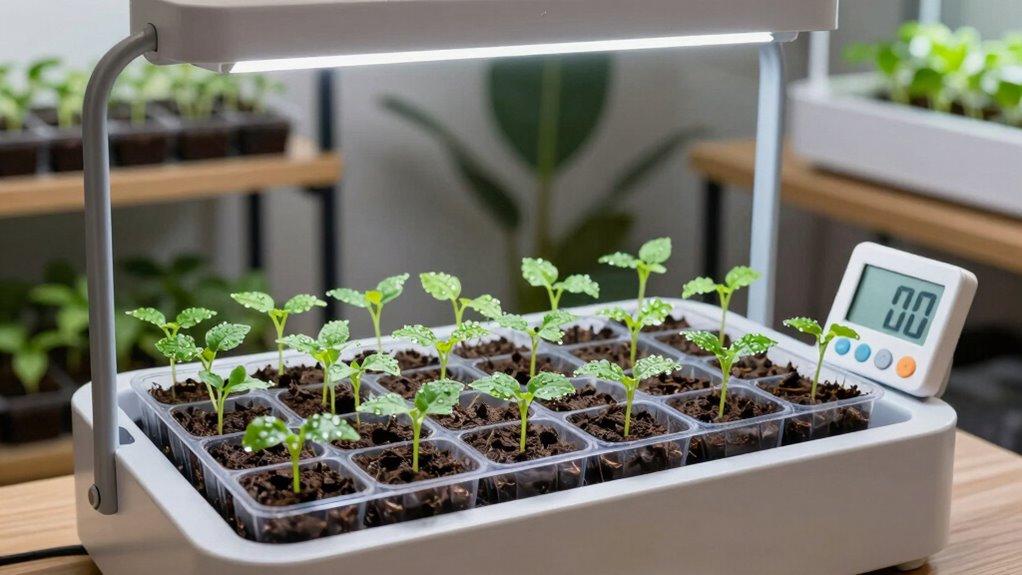
A germination station is a smart setup for home growers, helping you control key factors like temperature, moisture, and light to boost seed sprouting success. It creates a focused environment that promotes healthy, strong seedlings ready for transplanting. Proper soil mixes, light spectrum, and environmental controls guarantee consistent growth and reduce issues like mold or weak stems. If you want to maximize your seed-starting success and develop healthier plants, keep exploring for more tips and insights.
Key Takeaways
- Germination stations provide controlled environments, increasing seedling success rates and promoting healthy, vigorous growth.
- They help maintain optimal temperature, humidity, and light conditions, reducing issues like damping-off and etiolation.
- Proper setup with quality soil mixes and grow lights enhances seed sprouting and early development.
- Consistent environmental control minimizes variability, ensuring uniform germination across multiple seed types.
- Investing in a dedicated station can improve overall seedling health and simplify the nurturing process for home growers.
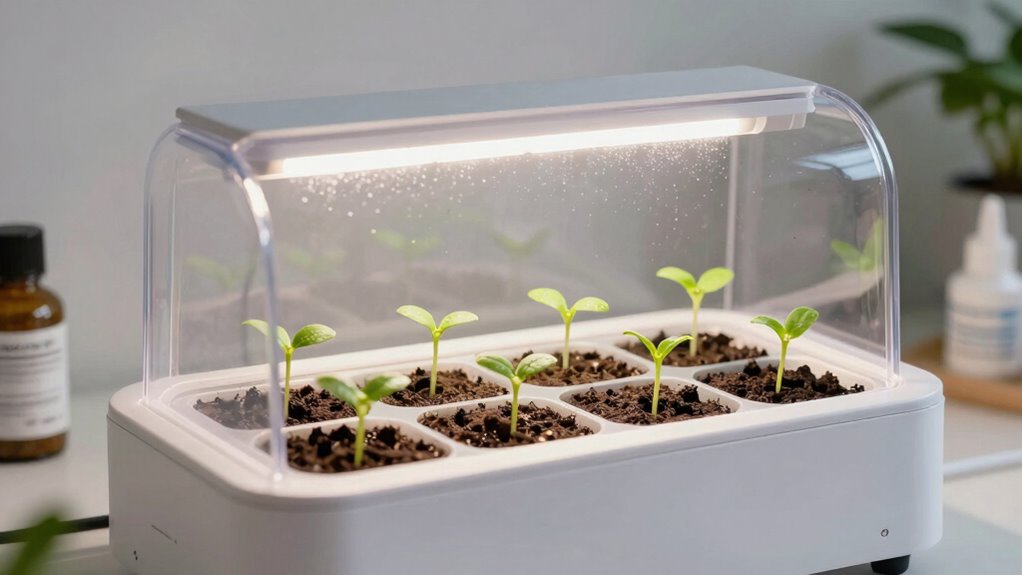
Creating a dedicated plant germination station at home makes starting your garden easier and more successful. When you set up a specific area for germinating seeds, you control key factors like temperature, moisture, and light, which notably boost your chances of healthy sprouting. One essential aspect to focus on is providing the right seedling nutrition. Young seedlings are delicate and require proper nutrients to develop strong roots and sturdy stems. While they don’t need heavy fertilization right away, incorporating a gentle, balanced nutrient solution or seed-starting mix can give them the energy they need to grow. This early nourishment sets a solid foundation for healthy development once they’re transplanted outdoors or into larger containers.
Starting seeds in a dedicated station with proper nutrients boosts healthy, strong seedlings for successful transplantation.
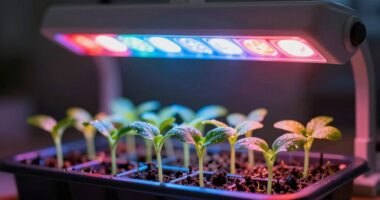
Another important consideration is the light spectrum. Seedlings depend heavily on the right kind of light to photosynthesize effectively, which influences their growth rate and overall health. Natural sunlight is ideal, but if your germination station is indoors or in a shaded area, you’ll want to use grow lights that mimic the sun’s spectrum. Look for full-spectrum LED grow lights—they provide a balanced range of light wavelengths, including blue light, which is critical for leafy growth, and red light, which encourages flowering and root development. Proper light spectrum considerations help prevent leggy, weak seedlings and promote stocky, vigorous plants. Keep the lights close to your seedlings, typically 2-4 inches, and maintain a consistent photoperiod, usually 12-16 hours daily, to mimic natural conditions and encourage healthy growth.
Temperature and humidity also play a key role in your germination station’s success, but with the right setup, you can easily manage these factors. Using a seed-starting tray with a clear cover can help retain moisture and maintain humidity levels, creating a mini-greenhouse effect. This environment, combined with controlled lighting, ensures your seeds germinate consistently and grow uniformly. As your seedlings develop, monitor their nutrition and light exposure closely, adjusting as necessary to prevent issues like damping-off disease or etiolation, which occurs when seedlings stretch in search of light. Additionally, maintaining proper environmental conditions is essential for consistent germination rates. Ensuring stable temperature control within your germination station can also significantly improve success, especially in fluctuating outdoor climates. Incorporating proper ventilation can help prevent excess humidity and reduce the risk of mold or disease. Furthermore, selecting the right seed-starting mix can enhance germination success and provide a balanced foundation for young plants.
In essence, establishing a dedicated germination station streamlines the entire process of starting seeds. By paying close attention to seedling nutrition and light spectrum considerations, you give your young plants the best possible start. Ensuring optimal light quality and proper environmental control can significantly improve germination success rates. This focused environment not only increases germination success rates but also results in healthier, stronger plants that are primed for vigorous growth once transplanted. With a little effort and attention to these details, you’ll find that nurturing seedlings becomes more predictable, rewarding, and ultimately, more fruitful for your gardening endeavors.

LBW Desk Grow Light, Full Spectrum Plant Light for Indoor Plants, Grow Lamps with 4/8/12H Timer, 10"-26" Height Adjustable, 6 Brightness Levels
214 Full Spectrum LEDS: This grow light features 214 high-performance LED beads, this innovative plant light provides a…
As an affiliate, we earn on qualifying purchases.
As an affiliate, we earn on qualifying purchases.
Frequently Asked Questions
How Much Do Plant Germination Stations Typically Cost?
Plant germination stations usually cost between $30 and $100, depending on features like built-in lights, seedling trays, and light spectra. Basic models with simple LED lights and trays are more affordable, while advanced stations with adjustable light spectra and climate controls tend to be pricier. When choosing, consider how many seedling trays you need and the quality of the light spectrum, as these impact plant growth success and station cost.
Can Germination Stations Be Used for All Plant Types?
Germination stations are versatile for seedling propagation, but they might not suit all plant types. Some plants need specific lighting requirements or temperature conditions, which standard stations might not provide. Before using one, check the seedling propagation needs of your plants, especially their lighting requirements. Adjust the station’s setup if possible, or consider specialized equipment for plants with unique needs, ensuring healthy growth from germination to maturity.
What Is the Ideal Temperature for Germination Stations?
Imagine you’re setting up your seedling trays on a heat mat, aiming for perfect germination. The ideal temperature for most seeds is between 65-75°F. Maintaining this range guarantees healthy sprouting and growth. If it gets too hot or cold, germination slows or stops. A reliable heat mat helps regulate temperature, so your seedlings get consistent warmth, leading to stronger, faster-growing plants.
How Long Does It Take for Seeds to Germinate?
Seeds usually germinate within a few days to a few weeks, depending on the plant type and conditions. To improve germination, you should break seed dormancy with proper soil preparation—use well-draining, moist soil and maintain consistent warmth. Keep the environment stable, and avoid disturbing the seeds. Patience is key, but with the right setup, you’ll see sprouts emerging faster and healthier.
Are Germination Stations Energy-Efficient?
Germination stations are surprisingly energy-efficient, often saving more power than you’d think. They optimize lighting, ensuring your seeds get just the right amount, which minimizes energy waste. Plus, with smart water management, you prevent excess use, making the process eco-friendly. The station’s design reduces electricity consumption while promoting healthy sprouting. So, by carefully managing lighting and water, you can grow confidently without skyrocketing your energy bills.

Bonviee 5-Pack Seed Starter Trays, Humidity Dome, Base, 12-Cell Tray, Clear
🌱 Complete 5-Pack Seed Starting Kit: Includes 5 clear seedling trays with drainage holes, 5 sturdy clear base…
As an affiliate, we earn on qualifying purchases.
As an affiliate, we earn on qualifying purchases.
Conclusion
While plant germination stations make growing your own food easier and more efficient, they also remind you of nature’s delicate balance. You control the environment, yet you’re still at its mercy—waiting, watching, hoping for that tiny sprout to emerge. In this dance between technology and nature, you’re empowered, yet humbled. Embrace the journey, knowing that even in the comfort of your home, growth remains a miracle to nurture and cherish.

BN-LINK Seedling Heat Mat with Thermostat Controller Combo Set, 10" x 20.75" Plant Heating Mat for Seed Starting with Temperature Control for Indoor Growing, Plants Germination, ETL Listed
✓ Consistent & Uniform Heating: BN-LINK seedling heat mat maintains temperatures around 70–85℉, creating ideal conditions for seed…
As an affiliate, we earn on qualifying purchases.
As an affiliate, we earn on qualifying purchases.

Miracle-Gro Indoor Potting Mix for Seed Starting, 8 qt. (2-Pack)
Miracle-Gro Indoor Potting Mix for Seed Starting grows stronger roots for seeding success (vs unfed when used as…
As an affiliate, we earn on qualifying purchases.
As an affiliate, we earn on qualifying purchases.