When choosing pruning shears for your herb and seed gardens, focus on finding tools with sharp, stainless steel blades for clean cuts that promote healthy growth. Consider ergonomic handles to reduce fatigue and increase control during use. Select the right type based on your tasks—bypass shears for delicate stems or anvil shears for tougher wood. Proper maintenance keeps your shears effective and safe, helping your garden thrive season after season. Keep exploring to uncover more helpful tips.
Key Takeaways
- Choose lightweight, precise shears for delicate herbs and thicker, bypass-style shears for woody stems.
- Prioritize sharp, stainless steel blades for clean cuts and long-lasting performance.
- Opt for ergonomic handles to reduce fatigue during frequent pruning tasks.
- Regularly clean and oil shears to prevent rust and maintain cutting efficiency.
- Use safety locks and proper tool maintenance to ensure safe and effective gardening.
Have you ever wondered how to keep your herb and seed gardens healthy and productive? The key lies in proper garden maintenance, and one crucial tool for this is a good pair of pruning shears. When you’re tending to your garden, regularly trimming and shaping your herbs encourages vigorous growth and prevents disease. But to do this effectively, you need to understand how to select the right pruning shears. Tool selection isn’t just about choosing the most expensive pair; it’s about finding a tool that fits your needs, feels comfortable in your hand, and performs well over time.
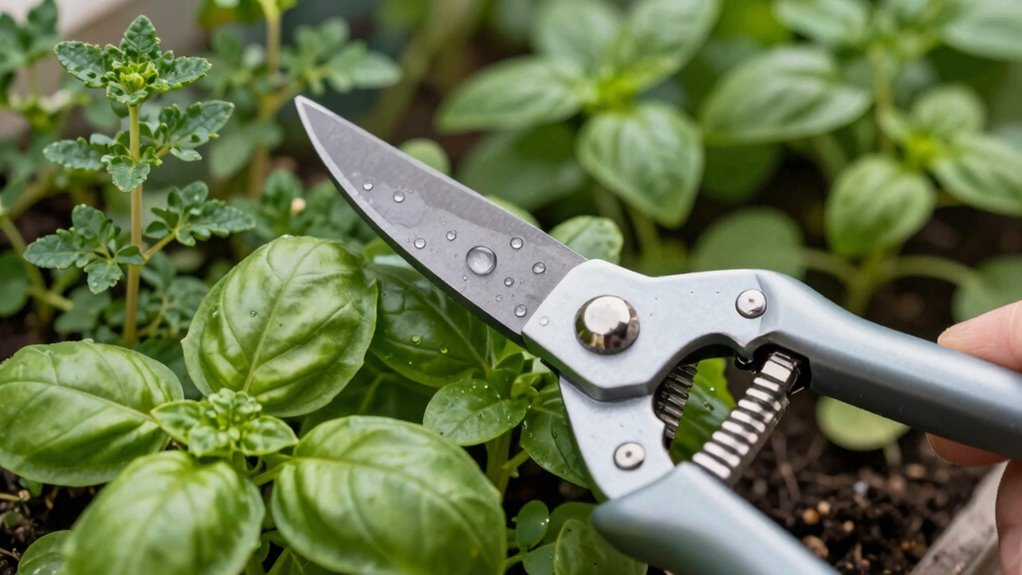
A essential aspect of garden maintenance is knowing which shears to use for different tasks. For herbs, lightweight and precise pruning shears work best, letting you make clean cuts without damaging delicate stems. If you’re working with seed plants or thicker stems, you might want to consider a sturdier, bypass-style shear that provides more strength and control. Bypass shears cut with two blades that pass by each other, creating smooth, clean cuts that heal quickly—ideal for herb gardening. On the other hand, anvil shears, which have a single sharp blade that presses down onto a flat surface, are better suited for deadheading or cutting through tougher, woody stems.
When selecting pruning shears, pay attention to the blade quality and handle design. Sharp, stainless steel blades stay sharper longer and make cleaner cuts, reducing stress on your plants. A comfortable, ergonomic handle reduces hand fatigue during extended gardening sessions and ensures you maintain good control. For frequent use, investing in high-quality shears can save you money in the long run because they tend to last longer and require less frequent sharpening or replacement. Additionally, choosing ergonomic design tools can help prevent strain injuries, especially during prolonged gardening activities. Recognizing the importance of proper tool maintenance can also improve your gardening efficiency and extend the lifespan of your tools. Incorporating quality tools into your gardening routine ultimately leads to healthier plants and more enjoyable gardening sessions. Furthermore, selecting tools with anti-corrosion properties can help maintain their effectiveness over time despite exposure to moisture and soil.
Another key aspect of tool selection is considering safety features. Look for shears with safety locks to prevent accidental cuts when not in use, and check that the blades are well-secured to avoid mishaps. Proper tool maintenance also plays a role in keeping your pruning shears performing effectively. Regularly cleaning and oiling the blades prevents rust and ensures smooth operation. Additionally, understanding the importance of blade maintenance can greatly extend the lifespan of your tools and maintain their cutting performance.
Ultimately, the right pruning shears are an investment in your garden’s health. They help you perform precise cuts that encourage strong growth and prevent diseases, making your garden maintenance more effective. By choosing tools that fit your needs and caring for them properly, you’ll keep your herb and seed gardens thriving season after season.
stainless steel pruning shears for herbs
As an affiliate, we earn on qualifying purchases.
As an affiliate, we earn on qualifying purchases.
Frequently Asked Questions
How Often Should I Sharpen My Pruning Shears?
You should sharpen your pruning shears every few months, but it depends on how often you use them. Regular sharpening guarantees clean cuts and prevents plant damage. Follow maintenance tips like cleaning the blades after each use and checking for rust. If you notice difficulty in cutting or jagged edges, it’s time to sharpen. Proper upkeep keeps your shears efficient and extends their lifespan, making garden work easier and more productive.
What Safety Precautions Should I Take When Pruning?
When pruning, you should wear protective gear like gloves and safety glasses to prevent injuries. Use proper technique by making clean, angled cuts to avoid damaging plants and reduce the risk of infection. Always hold the pruning shears securely and stay focused, especially when cutting thick or tough stems. Taking these safety precautions guarantees your hands and eyes stay protected, and your plants remain healthy and well-maintained.
Can Pruning Shears Be Used for Thick Branches?
Yes, pruning shears can be used for thick branch cutting if they have the right shear durability and are designed for heavy-duty tasks. Look for shears with sturdy, sharp blades and a strong build that can handle thick branches without damage. Keep in mind, specialized tools like pruning saws might be more effective for very thick branches, ensuring safe and efficient pruning without risking your shears.
What Are the Best Storage Practices for Pruning Shears?
To keep your pruning shears in top shape, store them in a dry, clean place, preferably in a dedicated storage organization like a tool rack or a case. Always clean and oil the blades after use to maintain shear maintenance. Avoid leaving them exposed to moisture, which can cause rust. Regularly inspect for damage, and tighten any loose screws to guarantee safety and longevity.
How Do I Prevent Rust on My Pruning Shears?
Prevent rust promptly by practicing proper pruning shear care. Wipe your shears with a clean cloth after use to remove moisture, then apply a light coat of oil to create a barrier against rust. Incorporate rust prevention techniques like storing in a dry place and avoiding moisture exposure. Shear maintenance tips include sharpening blades regularly and tightening screws, ensuring your tools stay in top shape and resist rusting over time.
As an affiliate, we earn on qualifying purchases.
Conclusion
Choosing the right pruning shears for your herb and seed garden isn’t just about tools—it’s about nurturing growth and cultivating success. Think of your shears as the scissors that cut the threads of chaos, weaving order into your garden’s future. With the right pair in hand, you’ll discover healthier plants, bountiful harvests, and a garden that thrives under your care. After all, isn’t a gardener’s touch the seed of every flourishing herb and seed?
bypass pruning shears for woody stems
As an affiliate, we earn on qualifying purchases.
As an affiliate, we earn on qualifying purchases.
As an affiliate, we earn on qualifying purchases.