
TL;DR
Planet Natural’s fall checklist recommends sorting spent tomato plants by their overall condition, not by one symptom. Healthy, normally declining vines can go into a well-managed home compost pile; plants with rapidly spreading lesions, unexplained wilt, decay or heavy pest problems are better kept out of a casual backyard pile. When the cause is uncertain, use local disposal guidance and choose the more cautious route.
Planet Natural’s fall checklist says gardeners should inspect spent tomato plants before deciding whether to compost them, send them to an accepting municipal program or put them in the trash. Its central guidance is to compost healthy, normally declining vines, but keep plants with concerning disease or pest signs out of a casual home pile, especially when the cause is unclear.

Get garden gear delivered free with Prime
- Fast, free delivery on millions of items
- Prime Video, Amazon Music and more included
- Member-only deals all year
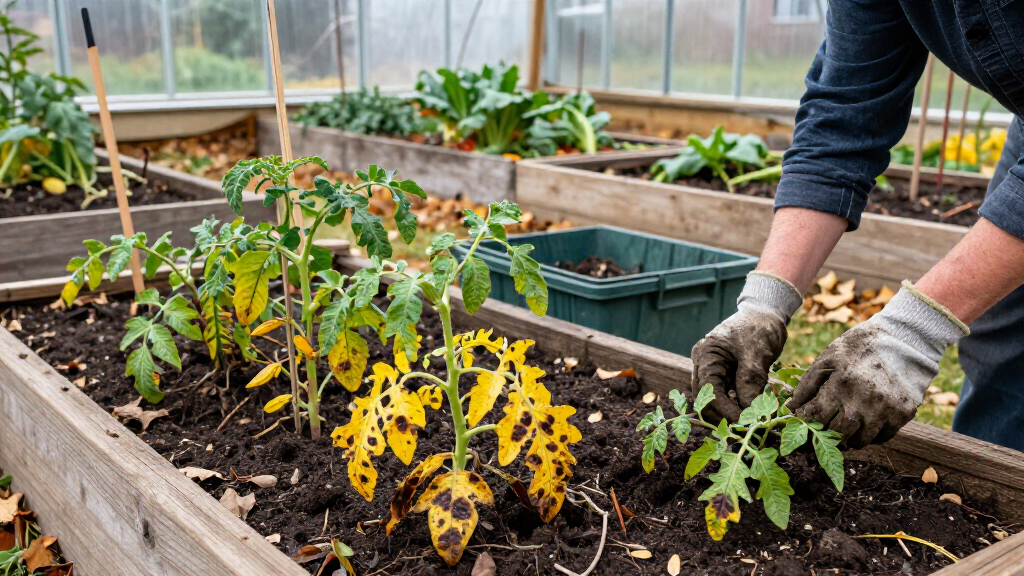
The report advises inspecting the whole plant on a dry day rather than making a disposal decision from one yellow or spotted leaf. Check leaves for spreading spots, large brown patches, powdery growth, chewing or webbing; inspect stems for dark or sunken lesions; look over fruit for soft rot or dark sunken areas; and examine the crown and roots if a plant has collapsed. The pattern across the bed can be more informative than any one symptom.
Vines with ordinary late-season aging, no concerning disease pattern, no serious fruit rot and no heavy pest infestation can go into an active home compost pile. The report recommends removing clips and ties, chopping the vines, and mixing them with dry, carbon-rich material such as leaves, straw or shredded paper. Keep the pile about as moist as a wrung-out sponge and turn it as it settles. Sound fruit can be composted with healthy vines; pick up rotting fruit separately.
Rapidly spreading lesions, water-soaked or dark stem damage, unexplained wilting when the soil is moist, decayed roots or crown, and unusual powdery growth or distorted, mosaic-patterned leaves are reasons to be conservative. These signs do not establish a diagnosis, but the report advises against putting suspicious plants in a small, cool backyard pile. Bag them for trash under local rules, or check whether a municipal compost program accepts diseased garden material before sending it there.
Choosing a Safer Fall Disposal Route
Spent vines and fruit can provide useful material for compost, but a disposal choice also affects what remains in the garden and what enters a household pile. The practical distinction is between apparently healthy plant material and debris with symptoms that could reflect disease or a serious pest problem. The checklist gives gardeners a way to avoid treating all end-of-season yellowing as proof of infection, while also avoiding the assumption that an ordinary backyard pile will sanitize questionable debris.
The report says a properly managed hot pile can reduce many plant pathogens, but backyard piles may not heat evenly or stay hot long enough to count as a reliable sanitation method. That makes the condition of the vines and the management of the pile relevant to the decision. For gardeners uncertain about a plant, keeping it out of the home pile is the cautious choice; municipal programs may have different rules and processes, so acceptance should be checked directly.
Products Worth Considering

KitchenAid Dual Smart Wireless Rechargeable Thermometers, KTH12BM

De'Longhi Classic Signature Espresso Machine with Adjustable Milk Frother

KitchenAid 5-Ply Stainless Steel Roasting Pan with Removable Rack, 15 x 11.5 in
As an affiliate, we earn on qualifying purchases.
How the Checklist Sorts Tomato Debris
Late-season yellowing and decline are not diagnoses by themselves. The report notes that drought stress, nutrient imbalance, herbicide injury and disease can produce overlapping symptoms. A single brown leaf therefore may not tell a gardener where the whole plant belongs. Looking at how quickly symptoms spread, whether stems or fruit are affected, and whether nearby tomatoes or peppers show the same problem can help guide a disposal decision without naming a pathogen.
For suspicious plants, the report suggests taking photographs and contacting a local nursery if a diagnosis would change next year’s planting, treatment or seed-saving plans. It also recommends recording where affected plants grew and avoiding moving soil from around a plant with unexplained wilt or root trouble to a new tomato bed. Those steps preserve useful information for future decisions rather than relying on composting to resolve an uncertain problem.
The supplied report discusses late blight as one possible concern when dark, water-soaked lesions spread quickly, particularly in cool, wet conditions. It also notes that early blight and Septoria leaf spot can produce brown lesions, while generic spots can overlap with bacterial diseases and other stresses. Appearance alone is not definitive; the checklist is intended to guide caution, not replace a confirmed diagnosis.
Symptoms Do Not Confirm a Disease
The checklist cannot determine from appearance alone whether a plant has late blight, another disease, pest damage or a noninfectious stress. Late-season decline can have several causes, and the source material does not provide a laboratory diagnosis or a specific test for gardeners to use. It also does not set a universal rule for which municipal facilities accept diseased garden waste; those policies vary and should be checked with the local program.
The supplied source excerpt ends during its discussion of powdery growth, distorted leaves and mosaic-like color, so it does not provide the full disease-by-disease guidance for those symptoms. Its general advice remains to treat unusual symptoms cautiously and seek local expertise when a diagnosis would affect future garden plans.
Check Local Rules Before Disposal
Before moving suspicious vines, gardeners should check local trash requirements and contact any municipal compost program they plan to use to confirm whether it accepts diseased garden material. For healthy vines, remove reusable ties and clips, chop the plants and mix them through a managed pile with dry, carbon-rich material. For plants with unexplained collapse, extensive lesions or substantial decay, the report recommends choosing a cautious disposal route rather than relying on an unverified backyard composting process.
For next season, keep notes on affected plants and their locations. If identifying the problem would change crop rotation or other garden decisions, photograph the symptoms and ask a local nursery or other knowledgeable local source for help.
Key Questions
Can healthy tomato vines go in a home compost pile?
Yes. The report says healthy vines with normal late-season decline can be composted in an active pile. Chop them, remove clips and ties, and mix them with dry, carbon-rich material rather than leaving a wet mat of vines on top.
Should tomato plants with possible blight go in backyard compost?
The report advises keeping broadly blighted or rapidly deteriorating plants out of a casual, cool home pile. A symptom does not confirm blight, but when the plant looks seriously affected and the cause is uncertain, bagging it for trash under local rules is the cautious option.
Does heating a compost pile kill every tomato disease?
No such guarantee is given. The report says a properly managed hot pile can reduce many plant pathogens, but backyard piles may not heat evenly or remain hot long enough to reliably sanitize questionable material.
Can diseased tomato plants go to municipal compost?
Possibly, but gardeners should check the program’s current acceptance rules. The source says municipal composting may be an option when a program explicitly accepts diseased garden material and processes it at commercial scale.
What should I do if I cannot identify the symptoms?
Do not treat one spotted leaf as a confirmed diagnosis. If the plant has concerning symptoms, keep it out of a small backyard pile; photograph the plant and contact a local nursery if identifying the cause would affect what you plant or do next year.
Source: rss