TL;DR

Get garden gear delivered free with Prime
- Fast, free delivery on millions of items
- Prime Video, Amazon Music and more included
- Member-only deals all year
A Grow Organic guide explains that “worms” in apples are usually insect larvae, commonly codling moth caterpillars or apple maggots. Their damage and winter hiding places differ, so gardeners should inspect several fruits, remove infested apples and choose barriers or monitoring methods suited to the identified pest.
Grow Organic’s gardening guide outlines how to identify and prevent two common causes of wormy apples: codling moth caterpillars and apple maggots. The advice matters to home growers because the insects leave different signs and require different controls; a hole or blemish alone may not identify the pest.
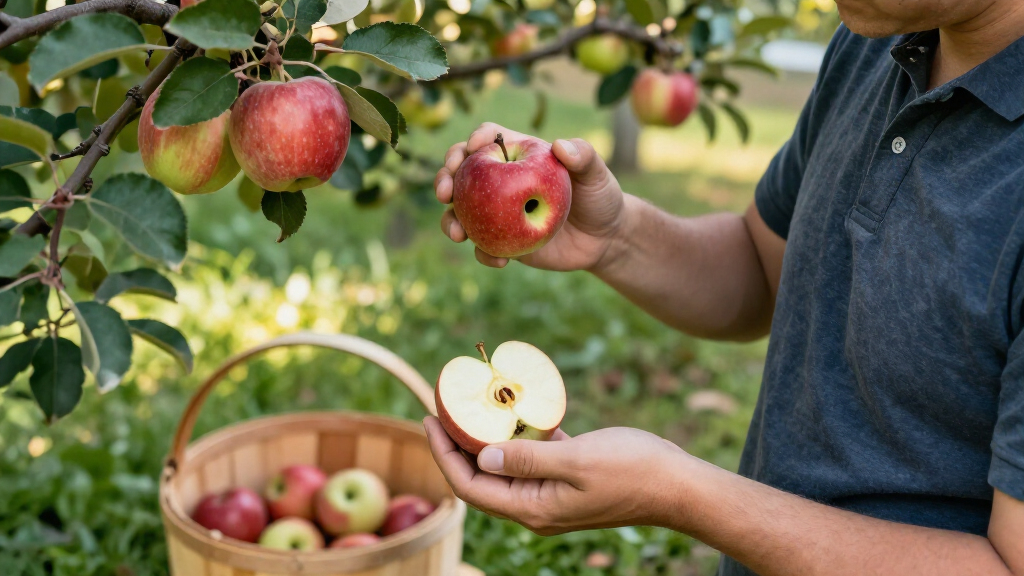
The guide describes a codling moth larva as a cream-to-pink caterpillar with a dark head, growing up to about three-quarters of an inch. Its tunnel often heads toward the core and seeds, and brown insect waste, called frass, may appear near the entry hole. Apple maggot larvae are described as small, pale and legless; their feeding can leave winding brown trails through the flesh and small dimples in the skin.
The insects also differ in where they spend winter. Codling moth caterpillars shelter in cocoons, often beneath loose bark, while apple maggots overwinter as pupae in soil. The guide says codling moths lay eggs on leaves or fruit, while adult apple maggot flies place eggs beneath the skin. Because other insects and non-insect damage can look similar, the article advises checking several apples and contacting a local Extension service when identification is uncertain.
Suggested steps include removing damaged fruit from branches and collecting fallen apples rather than leaving them under the tree or in a cool backyard compost pile. Gardeners can thin crowded clusters while fruit is small and bag healthy apples before pests enter. The guide cautions that barriers are not interchangeable: paper bags can exclude codling moth, while UC Integrated Pest Management guidance cited in the article says nylon bags are ineffective against that pest. Apple maggot barriers and traps should be selected for that insect.
Why Correct Pest Identification Matters
Identifying the likely insect can prevent gardeners from relying on a control that does not address the problem. Codling moth and apple maggot have different life cycles, and their larvae damage fruit in different ways. A barrier or treatment aimed at one pest may not work against the other.
Early inspection also helps growers protect fruit that is still undamaged. The guide recommends examining apples on several branches, including shaded clusters and the outer canopy, and cutting suspect fruit to look for tunnels. Already damaged apples cannot be repaired by covering them, so bagging is a preventive measure, not a remedy. Removing infested and fallen fruit can also reduce places where pests may survive.
For homeowners with a small tree, these steps can help guide decisions before using pesticides. Monitoring traps may help show when adult insects are active, but the article warns that codling moth pheromone traps do not reliably protect a backyard crop by themselves. A correct identification and local timing information matter if a grower considers a labeled treatment.
As an affiliate, we earn on qualifying purchases.
How the Two Pests Differ
The source presents its advice as a home-gardening guide, not a report of a new infestation or a change in official policy. It points readers to damage photographs from Colorado State and an apple maggot guide from Minnesota, and cites Utah State Extension for thinning and bagging methods. These references support identification and management advice; the source does not report a study measuring how well the methods work across all gardens.
Seasonal timing varies by pest and location. The article says warm regions may have more codling moth generations during the growing season than cooler areas. It gives Minnesota’s apple maggot activity—from late June into early July and through summer—as a regional example only, not a national treatment calendar. Temperature, rain and local pest history can affect when monitoring is useful.
Monitoring methods differ as well. Pheromone traps are used to track male codling moths, while apple maggot monitoring uses red sticky spheres. A paper trunk wrap with a sticky coating targets crawling insects, but the guide says it will not stop moths or flies from reaching fruit. It also reports that UC IPM no longer recommends cardboard trunk banding for home codling moth control.
““An entry mark can hide a tunnel, so examine several fruits before choosing treatment.””
— Grow Organic
As an affiliate, we earn on qualifying purchases.
What a Hole Cannot Confirm
A skin hole, a spot or a damaged apple does not by itself confirm which pest is responsible. The source says birds and other insects can also cause open wounds, and that similar damage may need a local Extension specialist’s assessment. It recommends photographing the skin, the cut surface and any larva beside a ruler, while recording the date and apple variety.
The source does not provide a universal spray date or a single treatment for every orchard. The Minnesota timing example applies to that region, while codling moth activity can differ with climate and generations. It also does not establish that any one method will prevent all fruit loss. Gardeners considering a pesticide should confirm the pest and use only a product labeled for apples and that pest, following the label’s directions and protective-equipment requirements.
As an affiliate, we earn on qualifying purchases.
Monitor Fruit Through the Season
For current control decisions, growers can check local Extension alerts and monitor traps regularly rather than relying on a fixed calendar. The guide says codling moth treatment timing should target the vulnerable period before larvae enter fruit, with local traps and temperature models helping to inform timing. Apple maggot traps should also be checked regularly during local fly activity.
Gardeners can continue inspecting fruit, replace torn bags and keep closures secure through harvest. After harvest, they can remove fallen or damaged apples and keep notes on which trees showed symptoms, helping them plan earlier checks the following season. Any pesticide use should follow the product label, including specified protective equipment and crop and pest directions.
As an affiliate, we earn on qualifying purchases.
Key Questions
What kinds of larvae commonly cause worms in apples?
The Grow Organic guide identifies codling moth caterpillars and apple maggots as common causes. The term “worm” refers to insect larvae, not earthworms.
How can I tell codling moth damage from apple maggot damage?
Codling moth damage often includes a tunnel toward the core and seeds, sometimes with brown frass near the entry. Apple maggot feeding can leave winding brown trails in the flesh and small dimples in the skin. Inspect several apples; a hole alone is not definitive.
Will a trap protect my apple tree from worms?
Not by itself, according to the guide. Codling moth pheromone traps help monitor adult activity and treatment timing but are not described as reliable standalone protection for a backyard crop.
Can I bag an apple that already has a hole?
No. The guide says covering fruit does not rescue an apple that is already damaged. Bag healthy, undamaged fruit before larvae enter, and remove infested apples.
When should I spray apple trees?
There is no universal date in the source. Timing depends on the pest and local conditions; consult local Extension information and use only a product labeled for apples and the identified pest, following its directions and protective-equipment requirements.
Source: rss
Fall Picks
fall essentials
As an affiliate, we earn on qualifying purchases.