
TL;DR

Get garden gear delivered free with Prime
- Fast, free delivery on millions of items
- Prime Video, Amazon Music and more included
- Member-only deals all year
Grow Organic’s guide says the National Center for Home Food Preservation recommends removing a 1/16-inch slice from the blossom end when a tested pickle recipe directs it, because blossom tissue may contain enzymes that soften pickles. The guide also covers growing and harvesting pickling cucumbers, while stressing that safe canning depends on following a tested recipe without changing its ingredient proportions.
Grow Organic has published a guide to growing pickling cucumbers and preparing them for pickling, emphasizing the National Center for Home Food Preservation’s recommendation to remove a 1/16-inch slice from the blossom end when a tested pickle recipe calls for it. The step is intended to help limit softening in finished pickles; the guide also advises growers to harvest young, firm fruit and follow tested recipes for safe canning.
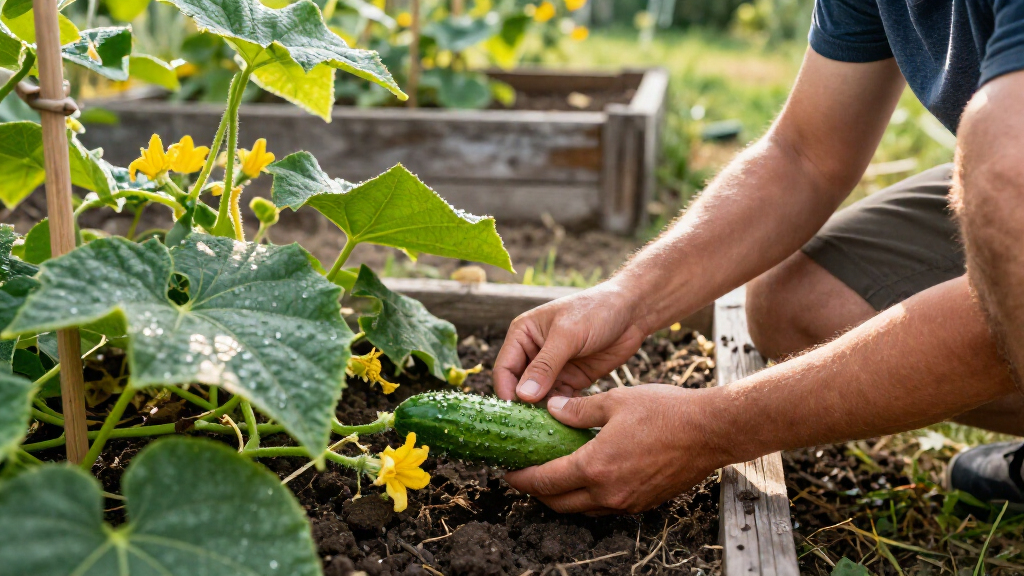
The blossom end is opposite the stem end: it is where the flower was attached. If the stem is still on the cucumber, the opposite end is the blossom end. If the stem is missing, the flower scar can help identify it. Grow Organic says the National Center for Home Food Preservation recommends trimming 1/16 inch from that end for tested pickle recipes because blossom tissue may contain enzymes that soften pickles.
The trimming instruction concerns pickle texture, not cucumber bitterness. The guide says to use the directions in a tested recipe rather than treating the trim as a general remedy for bitter fruit. For shelf-stable canned pickles, it warns against changing the recipe’s vinegar, food or water proportions. Ingredients and cutting styles vary by recipe; cucumbers may be kept whole or prepared as spears, strips or slices.
For growing, the guide recommends choosing a pickling variety and waiting until frost danger has passed and the soil has warmed before planting. Cucumbers need sun, well-drained soil and steady moisture, with space to spread or a structure to climb. Harvesting regularly while fruit is young and firm helps avoid leaving oversized cucumbers on the vine; the guide says varieties differ, so growers should check seed-packet information for maturity timing.
Texture and Safe Pickle Preparation
The blossom-end detail is small, but it addresses a practical concern for people preserving cucumbers: soft pickles. The cited recommendation gives home cooks a specific trimming measurement to follow when it appears in their tested recipe. It also separates that preparation step from questions about bitterness, which the guide does not say trimming will resolve.
The food-safety point extends beyond trimming. A recipe intended for shelf-stable canning depends on its tested proportions and method. Changing the amount of vinegar or water can take the preparation outside the recipe’s validated instructions. Readers who want a different flavor or style should choose a tested recipe designed for that result, rather than adjusting the proportions of a canning recipe themselves.
For gardeners, the advice connects harvest decisions with the finished product. Pickling cucumbers are commonly picked young and firm, and frequent harvesting can help prevent fruit from becoming oversized on the vine. The guide offers growing pointers, but it does not claim that one variety or growing method guarantees a particular pickle texture.
As an affiliate, we earn on qualifying purchases.
From Vine to Pickling Jar
Pickling cucumbers are often shorter and thinner-skinned than many slicing varieties, though characteristics vary. Grow Organic’s report links plant care with kitchen preparation: give vines warm conditions, sunlight, well-drained soil and regular moisture, then use fresh, good-quality fruit. Planting dates depend on local weather; the guide says to wait until frost danger has passed and soil has warmed rather than giving one calendar date for all regions.
The time from flowering to harvest is not fixed. The source says cucumbers may grow quickly after successful pollination and that a fruit may be harvestable in about seven days under favorable conditions, but variety and weather affect the pace. It also notes that male flowers can appear before female flowers; female flowers have a small cucumber-shaped ovary at the base. Poor pollination can prevent fruit from developing.
Pickles can be made using different methods, including sweet, fermented or refrigerator preparations. The exact ingredients and handling depend on the method. For canned products intended to be stored at room temperature, the guide directs readers to tested preservation guidance and cautions against relying on informal ratios as a substitute for a tested recipe.
“For canned pickles, never change its vinegar, food, or water proportions.”
— Grow Organic
cucumber blossom end trimming knife
As an affiliate, we earn on qualifying purchases.
As an affiliate, we earn on qualifying purchases.
Recipe Details and Growing Conditions
The source does not provide a publication date, identify a particular tested pickle recipe, or establish that every recipe requires the same trimming step. It says to remove the blossom end when the tested recipe directs it. The extent to which trimming changes texture in any individual batch is not quantified in the material.
Growing timelines and harvest size also depend on the cucumber variety, weather and local conditions. The guide provides general care advice rather than a region-specific planting calendar. It does not identify one universal cucumber maturity period or a single harvest size suitable for every recipe.
As an affiliate, we earn on qualifying purchases.
Follow the Recipe at Harvest
Growers should check their seed packets and local conditions to time planting, then monitor vines and harvest fruit regularly while it is firm. At preparation, identify the flower end opposite the stem and follow the chosen tested pickle recipe for trimming, cutting and processing. For shelf-stable canning, use a recipe from a recognized food-preservation source and do not alter its specified proportions. The source material gives no announced follow-up or additional reporting date.
As an affiliate, we earn on qualifying purchases.
Key Questions
Which end of a cucumber is the blossom end?
It is the end opposite the stem, where the flower was attached. If the stem is gone, look for the flower scar.
How much should be trimmed from the blossom end?
The guide cites the National Center for Home Food Preservation’s recommendation to remove a 1/16-inch slice when a tested pickle recipe calls for it.
Does trimming the blossom end prevent bitterness?
The guide describes trimming as a step aimed at pickle texture, because blossom tissue may contain enzymes that soften pickles. It does not present trimming as a way to prevent bitterness.
Can I change a canned pickle recipe’s vinegar and water amounts?
For shelf-stable canned pickles, the guide says not to change the tested recipe’s vinegar, food or water proportions. Use a tested recipe intended for the style of pickle you want.
When should pickling cucumbers be planted?
Plant after frost danger has passed and the soil has warmed. The suitable timing varies by local weather and growing conditions.
Source: rss
Fall yard work Picks
leaf blowers
As an affiliate, we earn on qualifying purchases.