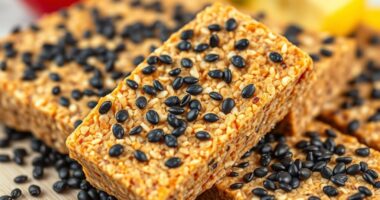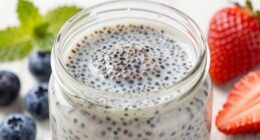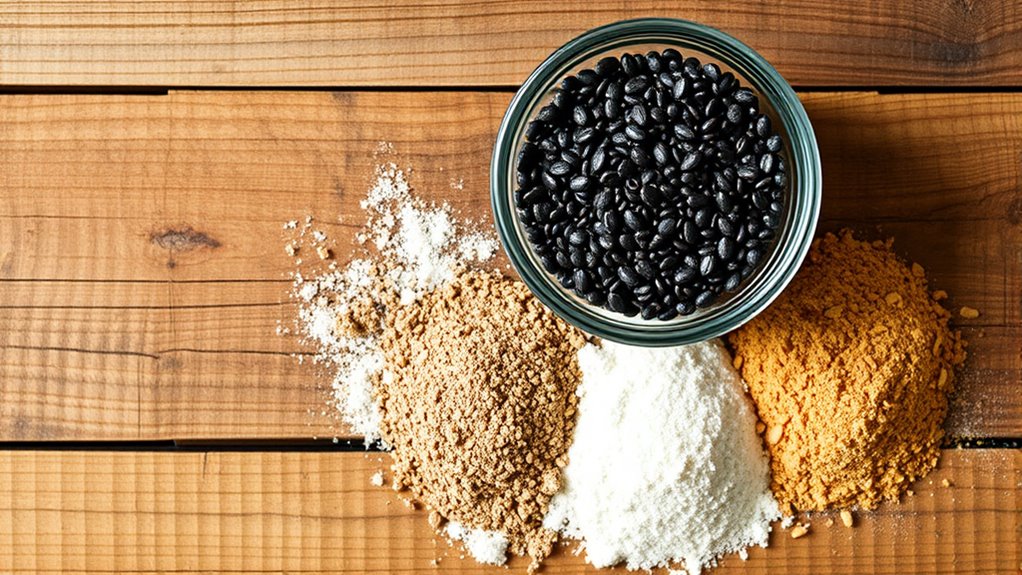
Combining chia seeds with various gluten-free flours enhances both nutrition and texture in your baked goods. You can add whole chia seeds or soak them to create a gel that acts as a natural binder, improving moisture and structure. Pairing chia with flours like almond, coconut, or rice allows you to customize the flavor and consistency. Experimenting with different ratios helps achieve the perfect balance of health benefits and delicious results—explore further to optimize your baking creations.
Key Takeaways
- Combining chia seeds with almond flour adds crunch and enhances nutty flavor, improving texture and nutrition.
- Using soaked chia gel with coconut flour increases moisture, reduces density, and promotes a tender crumb.
- Mixing chia seeds with rice flour boosts cohesion, resulting in a more satisfying and less crumbly gluten-free baked good.
- Adjusting chia-to-flour ratios allows customization of texture, from moist and chewy to light and airy.
- Integrating chia seeds with various gluten-free flours enhances nutritional content, fiber, and health benefits without compromising taste.
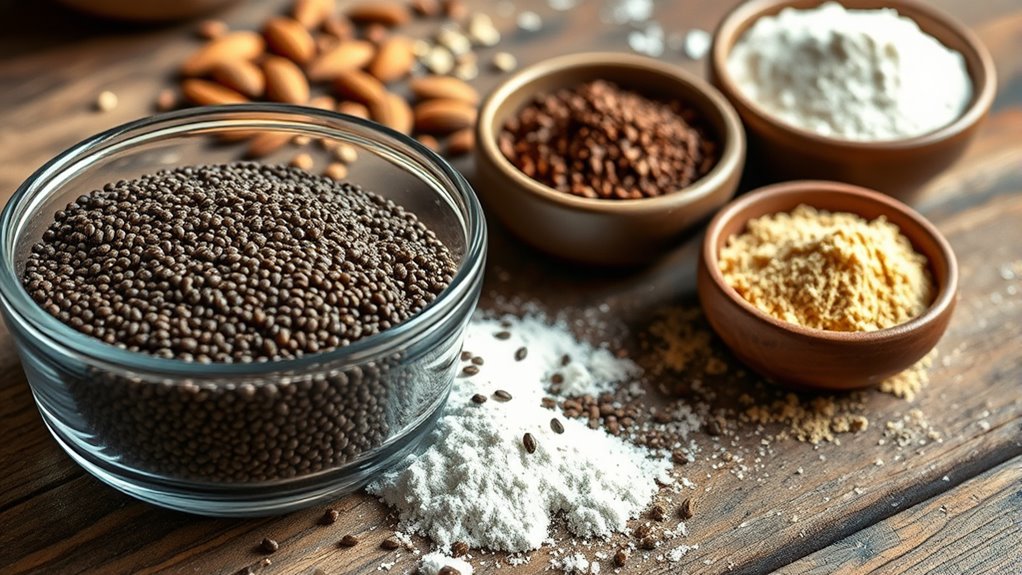
When baking gluten-free, combining chia seeds with other gluten-free flours can boost both nutrition and texture. Chia seeds are a powerhouse of nutritional benefits, packed with omega-3 fatty acids, fiber, protein, and antioxidants. By integrating them into your baking, you not only enhance the overall health profile of your treats but also improve their structure. The gelatinous quality of chia when soaked creates a natural binder that can replace eggs, making your baked goods more cohesive and moist. This sticky property markedly contributes to texture enhancement, especially in recipes that otherwise might turn out crumbly or dry. Incorporating chia seeds can also help balance humidity levels, ensuring your baked goods stay fresh longer. Using chia seeds alongside flours like almond, coconut, or rice flour allows you to tailor the texture to your liking. For instance, when combined with almond flour, chia can add a slight crunch that balances well with the nutty flavor. In recipes with coconut flour, chia helps mitigate the dry, dense feeling that coconut alone can produce by adding moisture and a bit of chewiness. Rice flour, which tends to produce a light and airy crumb, benefits from chia’s ability to improve cohesion, giving baked goods a more satisfying bite. So, whether you’re making muffins, bread, or pancakes, adding chia seeds can lead to a more pleasing, well-rounded texture. Beyond texture, chia seeds also boost the nutritional profile of your baked goods without altering the flavor too much. They’re a simple way to incorporate extra fiber, which aids digestion and promotes fullness. The healthy fats from chia contribute to heart health, while the protein content supports muscle repair and overall energy levels. When you bake with chia, you’re creating a more nourishing treat that supports your dietary goals while still satisfying your sweet tooth. This makes them especially valuable if you’re following a gluten-free or plant-based diet, where nutrient density can sometimes be limited. Incorporating chia seeds into your gluten-free baking routine is straightforward. You can add whole seeds directly or soak them in water beforehand to create a gel that acts as an egg replacer. This not only helps with binding but also ensures even distribution throughout your batter. Experimenting with different ratios of chia to flour allows you to find the perfect balance of nutrition and texture for your recipes. Additionally, selecting the right gluten-free flours can influence the overall outcome, making chia a versatile addition. Overall, combining chia seeds with other gluten-free flours is an easy, effective way to elevate your baked goods, making them healthier, more satisfying, and better in texture.

Sanar Naturals Chia Seeds | High Fiber Supplement, GLP-1 Support, Plant-Based Protein with Omega-3 | Superfood for Smoothies Baking and Oatmeal | Vegan, Non-GMO, Raw Bulk, Gluten Free, 10 oz
SUPRPORTS HEALTHY DIET: Natural source of fiber and lignans to support digestive health and help promote your weight…
As an affiliate, we earn on qualifying purchases.
As an affiliate, we earn on qualifying purchases.
Frequently Asked Questions
Can Chia Seeds Replace Eggs in Gluten-Free Baking?
Yes, chia seeds can replace eggs in gluten-free baking. When you mix 1 tablespoon of chia seeds with 3 tablespoons of water, it creates a gel-like consistency that works as an egg substitute. This gel acts as a binding agent, helping ingredients stick together. Use this chia seed mixture in recipes to improve texture and structure, especially in muffins, pancakes, or cookies, without sacrificing taste or quality.
Are There Flavor Differences When Combining Chia Seeds With Different Flours?
Sure, flavor variations and texture differences jump right out when you mix chia seeds with different flours—like a surprise party for your taste buds! Each flour brings its own personality: almond flour adds nuttiness, coconut flour gives a tropical twist, and rice flour keeps it light. Chia seeds blend in, but expect subtle taste shifts and a slightly different texture, making your baked goods uniquely delightful or confusing—depending on your perspective.
How Do Chia Seeds Affect the Shelf Life of Gluten-Free Baked Goods?
Chia seeds help extend the shelf life of your gluten-free baked goods by providing preservation benefits and moisture retention. They absorb liquid, keeping baked items moist longer and slowing staling. Plus, their natural antioxidants can help prevent spoilage. When you add chia seeds, you’ll notice your treats stay fresher, softer, and more enjoyable over time, reducing waste and enhancing overall freshness.
Do Chia Seeds Improve the Nutritional Profile of Gluten-Free Flours?
Imagine you’re in the Renaissance, discovering new ways to enhance your recipes. Chia seeds definitely improve the nutritional profile of gluten-free flours by adding fiber, omega-3s, and protein, offering a nutritional enhancement. They also boost texture, making baked goods moister and more cohesive. By incorporating chia seeds, you not only elevate your baked creations’ health benefits but also achieve better structure and mouthfeel, transforming simple gluten-free treats into nourishing delights.
Can Chia Seeds Be Used in Savory Gluten-Free Recipes?
Yes, you can definitely use chia seeds in savory gluten-free recipes. They add a nice texture and act as a natural binder, making them great for savory applications like veggie burgers, bread, or thickening sauces. When flavor pairing, combine chia seeds with herbs, spices, or savory ingredients like garlic and onions to enhance their taste. Just remember to soak them beforehand for better incorporation and a smoother texture.
Sanar Naturals Chia Seeds | High Fiber Supplement, GLP-1 Support, Plant-Based Protein with Omega-3 | Superfood for Smoothies Baking and Oatmeal | Vegan, Non-GMO, Raw Bulk, Gluten Free, 10 oz
SUPRPORTS HEALTHY DIET: Natural source of fiber and lignans to support digestive health and help promote your weight…
As an affiliate, we earn on qualifying purchases.
As an affiliate, we earn on qualifying purchases.
Conclusion
By combining chia seeds with other gluten-free flours, you create a versatile, nutritious, and flavorful blend. You enhance texture, boost health benefits, and expand your baking options. You experiment with flavors, improve consistency, and elevate your recipes. You embrace creativity, embrace variety, and enjoy delicious results. With chia seeds and gluten-free flours, you transform simple ingredients into exciting, wholesome treats that satisfy your cravings and nourish your body.

Pride of India- Triple Omega Superseed Flour 1 lbs (454 gm) Nutty Earthy Taste Milled in Small Batches | Chia Flax Sesame Seed mix | Ideal for Muffins Smoothies Oatmeal Pudding | Vegan, Gluten-Free
Nutrient-Rich Fusion: Experience the ultimate blend of nutrition and flavor with our Triple Omega Superseed Flour. Crafted from…
As an affiliate, we earn on qualifying purchases.
As an affiliate, we earn on qualifying purchases.

Viva Naturals Organic Coconut Flour, 4 lbs (1.81 kg) – Gluten Free Flour for Keto, Paleo & Vegan Baking, Good Source of Fiber, Low Fat, Non-GMO, Unbleached & Unrefined
✔️ FRESH & FLAVORFUL ORGANIC FLOUR – Gently milled from some of the freshest organic coconuts, our coconut…
As an affiliate, we earn on qualifying purchases.
As an affiliate, we earn on qualifying purchases.