
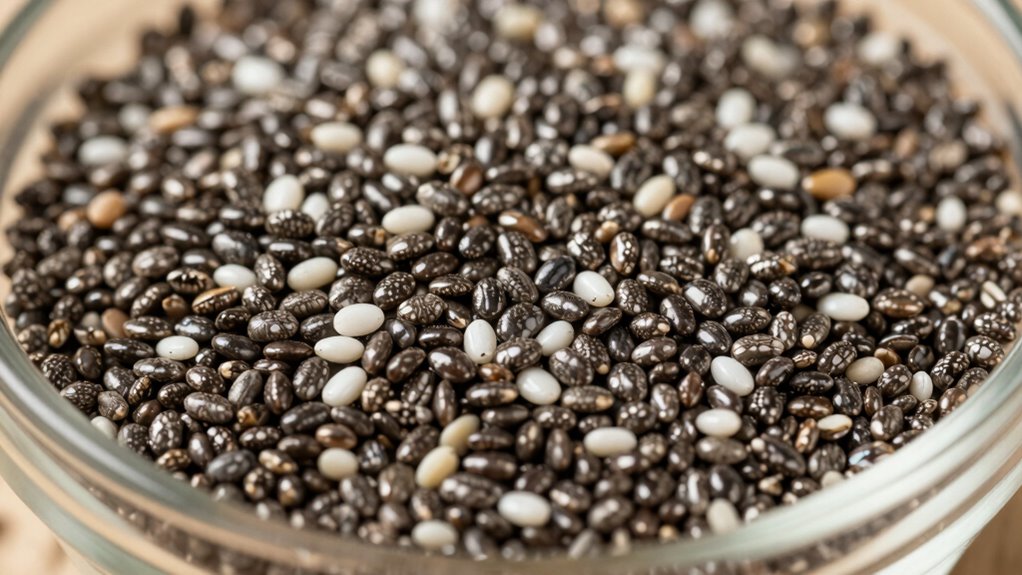
Chia seeds come in black and white varieties, both with a neutral taste and mild, nutty flavor that won’t interfere with your recipes. They are tiny and slightly crunchy when dry, but quickly turn soft and gel-like when soaked in liquid, adding a satisfying texture. Their versatile appearance and taste make them perfect for any dish or drink you want to improve with extra nutrients. Keep exploring to discover even more ways to enjoy these incredibly adaptable seeds.

Get garden gear delivered free — and shop member deals
- Fast, free delivery on millions of items
- Access to Prime Big Deal Days deals on October 6–7
- Prime Video, Amazon Music and more included
Key Takeaways
- Chia seeds are available in black and white, both with similar nutritional profiles but varying in appearance and mild flavor.
- They have a neutral, nutty taste that does not overpower dishes.
- When dry, they are slightly crunchy; soaking creates a soft, gel-like texture.
- The color of chia seeds can influence the visual appeal of recipes, with white seeds offering a milder look.
- Their versatile texture and flavor make them suitable for a wide range of culinary applications.
Have you ever wondered what makes chia seeds so popular among health enthusiasts? One key reason is their impressive nutritional benefits. These tiny seeds pack a punch with fiber, omega-3 fatty acids, protein, vitamins, and minerals. Consuming chia seeds regularly can support digestion, boost energy levels, and promote heart health. Their high fiber content helps you feel full longer, making them a smart addition to weight management plans. Plus, their omega-3s contribute to brain health and reduce inflammation. Because they’re rich in antioxidants, they also help combat oxidative stress. All these benefits make chia seeds a versatile superfood that fits into various diets and lifestyles.
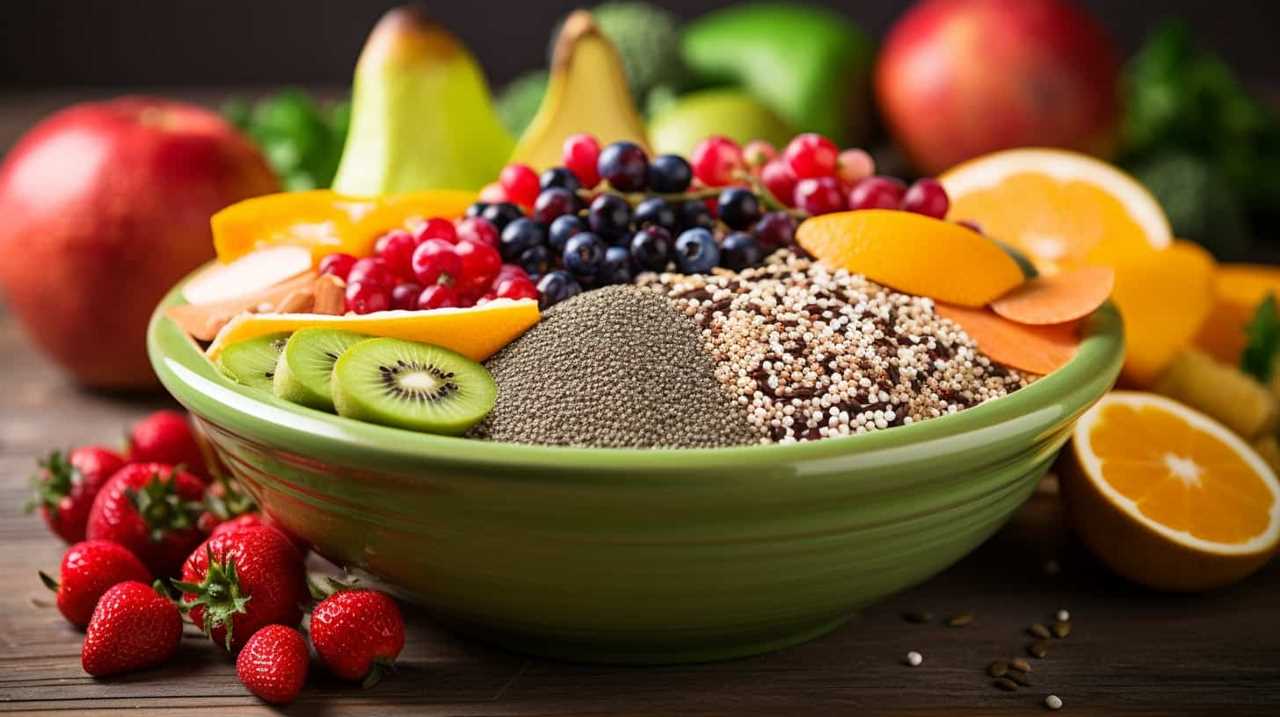
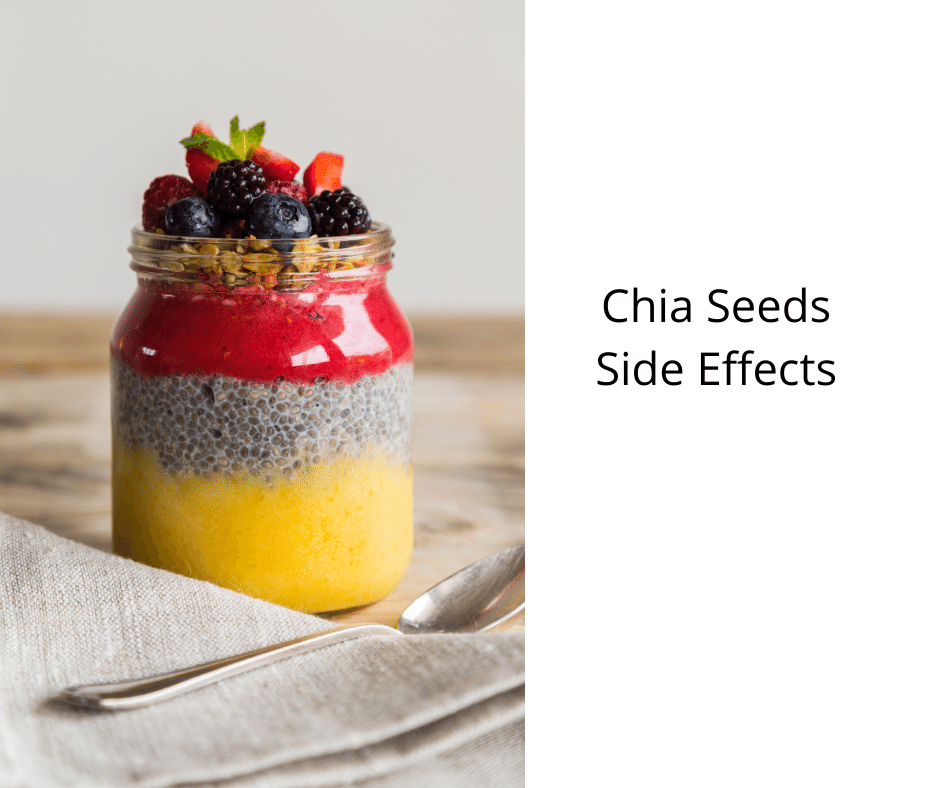
When it comes to culinary uses, chia seeds are incredibly adaptable. You can sprinkle them over yogurt, oatmeal, or salads for added crunch and nutritional value. They work well as an egg substitute in baking—just soak them in water until they form a gel, then use as a binder. This gel can be mixed into smoothies, puddings, or energy bars for a boost of texture and nutrients. Many people enjoy making chia pudding by soaking the seeds in milk or plant-based alternatives overnight; the seeds swell and develop a pudding-like consistency, which you can flavor with fruits, honey, or spices. Chia seeds also blend smoothly into smoothies, adding thickness without overpowering the flavor.
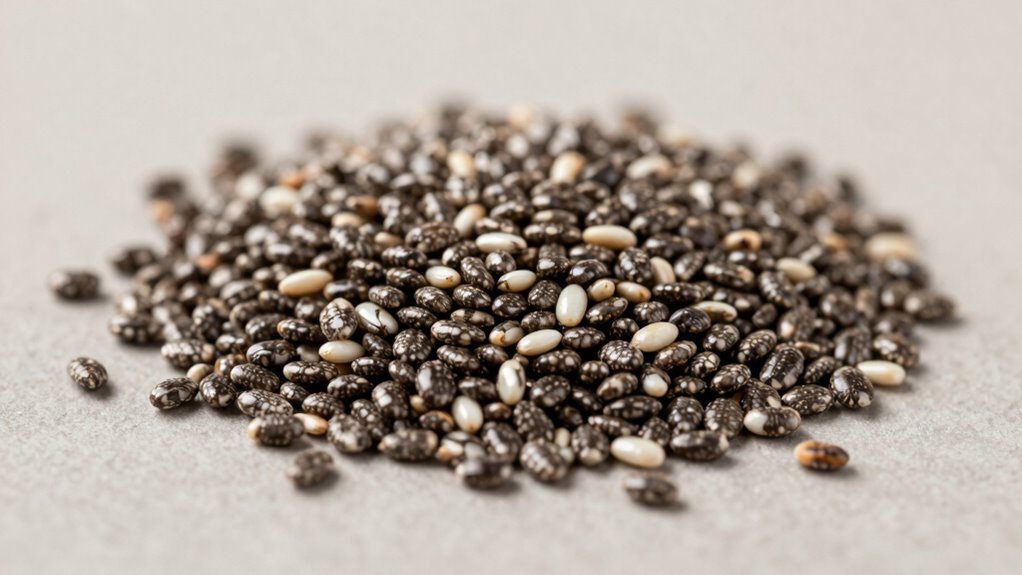
In terms of their appearance, chia seeds come in various colors, but black and white are most common. Black chia seeds tend to be more widely available and are often used in recipes without altering the color of the dish. White chia seeds are milder in flavor and sometimes preferred for aesthetic reasons, especially in light-colored recipes. Despite their different hues, both types share similar nutritional profiles and taste neutralities. Speaking of taste, chia seeds have a very mild, nutty flavor that doesn’t interfere with the taste of your dishes. Their texture is slightly crunchy when dry but transforms into a soft, gel-like consistency when soaked. This unique texture makes them a popular ingredient for adding a satisfying mouthfeel to various recipes.
As an affiliate, we earn on qualifying purchases.
Frequently Asked Questions
Do Chia Seed Colors Indicate Different Nutritional Benefits?
Chia seed colors do indicate some nutritional variations, but these differences are generally minimal. Darker seeds, like black or brown, may have slightly higher antioxidant levels, while lighter seeds, such as white or cream, often come from different harvesting differences. Overall, color isn’t a reliable indicator of nutritional benefits. Focus on high-quality seeds regardless of color, as they all offer beneficial omega-3s, fiber, and protein.
Can the Taste of Chia Seeds Vary by Color?
The taste of chia seeds doesn’t substantially vary by color because the flavor is primarily mild and nutty across all shades. During chia seed cultivation and seed harvesting methods, flavor differences are minimal, but some minor variations can occur due to processing or storage. You can enjoy any chia seed color without worrying about taste differences, focusing instead on nutritional benefits and how they complement your recipes.
Are There Any Flavor Differences Between Black and White Chia Seeds?
Black and white chia seeds don’t have significant flavor differences; both offer mild, nutty taste profiles. Their culinary versatility means you can use either in smoothies, puddings, or baked goods without altering the flavor. The main distinction lies in appearance, which can affect presentation. So, choose based on visual preference or availability, knowing that their flavor profiles are fundamentally the same and won’t impact your dish’s taste.
How Does Chia Seed Texture Change When Soaked?
Imagine chia seeds as tiny ships that transform upon sailing into water. When soaked for about 10-15 minutes, their firm seed size dissolves into a gel-like texture, coating each vessel with a smooth, slippery layer. The longer soaking time, up to an hour, deepens this change, making the seeds softer and more palatable. You’ll notice their once-crisp exterior becomes a chewy, pudding-like consistency, perfect for adding to your favorite dishes.
Are Certain Chia Seed Colors More Popular for Specific Recipes?
Certain chia seed colors are more popular for specific recipes due to their visual appeal and culinary versatility. Black chia seeds blend seamlessly into smoothies, puddings, and baked goods, adding contrast and texture. White chia seeds are often preferred for lighter dishes, like desserts or salads, where their subtle appearance enhances presentation. The color variety allows you to customize your recipes creatively, making chia seeds a versatile ingredient suitable for a range of culinary applications.
As an affiliate, we earn on qualifying purchases.
Conclusion
Think of chia seeds as tiny black or white stars waiting to brighten your culinary universe. Their color hints at the universe’s mystery, their taste a subtle whisper of earth’s bounty, and their texture a gentle ripple on your palate. Embrace these seeds, and you hold a universe of health and flavor in your hands—like holding a handful of night sky, full of endless possibilities waiting to be explored.
As an affiliate, we earn on qualifying purchases.
As an affiliate, we earn on qualifying purchases.
Fall Picks
fall essentials
As an affiliate, we earn on qualifying purchases.