Adding chia seeds to your pregnancy diet can boost your digestive health thanks to their high fiber content, helping prevent constipation and support gut function. However, it’s important to soak them first to avoid choking and consume in moderation to prevent bloating or diarrhea. Staying well-hydrated is also essential, as they absorb water and expand. Continue exploring to learn how to enjoy chia seeds safely and maximize their benefits during pregnancy.
Key Takeaways
- Chia seeds’ high fiber content supports digestion and can help prevent constipation during pregnancy.
- Soaking chia seeds before consumption improves digestibility and reduces choking risks.
- Excessive intake may cause bloating or diarrhea; moderation is essential.
- Hydration is crucial, as chia seeds absorb water and expand in the digestive tract.
- Rare allergies may cause digestive or allergic reactions; monitor for adverse symptoms.
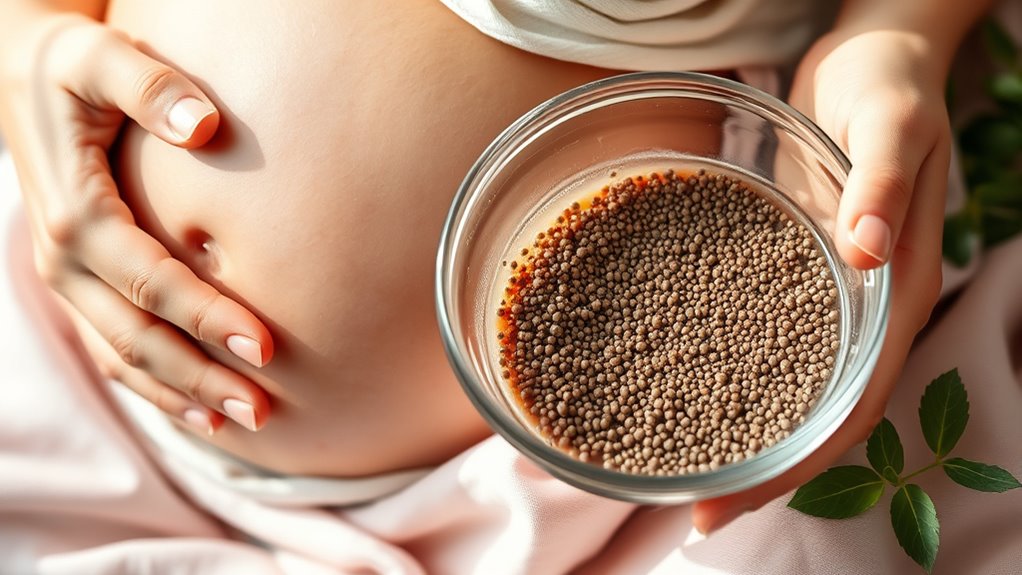
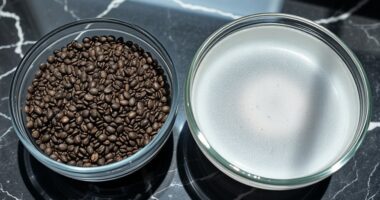
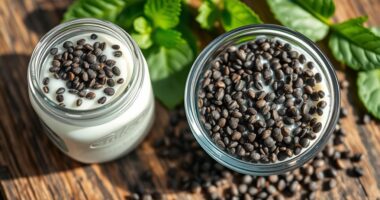
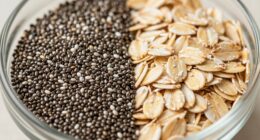
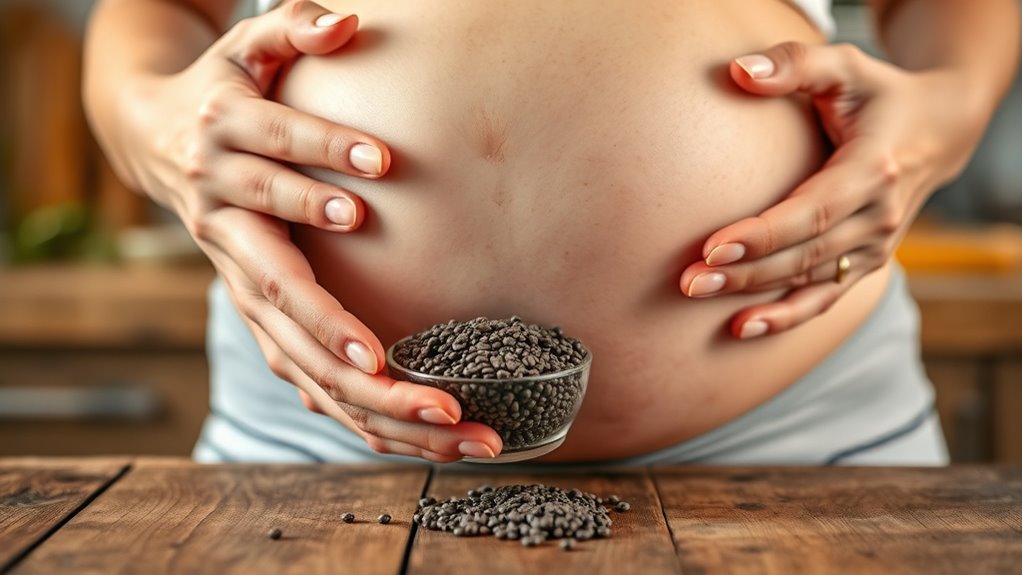
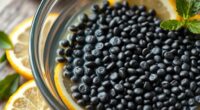
Chia seeds have become a popular superfood for many, including pregnant women looking to boost their nutrition. These tiny seeds are packed with nutritional benefits that can support your pregnancy journey. Rich in omega-3 fatty acids, fiber, protein, vitamins, and minerals like calcium and magnesium, chia seeds offer a nutrient-dense addition to your diet. Incorporating them can help improve your overall health and provide essential nutrients that support fetal development. Their high fiber content can also aid in maintaining healthy digestion, which is especially important during pregnancy when digestive issues are common. Additionally, the soluble fiber in chia seeds absorbs water, forming a gel-like substance that can further support digestion and hydration. However, before adding chia seeds regularly, it’s crucial to think about potential allergies. Although allergies to chia seeds are rare, some individuals may experience reactions such as skin rashes, stomach upset, or respiratory issues. If you notice any unusual symptoms after consuming chia, it’s best to consult your healthcare provider to rule out sensitivities or allergies. When including chia seeds in your diet, start with small quantities to observe how your body reacts. Soaking the seeds before eating can improve digestibility and reduce the risk of choking or digestive discomfort. You can add soaked chia to smoothies, yogurt, oatmeal, or baked goods for a nutritious boost. Remember, even though chia seeds are generally safe, moderation is key, especially during pregnancy. Overconsumption might lead to gastrointestinal issues like bloating or diarrhea, due to their high fiber content. Also, because chia seeds can absorb many times their weight in water, it’s important to stay well-hydrated when consuming them to prevent dehydration or choking hazards. As with any supplement or dietary change during pregnancy, it’s wise to discuss your plans with your healthcare provider. They can help verify that adding chia seeds aligns with your overall nutritional needs and doesn’t interfere with any medical conditions or medications. Keep in mind that while chia seeds can be a valuable part of a balanced diet, they shouldn’t replace other crucial nutrients from a variety of foods. Incorporating omega-3 fatty acids found in chia seeds can further enhance your nutritional intake during pregnancy. Pay attention to your body’s responses and enjoy this versatile, nutrient-rich option that can support your health during pregnancy, but awareness of potential allergies and proper consumption practices will help you enjoy their benefits safely.

Patigrow 120-Cell Self-Watering Seed Starter Tray with Grow Light, Seed Starter Kit with 4.07” Humidity Dome, Indoor Seedling Starter Tray, Seed Starting Trays for Plant Germination, Seeds Growing
Pro Grow Lights with Advanced Chips: Equipped with 56 high-efficiency beads per tray, these LED strips simulate natural...
As an affiliate, we earn on qualifying purchases.
Frequently Asked Questions
Can Chia Seeds Help With Morning Sickness During Pregnancy?
Chia seeds can help with morning sickness by improving digestive regulation and nutrient absorption. Their high fiber content soothes your stomach and prevents constipation, which is common during pregnancy. The gel-like texture of soaked chia seeds makes them easy to digest, reducing nausea. Including them in your diet might ease morning sickness symptoms, but always consult your healthcare provider to make certain they’re safe and suitable for your pregnancy.
Are There Any Specific Brands of Chia Seeds Recommended for Pregnant Women?
You should look for brands that prioritize quality and organic certifications, such as USDA Organic, to guarantee safety during pregnancy. Reputable brands like Nutiva, Viva Naturals, or Navitas often meet these standards, providing high-quality chia seeds free from pesticides and contaminants. Always check product labels for transparency and opt for those with clear organic certifications. This way, you can enjoy the benefits safely and confidently during your pregnancy.
How Much Chia Seed Intake Is Safe Daily During Pregnancy?
They say, “Less is more,” and when it comes to chia seeds during pregnancy, that’s true. You should stick to about 1 to 2 tablespoons daily, practicing portion control to avoid digestive discomfort. Always consider allergy considerations and consult your healthcare provider before increasing your intake. Remember, moderation guarantees you enjoy the benefits without risking any issues, keeping you and your baby safe and healthy.
Do Chia Seeds Affect Blood Sugar Levels in Pregnant Women?
Chia seeds can help stabilize blood sugar levels in pregnant women, supporting blood sugar regulation. They contain soluble fiber, which slows digestion and improves insulin sensitivity. As a result, incorporating chia seeds into your diet may prevent blood sugar spikes and help manage gestational diabetes. However, it’s essential to consume them in moderation and consult your healthcare provider to verify they fit your individual nutritional needs during pregnancy.
Can Chia Seeds Be Combined With Prenatal Vitamins?
Yes, you can combine chia seeds with prenatal vitamins. They offer nutritional compatibility, providing omega-3s, fiber, and antioxidants that complement your vitamins. To maximize absorption, soak chia seeds before consuming, which enhances nutrient availability. Just make certain you follow your healthcare provider’s advice, especially during pregnancy, and maintain a balanced diet. Combining chia seeds with prenatal vitamins can support your overall nutrition without interfering with vitamin absorption.

VEVOR Vacuum Freeze Dryer Machine, 8.8-13.2 LBS/Batch Food Freeze Drying Machine with 4-Layer Trays, Vacuum Pump, Adjustable Timer and Temperature Control, for Fruits Vegetables Meat, White
Large Capacity: The freeze dryer utilizes an 8.8-13.2 lbs (4-6 kg) capacity with a 4-layer tray design, handling...
As an affiliate, we earn on qualifying purchases.
Conclusion
As you incorporate chia seeds into your pregnancy diet, remember that their digestive benefits can support your comfort, just like the coincidental boost of energy you might notice on busy days. However, stay cautious about potential risks, since not every benefit aligns perfectly with your unique needs. By listening carefully to your body and consulting your healthcare provider, you’ll find the right balance—proving that sometimes, the smallest changes can lead to the most surprising, positive outcomes during this special time.

Freeze Dryer Machine for Home Food Preservation, 4-Layer Stainless Steel Trays, 8.8-13.2 LBS/Batch, 7" Touch Screen, Electric Defrost, Fruit Vegetable Processing
Large Capacity: The freeze dryer utilizes an 8.8-13.2 lbs (4-6 kg) capacity with a 4-layer tray design, handling...
As an affiliate, we earn on qualifying purchases.

GROWFRIEND Seed Starter Kit with Grow Lights & Heat Mat – 40-Cell Seed Starter Tray, Humidity Dome, Soil Moisture Meter & Sticky Gnat Traps – Indoor Greenhouse & Plant Propagation Station
🌱 All-in-One Indoor Seed Starter Kit 🌱 From basil to begonias, Growfriend makes it easy to grow vibrant...
As an affiliate, we earn on qualifying purchases.