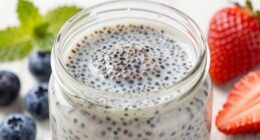
When comparing plant-based egg replacers like chia seeds, flaxseeds, and aquafaba, consider your baking needs. Chia and flax act as binders, with chia creating a gel and flax adding a nutty flavor, but flax can make baked goods denser. Aquafaba mimics egg whites, making it great for airy desserts like meringues. Want to find the best choice for your recipe? Keep exploring for more tips and tricks.
Key Takeaways
- Chia and flax seeds work as effective binders after soaking, while aquafaba is best for airy, meringue-like textures.
- Flaxseed has a nutty flavor and can produce denser baked goods; chia adds slight crunch and texture.
- Aquafaba is neutral in flavor and ideal for light, fluffy desserts like meringues and mousses.
- Flax is often used in a 1:3 ratio of ground flax to water; chia requires soaking to form a gel.
- Chia and flax are nutritionally rich, whereas aquafaba offers minimal nutritional benefits.

If you’re looking to reduce or eliminate eggs from your diet, plant-based egg replacers offer a versatile and sustainable solution. Among the most popular options are chia seeds, flaxseeds, and aquafaba. Each of these substitutes provides unique benefits, especially when considering nutritional comparisons and culinary versatility.
Chia seeds are tiny but mighty, packed with fiber, omega-3 fatty acids, and protein. When soaked in water, they form a gel-like consistency that mimics the binding qualities of eggs. This makes them ideal for baking recipes like muffins, pancakes, or cookies. Nutritionally, chia offers a boost of healthy fats and fiber, making it a nutritious choice. However, their distinct texture can influence the final product, adding a slight crunch or density, which is perfect for certain baked goods but less suitable for delicate cakes or fluffy meringues.
Chia seeds create a gel that binds baked goods, adding texture but may be less ideal for delicate cakes.
Flaxseeds, much like chia, create a gel when mixed with water—usually a 1:3 ratio of ground flax to water. This makes them a reliable binder for various recipes, from bread to veggie burgers. Nutritionally, flaxseeds are rich in lignans, fiber, and omega-3s, and they tend to have a more neutral flavor than chia, making them a versatile option that won’t alter the taste of your dishes. Their culinary versatility shines in recipes where a subtle nutty flavor is welcome. However, flax can sometimes produce a slightly denser texture, so it might not be the best choice for recipes requiring a light, airy result.
Aquafaba, the liquid from cooked chickpeas, stands out for its remarkable ability to mimic egg whites. Whipped up, it creates a light, airy foam perfect for meringues, mousses, or soufflés. Unlike chia or flax, aquafaba’s nutritional profile isn’t as robust, but it excels in culinary versatility, especially for recipes that need a fluffy or airy element. Its neutral flavor ensures it won’t interfere with the taste, making it a favorite among bakers aiming for light, delicate textures. However, aquafaba can be less convenient if you don’t regularly cook chickpeas, and it requires some planning to save the liquid from canned or cooked beans.

GROWFRIEND Seed Starter Kit with Grow Lights & Heat Mat – 40-Cell Seed Starter Tray, Humidity Dome, Soil Moisture Meter & Sticky Gnat Traps – Indoor Greenhouse & Plant Propagation Station
🌱 All-in-One Indoor Seed Starter Kit 🌱 From basil to begonias, Growfriend makes it easy to grow vibrant...
As an affiliate, we earn on qualifying purchases.
Frequently Asked Questions
How Do Egg Replacers Affect Baking Time and Texture?
Egg replacers can influence both baking duration and texture impact. When you use them, you might notice a slight change in baking time, often requiring a bit longer or shorter depending on the substitute. They also affect the final texture—some make baked goods more moist or dense, while others add lightness. Adjusting baking time and choosing the right replacer helps you achieve your desired texture and perfect results.
Are Plant-Based Egg Replacers Suitable for All Dietary Restrictions?
You wonder if plant-based egg replacers suit all dietary restrictions. They offer varied options, but you need to contemplate nutritional completeness and allergen considerations. Some replacers, like flax and chia, provide omega-3s and fiber, while aquafaba is allergen-free but lacks nutrients. You should evaluate your specific needs, as plant-based alternatives can be inclusive, yet may not fully meet every dietary restriction or nutrient requirement.
Can These Egg Substitutes Be Used in Savory Recipes?
You can definitely use plant-based egg replacements in savory applications. Chia, flax, and aquafaba work well, but consider flavor compatibility. Chia and flax have mild, nutty tastes that suit dishes like veggie patties or quiches, while aquafaba’s neutral flavor is great for savory mousses or sauces. Experiment to find the best match for your recipe’s flavor profile, and you’ll enjoy versatile, plant-based options for savory cooking.
How Long Do Egg Replacers Last in the Refrigerator?
Imagine you made a batch of aquafaba meringue yesterday; you wonder if it’s still good. Typically, egg replacers like chia gel, flaxseed mixture, or aquafaba last about 3 to 4 days in the fridge. Check for spoilage indicators like sour smell, discoloration, or mold. Proper storage duration guarantees safety and freshness, so always store in an airtight container and use within this timeframe to avoid spoilage.
Do Egg Replacers Influence the Flavor of Baked Goods?
You might wonder if egg replacers affect the flavor of your baked goods. Generally, they have minimal flavor impact, allowing your recipe’s taste variations to shine through. Chia and flax can add a slight nutty flavor, while aquafaba is more neutral. Keep in mind that these subtle differences can enhance or subtly alter the overall flavor, but they won’t overpower your baked creations, making them a versatile choice.

SOLIGT Self Watering Seed Starter Trays with Humidity Domes, Extra Thick Plastic Seed Starter kit for Seed Starting, Plant Germination & Seedling Growing, 3 Pack 72 Cells
Complete Seed Starter Kit: Self watering seed starter tray kit includes 3 packs, each with 1 clear bottom...
As an affiliate, we earn on qualifying purchases.
Conclusion
So, whether you choose chia, flax, or aquafaba, each offers a unique way to turn your recipes plant-powered. Think of them as your culinary superheroes—each with their own strength to replace eggs effortlessly. The real question isn’t which is better, but which suits your taste and needs best. Embrace these natural alternatives and transform your cooking into a vibrant, egg-free adventure—because, after all, your kitchen is the stage for endless possibilities.

Gardzen 5-Set Seed Starter Tray Kits, Durable Plant Germination Trays with Humidity Vented Domes and Bases, Ideal for Seed Starting, Indoor Gardening, and Greenhouse (Total 200 Cells)
Upgraded with Adjustable Ventilation - Gardzen seed starter tray has been newly upgraded with two air vents added...
As an affiliate, we earn on qualifying purchases.

6×6FT Polycarbonate Greenhouse for Outdoors, Large Walk in Green House Kit and Winter Garden Planting, Enhanced Aluminum Green Houses for Outside to Protect Vegetables or Plants
【Heavy-Duty & Weather Resistant Greenhouse】Built to last through storms, snow, and sun—this outdoor greenhouse features a reinforced aluminum...
As an affiliate, we earn on qualifying purchases.