
When adding chia seeds to your diet, start with small portions like 1 teaspoon and gradually increase over several weeks. This helps your digestive system adjust safely and prevents issues like bloating, gas, or constipation. Remember to drink plenty of water, as fiber absorbs fluids and aids digestion. Monitoring how your body reacts and balancing your diet can make the process smoother. Keep exploring for more tips on incorporating chia seeds effectively.
Key Takeaways
- Start with small servings (1 teaspoon to 1 tablespoon) to prevent digestive discomfort.
- Gradually increase chia seed intake over weeks to allow your digestive system to adapt.
- Drink plenty of fluids to support fiber’s water-absorbing properties and prevent constipation.
- Monitor your body’s response and adjust intake to avoid bloating, gas, or nutrient absorption issues.
- Combine chia seeds with a balanced diet for optimal health benefits and digestive comfort.
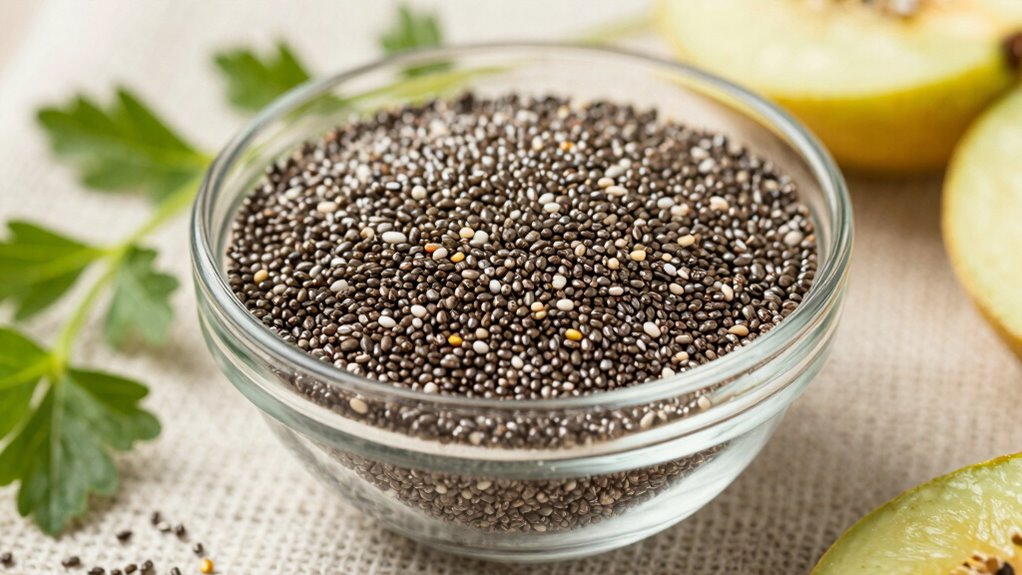
If you’re looking to boost your fiber intake naturally, adding chia seeds to your diet is a simple and effective option. These tiny seeds are packed with superfood nutrition, making them a popular choice for those seeking dietary supplementation that benefits overall health. Chia seeds are rich in soluble fiber, which helps regulate digestion, stabilize blood sugar levels, and promote a feeling of fullness. Including them in your diet can support weight management and improve gut health.
However, it’s crucial to introduce chia seeds gradually, especially if you’re not used to high-fiber foods. Sudden increases in fiber intake can lead to digestive discomfort, such as bloating, gas, or constipation. To avoid this, start with small servings—about one teaspoon or one tablespoon per day—and slowly increase the amount over several weeks. This gradual approach gives your digestive system time to adapt without undue stress. Remember, fiber absorbs water, so it’s vital to drink plenty of fluids as you increase your intake. Staying well-hydrated helps fiber do its job effectively and reduces the risk of constipation.
Incorporating chia seeds into your diet can be straightforward. You can sprinkle them over yogurt, add them to smoothies, or mix them into oatmeal. When soaked in liquid, chia seeds form a gel-like consistency, which can be used as a thickener for puddings or as an egg substitute in baking. This versatility makes it easy to include them in your daily meals without much effort. As a superfood, chia seeds also provide omega-3 fatty acids, protein, antioxidants, and minerals like calcium and magnesium, making them a nutrient-dense addition to your diet. Additionally, understanding the benefits of gradual fiber increases can help you avoid common digestive issues associated with sudden dietary changes.
Moreover, recognizing the water-absorbing properties of fiber is essential to optimize its benefits and minimize any adverse effects. While chia seeds are beneficial, moderation is key. Overdoing it can cause digestive issues or interfere with nutrient absorption. Keep an eye on how your body responds, and adjust your intake accordingly. If you have any underlying health conditions or are on medication, consult your healthcare provider before making significant dietary changes. Remember, dietary supplementation with chia seeds is most effective when combined with a balanced diet rich in fruits, vegetables, whole grains, and lean proteins.
organic chia seeds for smoothies
As an affiliate, we earn on qualifying purchases.
As an affiliate, we earn on qualifying purchases.
Frequently Asked Questions
Can Chia Seeds Cause Allergic Reactions?
Chia seeds can cause allergenic reactions, especially if you have seed sensitivities. Some people might experience symptoms like itching, swelling, or difficulty breathing, which indicate an allergic response. If you’re new to chia seeds, start with small amounts to see how your body reacts. Always consult a healthcare professional if you notice any allergic symptoms or reactions, and discontinue use if any adverse effects occur.
How Long Does It Take to Notice Fiber Benefits?
You might start noticing fiber benefits within a few days to a week, depending on your digestion timeline and fiber absorption rate. As you increase your fiber intake gradually, your digestion adjusts, helping relieve constipation and improve regularity. Keep in mind, individual responses vary, so staying consistent and drinking plenty of water will support your body’s ability to absorb fiber effectively, leading to noticeable improvements over time.
Are Chia Seeds Suitable for All Diets?
Chia seeds are suitable for most diets, as they’re incredibly versatile and packed with nutrients. About 95% of diets can incorporate them comfortably. However, you should consider nutritional factors like fiber content and potential allergies. They fit well into vegan, keto, paleo, and gluten-free plans. Still, if you have specific health conditions or allergies, check with a healthcare professional to verify chia seeds align with your dietary needs.
What Are the Best Ways to Incorporate Chia Seeds?
You can incorporate chia seeds easily into your diet with various recipe ideas like smoothies, yogurt, oatmeal, or baking recipes. To keep them fresh, store chia seeds in an airtight container in a cool, dark place. Soaking them in water or milk creates a nutritious pudding, while sprinkling them on salads adds crunch. Experiment with these options to enjoy their health benefits and add texture to your meals.
Can Too Much Fiber Cause Digestion Issues?
Yes, too much fiber can cause digestion issues like digestive discomfort, bloating, and gas. When you suddenly increase your fiber intake, your digestive system may struggle to adjust, leading to these symptoms. To avoid this, introduce fiber gradually and drink plenty of water. This helps your body adapt smoothly, reducing the risk of discomfort. Listen to your body and adjust your fiber consumption accordingly for better digestion.
As an affiliate, we earn on qualifying purchases.
Conclusion
As you incorporate chia seeds into your diet, remember to increase your fiber intake gradually to avoid discomfort. For example, if you start with a tablespoon of chia, add an extra teaspoon each week, giving your body time to adjust. Imagine Sarah, who began with small amounts and noticed less bloating and better digestion over time. Patience is key—by easing in fiber slowly, you’ll enjoy the health benefits without the unwanted side effects.
fiber supplement with chia seeds
As an affiliate, we earn on qualifying purchases.
As an affiliate, we earn on qualifying purchases.
As an affiliate, we earn on qualifying purchases.