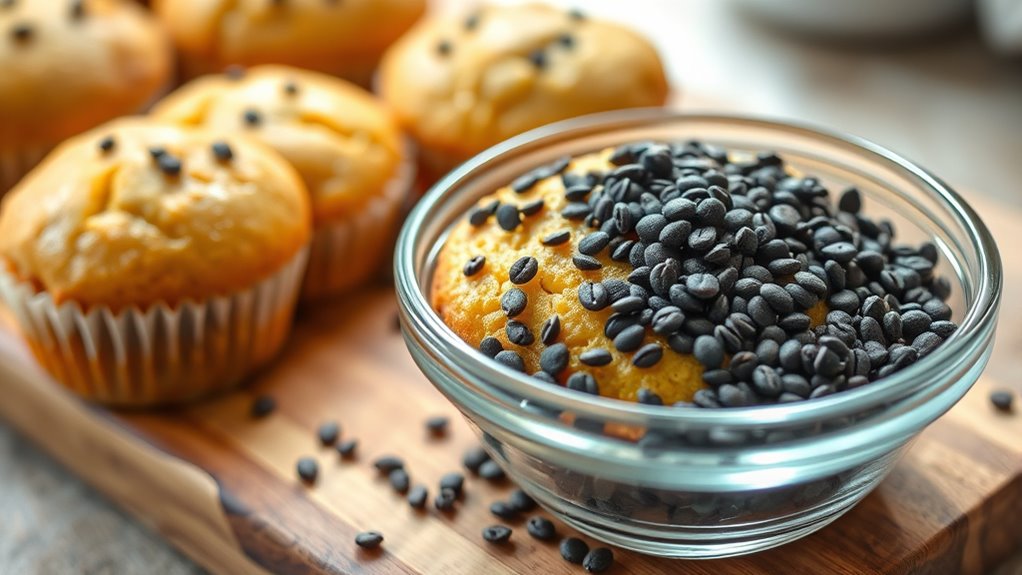
Using chia seeds in gluten-free baking helps improve texture by acting as a natural binder and moisture-retainer. When you mix chia seeds with water to make a gel, it mimics eggs and adds structure, making baked goods softer, moister, and more cohesive. This also enhances crumb and rise without overpowering flavor. If you keep exploring, you’ll discover simple ways to incorporate chia seeds for even better results.
Key Takeaways
- Chia seeds create a gel that mimics eggs, providing structure and moisture in gluten-free baked goods.
- Incorporating chia gel improves crumb tenderness and prevents dryness or density.
- The gel enhances elasticity and cohesion, resulting in a more uniform and resilient texture.
- Using chia reduces crumbliness and adds a moist, tender bite to gluten-free recipes.
- Chia’s neutral flavor maintains the original taste while boosting overall texture quality.

Chia seeds have become a popular ingredient in gluten-free baking, thanks to their versatile texture and nutritional benefits. When you incorporate chia seeds into your recipes, you often create a chia seed gel, which acts as a natural binder and moisture-retainer. To make this gel, you simply mix chia seeds with water—usually a 1:6 ratio—and let it sit for about 10-15 minutes until it thickens into a gel-like consistency. This gel mimics the properties of eggs in traditional baking, helping to hold your baked goods together and improve their overall texture. Using chia seed gel is especially beneficial because it provides structure without gluten, resulting in baked items that are moist and cohesive.
In addition to its functional benefits, chia seed gel offers notable nutritional benefits. It’s packed with omega-3 fatty acids, fiber, protein, and antioxidants, making your baked goods more nutritious. Including chia seeds in your recipes boosts your intake of essential nutrients, which is especially important in gluten-free diets that can sometimes lack certain nutrients found in wheat-based products. The gel’s high fiber content also promotes digestive health and helps regulate blood sugar levels, adding a healthful aspect to your baked treats. As you incorporate chia seed gel into your recipes, you not only improve texture but also enhance the overall nutritional profile of your baked goods.
You’ll find that chia seed gel lends a slightly gelatinous, moist quality to bread, muffins, and pancakes. Unlike eggs, which can sometimes make baked goods dense or rubbery in gluten-free recipes, chia gel provides a more tender crumb and a pleasant chewiness. It’s particularly useful in recipes that tend to fall apart or become crumbly because it helps bind ingredients together seamlessly. When you replace eggs with chia seed gel, you often notice a more uniform crumb, better rise, and improved elasticity. Plus, since chia seeds are flavor-neutral, they won’t interfere with the taste of your baked goods, allowing other flavors to shine through.
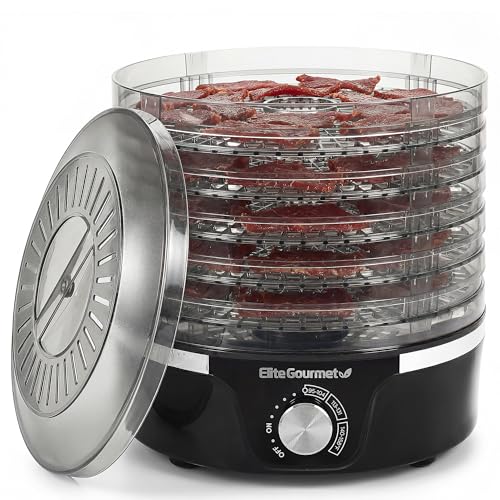
Elite Gourmet EFD319 Food Dehydrator, 5 BPA-Free 11.4" Trays Adjustable Temperature Controls, Jerky, Herbs, Fruit, Veggies, Dried Snacks, Black
CUSTOM TEMPERATURE CONTROL FOR PERFECT RESULTS: Adjustable temperature range from 95°F–158°F lets you dry fruits, vegetables, herbs, mushrooms...
As an affiliate, we earn on qualifying purchases.
Frequently Asked Questions
Can Chia Seeds Replace Eggs in Gluten-Free Recipes?
Yes, you can use chia seeds as plant-based alternatives for eggs in gluten-free recipes. By mixing one tablespoon of chia seeds with three tablespoons of water, you create a gel that works as an effective egg replacement technique. This method helps bind ingredients and adds moisture, making your baked goods hold together better without eggs. Chia seeds are a versatile and healthy option for those exploring egg-free and gluten-free baking.
How Long Should Chia Seeds Soak Before Use?
You might notice that soaking chia seeds for about 15 minutes works best, as this soaking time creates a gel-like consistency that enhances texture improvement in your baked goods. When you let them sit longer, they can become overly thick or slimy, affecting your recipe. Keep an eye on the clock to make certain the chia seeds are perfectly prepared, helping your gluten-free treats achieve the ideal texture every time.
Are There Flavor Differences When Using Chia Seeds?
Yes, you might notice slight flavor differences when using chia seeds. They have a mild, nutty taste that can subtly enhance the flavor profile of your baked goods. This flavor consistency complements your recipes, while their primary role is texture enhancement. If you prefer a neutral taste, you can soak and rinse the seeds beforehand to minimize their flavor impact, ensuring your baked goods retain their intended flavor.
Can Chia Seeds Be Used in Savory Gluten-Free Dishes?
Absolutely, you can use chia seeds in savory gluten-free dishes. They act like natural thickeners, turning into gel-like textures perfect for savory bread or gluten-free sauces. Think of chia seeds as tiny culinary superheroes, transforming your dishes with added nutrition and a subtle crunch. Incorporate them into your recipes to boost texture and health benefits, making your savory creations both delicious and nutritious without sacrificing flavor.
What Is the Best Chia Seed-To-Liquid Ratio for Baking?
You should aim for a chia seed-to-liquid ratio of about 1:4 for baking. This ratio allows chia seeds to absorb enough liquid, creating a gel-like consistency that improves texture and binding. Keep in mind that chia seeds have high liquid absorption rates, so adjusting the amount based on recipe needs is essential. Start with this ratio, then tweak it to achieve the desired consistency for your gluten-free baked goods.

COSORI Food Dehydrator, Bigger Than 7 Trays with Large 6.5 ft² Drying Space, Stainless Steel Trays, 600W Faster Drying, 165°F Dehydrated Dryer for Jerky, Dog Treats, Herbs, Meat, Fruit, Yogurt, Silver
𝗕𝗜𝗚𝗚𝗘𝗥 𝗧𝗛𝗔𝗡 𝟳 𝗧𝗥𝗔𝗬𝗦: With 6 stainless steel trays providing 6.5 ft² of drying space, this dehydrator is...
As an affiliate, we earn on qualifying purchases.
Conclusion
With each spoonful of chia seeds, you transform your gluten-free treats into moist, tender delights. Imagine the tiny seeds weaving a web of elasticity and moisture, turning dense dough into fluffy perfection. As you bake, the chia’s gel-like magic creates a crumb that’s light and satisfying. Embrace these humble seeds, and watch your baked goods come alive with a texture that invites every bite, making your gluten-free baking truly irresistible.

Gardzen 5-Set Seed Starter Tray Kits, Durable Plant Germination Trays with Humidity Vented Domes and Bases, Ideal for Seed Starting, Indoor Gardening, and Greenhouse (Total 200 Cells)
Upgraded with Adjustable Ventilation - Gardzen seed starter tray has been newly upgraded with two air vents added...
As an affiliate, we earn on qualifying purchases.
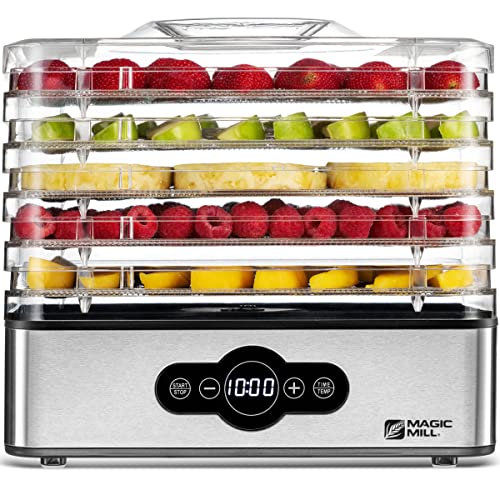
Magic Mill Food Dehydrator Machine | 5 Stackable Stainless Steel Trays, 48H Digital Adjustable Timer & Temperature Control Upto 167° Electric Dryer & Preserver for Jerky, Fruit, Dog Treats & Much More
POWERFUL FOOD DRYING PROCESS - Magic Mill Compact Food Dehydrator Machine streamlines 240W drying capacity that offers an...
As an affiliate, we earn on qualifying purchases.