
Omega-3 fatty acids in chia seeds are essential for reducing inflammation and supporting your heart and brain health. These plant-based ALA fatty acids help lower bad cholesterol, improve blood pressure, and boost cognitive function. Incorporating just one to two tablespoons daily can make a difference in your overall wellness. By including chia seeds in your diet, you’ll discover how this small seed packs a big health punch—learn more to see how it benefits you.
Key Takeaways
- Chia seeds are rich in alpha-linolenic acid (ALA), a plant-based omega-3 fatty acid beneficial for health.
- Consuming chia seeds helps reduce inflammation, lowering the risk of heart disease and arthritis.
- Regular intake supports cardiovascular health by improving cholesterol and blood pressure levels.
- Omega-3s in chia seeds contribute to brain health, enhancing cognitive function and mood.
- Incorporating 1-2 tablespoons daily provides a convenient way to boost omega-3 intake and overall wellness.
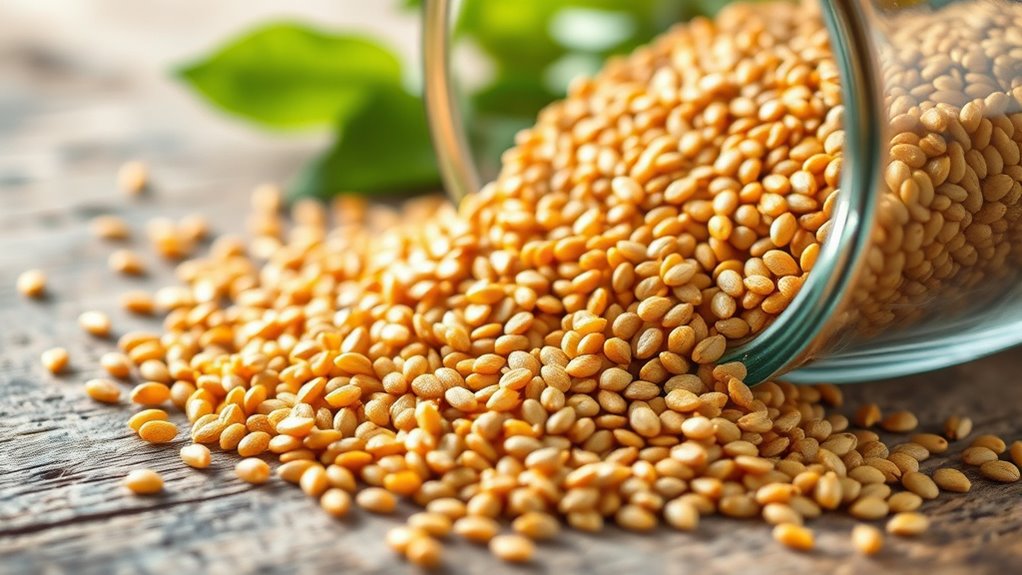
If you’re looking to boost your intake of omega-3 fatty acids, chia seeds are an excellent plant-based source to contemplate. These tiny seeds pack a powerful punch of nutrients, especially omega-3s, which are essential fats your body needs for ideal health. Including chia seeds in your diet can be a simple yet effective way to improve your overall wellness, thanks to their impressive omega 3 benefits. Unlike fish or seafood, chia seeds are a convenient, vegetarian source of omega-3 fatty acids, making them accessible to a wide range of diets. When you consider chia seed sources, you’re tapping into a versatile ingredient that can be easily added to smoothies, yogurt, oatmeal, or baked goods. Their neutral flavor allows them to blend seamlessly into many dishes, making it effortless to incorporate omega-3s into your daily routine.
The omega 3 benefits derived from chia seeds are extensive. They help reduce inflammation, which is linked to chronic conditions like heart disease and arthritis. Regular consumption of chia seeds can support cardiovascular health by lowering bad cholesterol levels and improving blood pressure. Additionally, omega-3s are crucial for brain health — they contribute to cognitive function, memory, and mood regulation. If you’re aiming to support your mental well-being, adding chia seeds to your diet could be a smart move. Furthermore, these seeds are rich in fiber, antioxidants, and minerals such as calcium and magnesium, which further contribute to overall health.
What makes chia seeds particularly appealing is their high omega-3 content compared to other plant-based sources. They mainly contain alpha-linolenic acid (ALA), a type of plant-derived omega-3 fatty acid. While ALA needs to be converted by your body into the more active forms, EPA and DHA, present in fish oils, consuming chia seeds regularly still provides significant health advantages. To maximize omega 3 benefits, it’s best to incorporate chia seeds consistently into your meals. A common recommendation is to consume about 1 to 2 tablespoons daily, which can easily fit into your diet without much effort. Incorporating the right amount of omega-3s can help optimize your health benefits and support your wellness goals.
Frequently Asked Questions
How Do Chia Seed Omega-3 Levels Compare to Fish Oil Supplements?
Chia seeds contain less Omega-3 fatty acids than fish oil supplements, so their Omega-3 content comparison shows that fish oil provides a higher dose per serving. However, the bioavailability differences matter; the Omega-3s in fish oil are more readily absorbed than those in chia seeds, which contain ALA that your body converts inefficiently to EPA and DHA. So, if you want maximum Omega-3 benefits, fish oil is more effective.
Can Chia Seeds Replace Fish in a Heart-Healthy Diet?
Imagine switching to chia seeds to replace fish in your diet, aiming for plant-based alternatives. While chia seeds are rich in omega-3s and contribute to nutritional completeness, they can’t fully replace the heart-healthy benefits of fish alone. Incorporate chia seeds alongside other sources like walnuts or algae oil to enhance your nutrient intake, ensuring your diet remains balanced and supportive of heart health.
Are There Any Side Effects From Consuming High Amounts of Chia Seeds?
Consuming high amounts of chia seeds can cause digestive discomfort like bloating or constipation due to their high fiber content. Additionally, their omega-3 fatty acids may thin your blood, so if you’re on blood-thinning medications, you should be cautious. It’s best to start with small servings and gradually increase intake, and consult your healthcare provider if you experience any adverse effects or have health concerns.
How Does Cooking Affect the Omega-3 Content in Chia Seeds?
Cooking affects the omega-3 content in chia seeds by reducing nutrient stability, as heat can break down delicate fatty acids. When you cook chia seeds, especially at high temperatures, you likely lose some omega-3s, diminishing their health benefits. To maximize nutrient retention, it’s best to add chia seeds to recipes after cooking or use them raw in smoothies or overnight oats.
What Is the Best Way to Incorporate Chia Seeds Into Daily Meals?
Imagine adding a secret weapon to your daily routine, like a knight’s armor—chia seeds are your versatile ally. You can sprinkle them on smoothie enhancements or use them as breakfast toppings. Mix them into yogurt, oatmeal, or baked goods for a subtle crunch and omega-3 boost. Just soak them in water or milk first for easier digestion. This simple step guarantees you enjoy their health benefits effortlessly every day.
Conclusion
Now that you know how chia seeds are packed with omega-3s, aren’t you ready to boost your health naturally? Incorporating these tiny seeds into your diet can support your heart, brain, and overall well-being. Why not take a simple step today toward a healthier future? Remember, small changes can make a big difference—so why not start with chia seeds and embrace better health today?