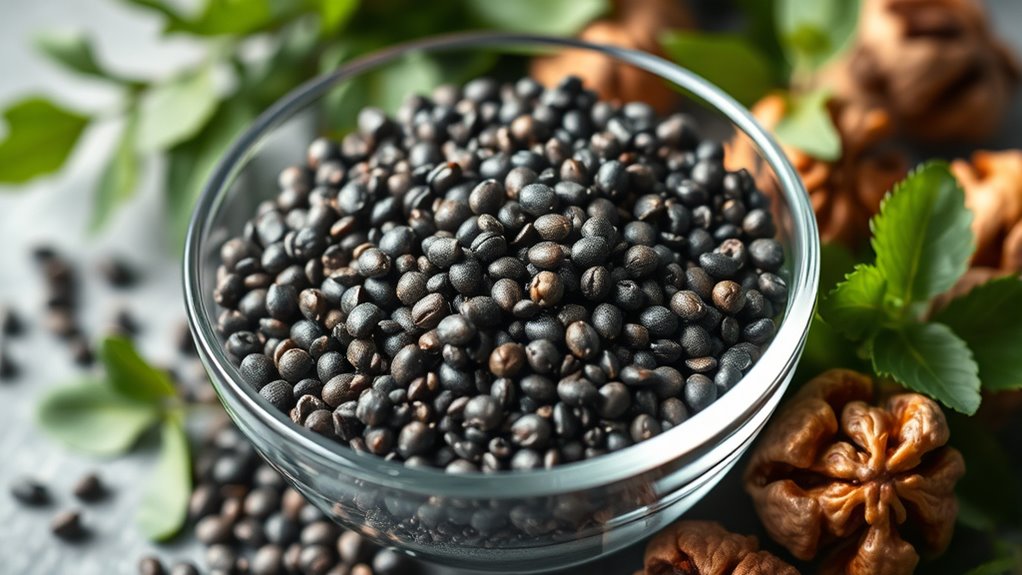
Chia seeds are a great plant-based source of omega-3 fatty acids, specifically alpha-linolenic acid (ALA). You can easily add them to smoothies, oatmeal, or salads to boost your intake. While your body needs to convert ALA into active forms like EPA and DHA, this process varies among individuals. Incorporating other omega-3 foods and supplements can help maximize your benefits. If you keep exploring, you’ll find options to support your omega-3 needs effectively.
Key Takeaways
- Chia seeds are rich in ALA, a plant-based omega-3 fatty acid essential for vegan diets.
- The body converts ALA from chia into EPA and DHA, vital for brain and heart health.
- Regular consumption of chia seeds, combined with other omega-3 sources, enhances omega-3 intake.
- Direct vegan EPA and DHA supplements from algae ensure active omega-3 benefits beyond ALA conversion.
- Chia seeds are a versatile, easy addition to various vegan meals supporting omega-3 nutrition.
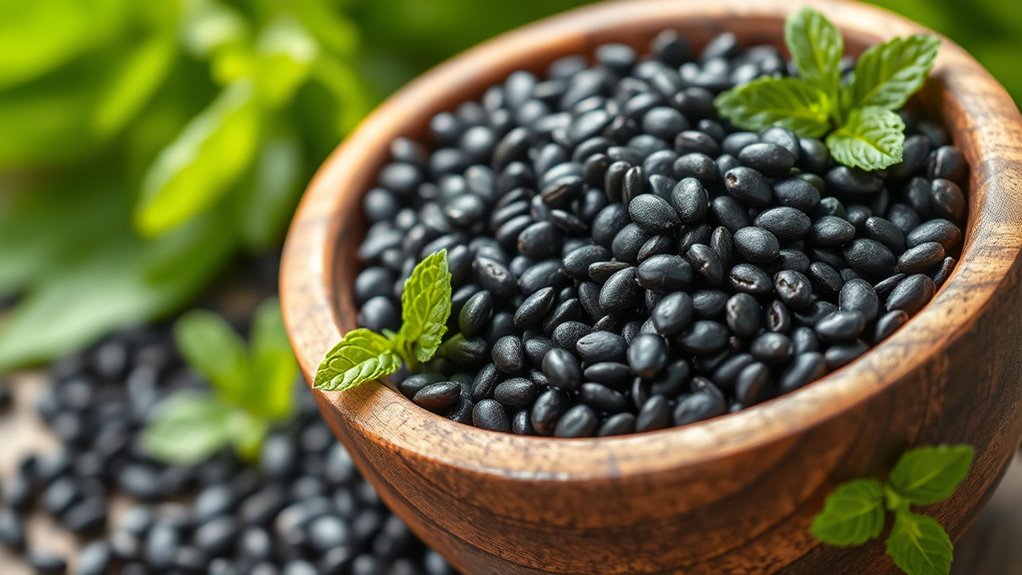
For vegans looking to boost their omega-3 intake, chia seeds offer an excellent plant-based option. These tiny seeds are packed with alpha-linolenic acid (ALA), a type of omega-3 fatty acid essential for your health. Since your body can’t produce omega-3s on its own, you need to get enough from your diet. Chia seeds make it easy to do just that, fitting seamlessly into vegan nutrition plans.
However, simply consuming chia seeds isn’t enough to guarantee optimal omega-3 benefits. Your body needs to convert ALA into the more active forms, EPA and DHA, which are vital for brain health, heart function, and reducing inflammation. This process, known as Omega 3 Conversion, varies greatly among individuals. Some people convert ALA efficiently, while others struggle to get enough EPA and DHA from plant sources alone. Factors like genetics, overall diet, and health status influence this conversion rate, making it important to understand that chia seeds are a valuable but sometimes limited source of omega-3s.
To maximize the benefits of chia seeds, you should incorporate them regularly into your meals. Add them to smoothies, oatmeal, or salads, or use ground chia as an egg replacer in baking. Remember, to enhance Omega 3 Conversion, consider consuming chia seeds alongside other omega-3-rich foods like walnuts or hemp seeds, and reduce your intake of omega-6 fatty acids, which can interfere with the conversion process. Maintaining a balanced diet supports your body’s ability to convert ALA efficiently.
While chia seeds are a fantastic addition to vegan nutrition, they shouldn’t be your only source of omega-3s. Since the conversion process can be limited, especially for some individuals, you might want to include direct sources of EPA and DHA, such as algae oil supplements. These supplements are vegan and provide the active forms of omega-3s your body needs without relying solely on conversion.
Additionally, advancements in AI in Education are exploring ways to personalize nutritional guidance, helping individuals optimize their omega-3 intake based on their unique genetic and health profiles. In essence, chia seeds serve as an accessible, versatile, plant-based way to boost omega-3 intake within a well-rounded vegan diet. They contribute greatly to your vegan nutrition by supplying ALA, but understanding the nuances of Omega 3 Conversion helps you better plan your diet. By combining chia seeds with other omega-3 sources and being mindful of your overall dietary balance, you can effectively support your health and meet your omega-3 needs naturally.

Viva Naturals Organic Chia Seeds, 2 lb, 32 Oz – Plant-Based Omega-3 and Vegan Protein, Gluten Free & Non-GMO, Perfect for Smoothies, Salads & Chia Pudding
PLANT-BASED OMEGAS-3 — Omega fatty acids are important fats, and luckily chia seeds organic contain omega-3s. Incorporate them…
As an affiliate, we earn on qualifying purchases.
As an affiliate, we earn on qualifying purchases.
Frequently Asked Questions
How Do Chia Seeds Compare to Other Plant-Based Omega-3 Sources?
You’ll find that chia seeds are among the top plant-based fats for omega-3s, especially compared to flaxseeds and walnuts. They offer a high nutrient comparison, providing more alpha-linolenic acid (ALA) per serving. Unlike some sources, chia seeds are easy to incorporate into your diet, giving you a convenient way to boost your omega-3 intake. Overall, they’re a versatile and efficient option for plant-based omega-3s.
Are There Any Potential Side Effects From Consuming High Amounts of Chia Seeds?
Like a double-edged sword, consuming too many chia seeds can cause digestive discomfort, leaving you bloated or constipated. You might also risk a nutrient imbalance if you rely heavily on them for omega-3s. Moderation is key; your body needs a balanced diet. Keep an eye on your intake to enjoy their benefits without upsetting your digestive harmony or nutrient levels.
Can Chia Seeds Replace Fish Oil Supplements Entirely?
Chia seeds can be a viable fish oil alternative for omega‑3s, but they might not fully substitute supplements for everyone. While they provide ALA, the plant-based omega‑3, your body converts only a small portion into the active EPA and DHA found in fish oil. Conduct a supplement comparison, and consider incorporating other sources like flaxseeds or algal oil to guarantee you’re meeting your omega‑3 needs effectively.
What Is the Optimal Daily Intake of Chia Seeds for Omega-3 Benefits?
You should aim for about 1 to 2 tablespoons of chia seeds daily, which provides roughly 5 grams of omega-3s. This chia seed dosage enhances omega-3 absorption effectively, supporting your heart and brain health. Consuming this amount regularly helps you meet your daily omega-3 needs without overdoing it. Remember to soak or grind the seeds to maximize nutrient absorption for ideal health benefits.
How Should Chia Seeds Be Prepared to Maximize Omega-3 Absorption?
You can open the full omega-3 potential of chia seeds by soaking them overnight and grinding them just before use. Soaking techniques soften the seeds, making nutrients more accessible, while grinding methods break down the seed’s tough shell, boosting absorption. This simple combo guarantees you get maximum benefits, transforming your chia into a powerhouse of omega-3s that support your health like nothing else.

Vegan Omega 3 Algae Oil | Plant Based DHA EPA | Sustainably Sourced, No Carrageenan, Non GMO | Heart, Brain, and Eye Health | Fish Oil Alternative | Algae Omega 3 Supplement | 60 Softgel Capsules
VEGAN OMEGA 3 SUPPLEMENT: Our Algae Oil Omega 3 supplement contains a high 550mg of essential plant-based Omega-3…
As an affiliate, we earn on qualifying purchases.
As an affiliate, we earn on qualifying purchases.
Conclusion
So, next time you sprinkle chia seeds on your breakfast or toss them into a smoothie, remember they’re more than just a topping—they’re a natural source of omega-3s. It’s a simple coincidence that such tiny seeds can provide essential nutrients for your vegan lifestyle. Embrace this little wonder, and let chia seeds become a regular part of your diet. After all, sometimes the best health secrets are right in front of us, waiting to be discovered.

Anthony's Organic Ground Chia Seed, 1 lb, Finely Ground, Cold Milled, Gluten Free, Non GMO
USDA Certified Organic Ground Chia Seeds
As an affiliate, we earn on qualifying purchases.
As an affiliate, we earn on qualifying purchases.
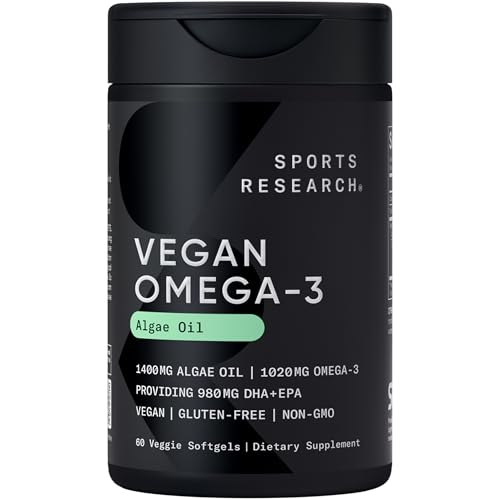
Sports Research Vegan Omega-3 Fish Oil Alternative from Algae Oil – Highest Levels of Vegan DHA & EPA Fatty Acids | Non-GMO Tested & Vegan Certified – 60 Veggie Softgels (Carrageenan Free)
VEGAN OMEGA 3 | Sourced from sustainable Algae Oil providing 770mg of heart healthy Omega-3's per serving.
As an affiliate, we earn on qualifying purchases.
As an affiliate, we earn on qualifying purchases.