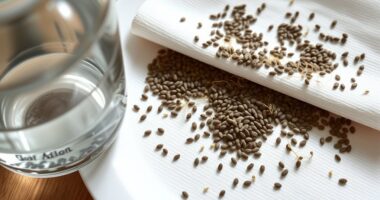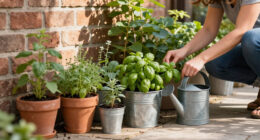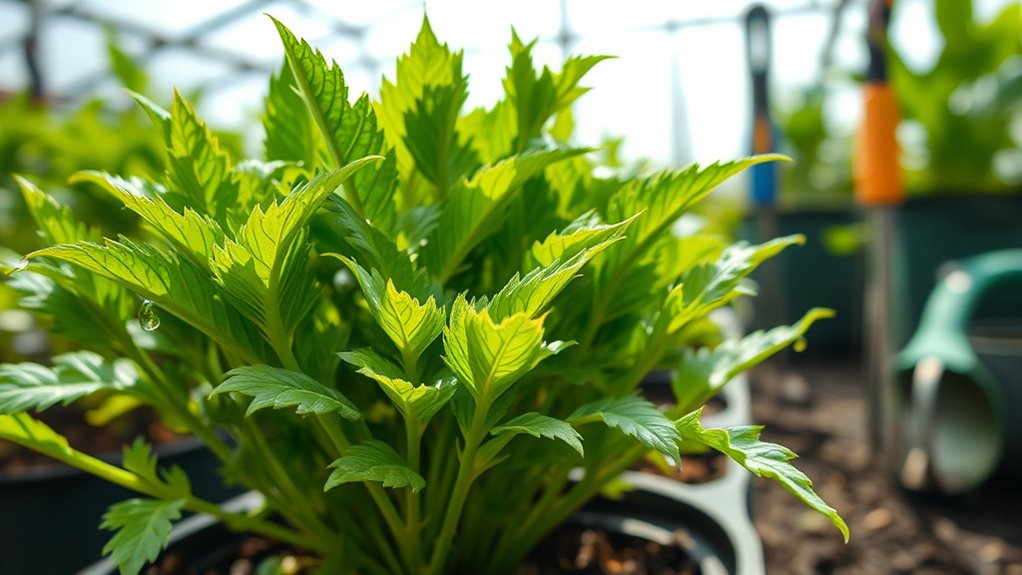

If your chia plants have yellow leaves and are wilting, check their drainage first; soggy soil can cause root rot and stress. Make certain you’re watering appropriately—avoid overwatering and keep soil moist but not soggy. Look for pests like aphids or spider mites and manage them with natural solutions. Confirm your plants get balanced nutrients, especially nitrogen, and improve soil drainage if needed. Keep an eye on these factors, and you’ll discover more ways to restore your chia’s health.

Get garden gear delivered free — and shop member deals
- Fast, free delivery on millions of items
- Access to Prime Big Deal Days deals on October 6–7
- Prime Video, Amazon Music and more included
Key Takeaways
- Check soil drainage and improve with compost, sand, or raised beds to prevent waterlogging and root rot.
- Inspect for pests like aphids and spider mites; use natural predators or insecticidal soaps for control.
- Adjust watering to keep soil moist but not soggy; avoid overwatering to prevent root oxygen deprivation.
- Ensure balanced fertilization to address nutrient deficiencies, especially nitrogen, that cause yellowing leaves.
- Regularly monitor plants for early signs of stress and pests, maintaining optimal growing conditions.
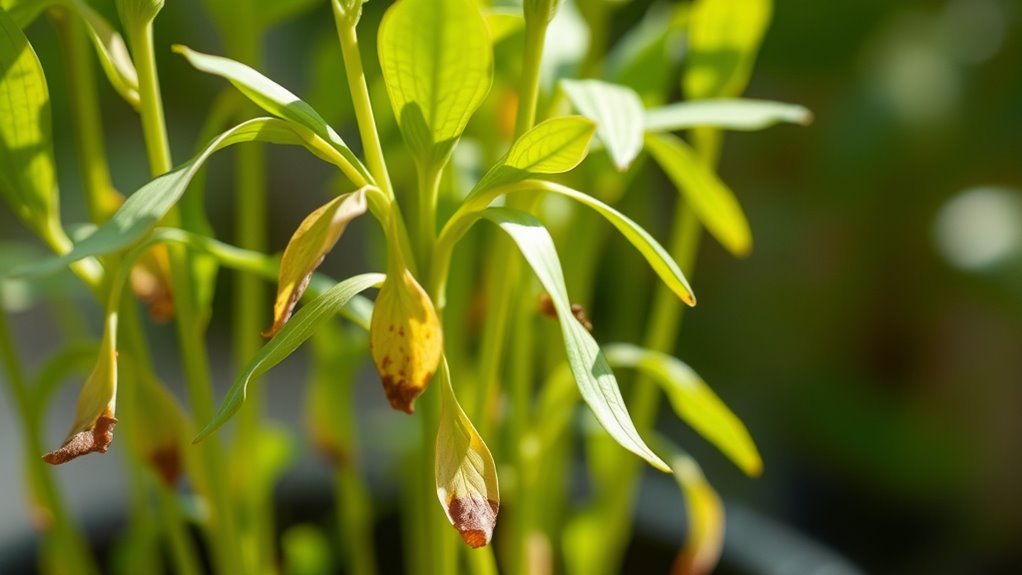
Growing chia plants can be rewarding, but they often face common problems that can hinder their growth. One of the most frequent issues is yellowing leaves or wilting, which can stem from a variety of causes. To troubleshoot these problems effectively, you need to consider factors like soil drainage and pest management, which play a vital role in maintaining healthy plants.
Poor soil drainage is a common culprit behind yellow leaves and wilting. Chia plants thrive in well-draining soil that allows excess water to escape, preventing root rot and oxygen deprivation. If the soil retains too much moisture, roots can become waterlogged, leading to stress and discoloration of the leaves. To improve drainage, you might incorporate organic matter like compost or sand into your soil or consider planting in raised beds. Ensuring proper soil structure helps roots access nutrients and oxygen, reducing the chances of yellowing and wilting caused by overwatering.
Pest management is another critical aspect of keeping your chia plants healthy. Pests such as aphids, spider mites, or beetles can attack the foliage, sucking sap and causing leaves to yellow or curl. If you notice tiny insects or sticky residues on your plants, it’s time to take action. Introducing natural predators like ladybugs or using insecticidal soaps can help control pest populations without harming beneficial insects. Regularly inspecting your plants and removing affected leaves can also prevent pests from spreading. An overlooked pest issue can weaken the plant, making it more susceptible to stress and leading to wilting.
Additionally, watering habits directly influence leaf health. Overwatering can drown roots, causing yellowing and wilting, while underwatering leaves the plant dehydrated and stressed. You should check the soil moisture regularly, ensuring it’s moist but not soggy. When watering, do so deeply and infrequently to encourage strong root growth. Adjust your watering schedule based on weather conditions—more during hot, dry periods and less during cooler, humid times.
Fertilization is equally important. Nutrient deficiencies, especially nitrogen, can cause leaves to turn yellow. Applying a balanced fertilizer according to the package instructions can replenish nutrients and improve overall plant vigor. However, avoid over-fertilizing, which can lead to nutrient imbalances and further stress.
Frequently Asked Questions
How Often Should I Water My Chia Plant?
You should water your chia plant every 1-2 days, depending on its moisture requirements and environmental conditions. Keep the soil consistently moist but not waterlogged, as overwatering can lead to root rot. Check the top inch of soil; if it feels dry, it’s time to water. Adjust your watering schedule based on humidity, temperature, and how quickly the soil dries out to make certain of healthy growth.
Can Over-Fertilizing Cause Yellow Leaves?
You might notice yellow leaves when over-fertilizing your chia plant, as a fertilizer imbalance can cause nutrient deficiency. Excess fertilizer can overwhelm the roots, blocking nutrient absorption and leading to yellowing. To prevent this, follow recommended fertilization guidelines and avoid overdoing it. Proper balance guarantees your plant gets the nutrients it needs without suffering from nutrient deficiency or other issues caused by over-fertilization.
What Pests Commonly Affect Chia Plants?
You’ll find that aphids, spider mites, and whiteflies commonly affect chia plants. To identify pests, look for visible insects, sticky residue, or distorted leaves. Practice insect prevention by regularly inspecting your plants, maintaining proper watering, and removing affected foliage. Using natural predators like ladybugs can also help control pests. Prompt pest identification and prevention keep your chia healthy, preventing damage and ensuring a lush, thriving plant.
How Do I Improve Soil Drainage for Chia?
To improve soil drainage for your chia plant, try adding soil amendments like sand or perlite to increase aeration. You might also consider implementing drainage solutions such as planting in raised beds or using pots with drainage holes. These steps help prevent waterlogging, which can cause yellow leaves and wilting. Regularly check soil moisture and adjust your amendments as needed to make sure your chia thrives in well-draining soil.
Is It Normal for Chia Leaves to Curl?
Yes, leaf curl can be typical for chia, especially if the plant is adjusting or experiencing mild stress. However, if you notice persistent leaf curl, it might indicate plant stress from factors like inconsistent watering, too much sun, or pests. Keep an eye on your plant’s environment, make sure proper watering, and check for pests. Addressing these issues promptly can help reduce leaf curl and keep your chia healthy.
Conclusion
Remember, your chia plant is like a delicate dance partner—you need to listen and respond to its subtle cues. Yellow leaves and wilting are just the plant’s way of whispering that something’s off. With attentive care and quick action, you can help your chia bounce back like a phoenix rising from the ashes. Keep nurturing it with patience and love, and soon, it’ll flourish like a lush green symphony, singing praises of your diligent care.
Fall Picks
fall essentials
As an affiliate, we earn on qualifying purchases.