
To maximize the shelf life and retain the nutrients of your chia seeds, store them in an airtight container in a cool, dark, and dry place. Whole seeds last 2-4 years, but ground chia should be used within a few weeks to prevent spoilage. Watch for signs like rancid smell or discoloration. Proper storage keeps nutrients safe from light, heat, and moisture—keep exploring to learn more about maintaining your chia seeds’ freshness.
Key Takeaways
- Proper storage in airtight, dark, and dry containers extends chia seeds’ shelf life and prevents nutrient loss.
- Whole chia seeds last 2-4 years; ground chia should be used within a few weeks to avoid oxidation.
- Avoid moisture, heat, and light to slow spoilage and preserve nutrients like omega-3s and antioxidants.
- Regularly check for signs of spoilage such as rancid smell, discoloration, or clumping before use.
- Refrain from storing in humid environments or near strong odors to maintain freshness and safety.

Are you wondering how long chia seeds stay fresh and the best way to store them? Understanding the shelf life of chia seeds is essential to guarantee you get the most out of their nutritional benefits. When stored properly, chia seeds can last for quite some time, but improper storage can lead to nutrient loss and spoilage. To maximize nutrient preservation, it’s important to follow specific storage tips that keep your seeds fresh and safe to consume.
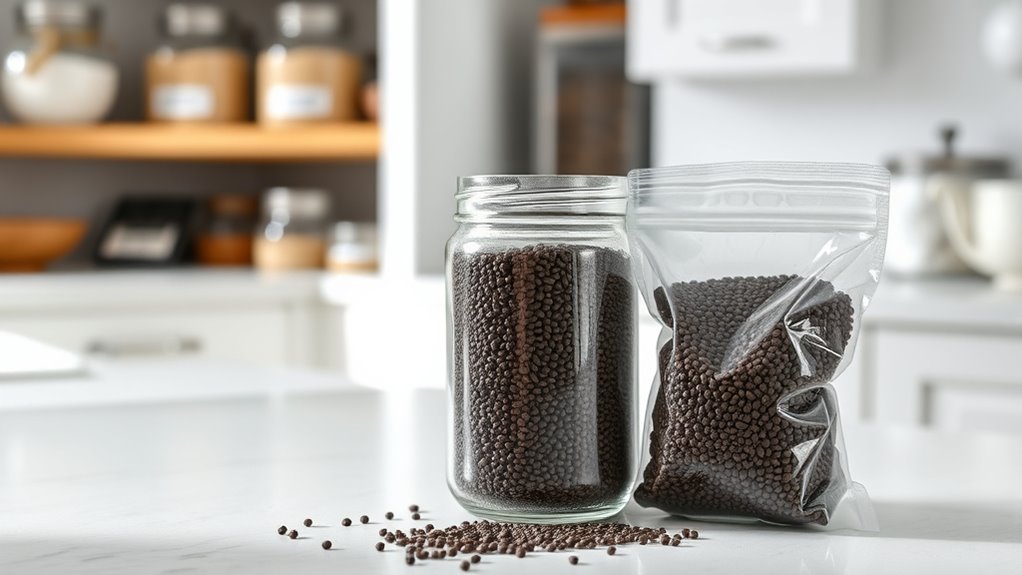
Chia seeds are known for their rich nutrient profile, including omega-3 fatty acids, fiber, protein, and antioxidants. However, these nutrients can degrade if exposed to moisture, heat, light, or air. That’s why maintaining ideal storage conditions is key. Keep your chia seeds in an airtight container, preferably in a cool, dark, and dry place. This prevents exposure to oxygen and light, both of which accelerate nutrient deterioration. Avoid storing your seeds in the refrigerator or freezer unless you live in a very humid climate, as condensation can introduce moisture and cause mold or rancidity.
Keep chia seeds in an airtight, cool, dark, and dry place to prevent nutrient loss and spoilage.
The typical shelf life of chia seeds is around 2-4 years when stored properly. Whole seeds tend to last longer than ground chia because their outer shell offers some natural protection from oxidation. Once you grind them, it’s best to use the ground chia within a few weeks, as the increased surface area makes them more susceptible to nutrient loss and spoilage. Always check for signs of spoilage before using: a rancid smell, discoloration, or clumping can indicate that your chia seeds are no longer good.
To guarantee you’re preserving nutrients effectively, avoid storing chia seeds near strong-smelling foods or in areas with fluctuating temperatures. Consistency in storage conditions helps prevent moisture buildup, which is a common cause of spoilage. If you buy in bulk, consider transferring a small amount into a sealed container for daily use, leaving the rest in a tightly sealed bag or container in a dark pantry. This minimizes exposure and maintains freshness longer.
Frequently Asked Questions
Can Chia Seeds Go Bad if They Are Exposed to Sunlight?
Yes, chia seeds can go bad if exposed to sunlight. Sunlight degradation speeds up seed oxidation, which damages the seeds’ nutrients and flavor. When you leave chia seeds in direct sunlight, they become more prone to spoilage and lose their freshness faster. To keep them fresh and nutritious, store your chia seeds in an airtight container in a cool, dark place away from sunlight.
How Can I Tell if My Chia Seeds Are Still Safe to Eat?
You can tell if your chia seeds are still safe to eat by checking for freshness indicators and spoilage signs. Look for a rancid smell or a bitter taste, which suggest spoilage. Also, examine the seeds’ appearance; if they are discolored, moldy, or clumpy, discard them. Fresh chia seeds are usually dry, light-colored, and have a mild scent. When in doubt, it’s safest to replace them.
Do Flavored or Pre-Packaged Chia Seeds Have a Different Shelf Life?
Think of flavored or pre-packaged chia seeds as a decorated cake—more tempting, but with added ingredients that can affect freshness. Generally, flavored varieties have a shorter shelf life because of the added flavors and preservatives, and pre-packaged chia seeds might last longer if unopened. Once opened, both should be stored properly and checked for freshness. Always read expiration dates for the best quality and safety.
Can I Freeze Chia Seeds to Extend Their Freshness?
Yes, you can freeze chia seeds to extend their freshness. Freezing benefits include slowing down the oxidation process and preventing moisture exposure, which helps maintain quality. Use proper storage techniques, like airtight containers or resealable bags, to keep out moisture and odors. When you’re ready to use them, simply thaw the seeds at room temperature. Freezing is an effective way to preserve chia seeds for longer periods.
Are There Specific Storage Containers That Best Preserve Chia Seed Quality?
Yes, using airtight containers like glass jars is best for preserving chia seed quality. These containers keep out moisture and air, preventing spoilage and maintaining freshness longer. Make sure the jar seals tightly after each use. Avoid plastic containers that aren’t airtight, as they can allow air and humidity in. Store the jar in a cool, dark place to maximize shelf life and keep your chia seeds fresh and nutritious.
Conclusion
Now that you know how to store your chia seeds properly, imagine them nestled in an airtight jar, protected from light and moisture like a treasure chest. With good storage, your seeds stay fresh and ready to sprinkle onto your mornings, adding a crunch of health and importance. Keep them in a cool, dark corner, and they’ll remain a reliable, nourishing companion in your kitchen adventures, always waiting to turn simple meals into something special.