Chia seeds pack a variety of essential vitamins, including B3 (niacin), B2 (riboflavin), and B9 (folate), which support your energy, metabolism, and cell growth. They also contain vitamin E, an antioxidant that protects your cells, and small amounts of vitamin A for good vision and skin health. These nutrients work together to boost your immune system, promote vigor, and enhance overall wellness. Keep exploring, and you’ll discover even more about their powerful nutritional benefits.
Key Takeaways
- Chia seeds are rich in B vitamins like niacin (B3), riboflavin (B2), and folate (B9), supporting energy and cell growth.
- They contain small amounts of vitamin A, benefiting vision and skin health.
- Vitamin E in chia acts as an antioxidant, protecting cells from damage.
- These seeds provide essential vitamins that boost immune function and overall vitality.
- Their vitamin content complements other nutrients, enhancing skin, bone, and brain health.
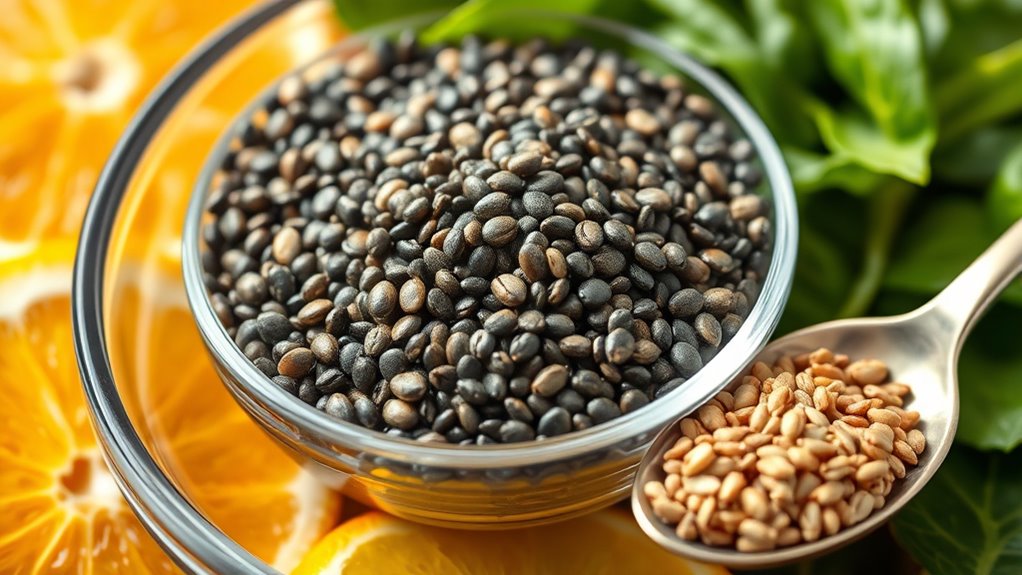
Have you ever wondered why chia seeds are often called a superfood? It’s because they pack a powerful nutritional punch in such a tiny package. When you include chia seeds in your diet, you’re not just adding a trendy ingredient—you’re boosting your intake of essential nutrients that support overall health. One of the key reasons they’re celebrated is their impressive nutritional benefits, especially their rich vitamin content. These small seeds contain a variety of vitamin varieties that contribute to your well-being in multiple ways.
Chia seeds are a notable source of several B vitamins, including niacin (B3), riboflavin (B2), and folate (B9). These vitamins play essential roles in energy production, cell growth, and brain function. For example, niacin helps convert food into energy, which keeps you feeling alert and energized throughout the day. Folate is indispensable for cell division and is especially important during pregnancy, supporting healthy fetal development. Riboflavin aids in the metabolism of fats, proteins, and carbohydrates, helping your body efficiently use nutrients from your diet. When you incorporate chia seeds into your meals, you’re providing your body with these important vitamin varieties that support your daily functions.
Chia seeds supply vital B vitamins like B2, B3, and B9 that support energy, cell growth, and brain health.
Additionally, chia seeds contain small amounts of vitamin A, which is essential for maintaining healthy vision, skin, and immune function. Although they are not a primary source of vitamin A, their contribution adds to the overall spectrum of nutrients you consume. They also have vitamin E, a powerful antioxidant that protects your cells from damage caused by free radicals. This antioxidant property supports skin health and may even help reduce signs of aging. By including chia seeds regularly, you’re giving your body a boost of these protective vitamins, which work synergistically to promote longevity and vitality.
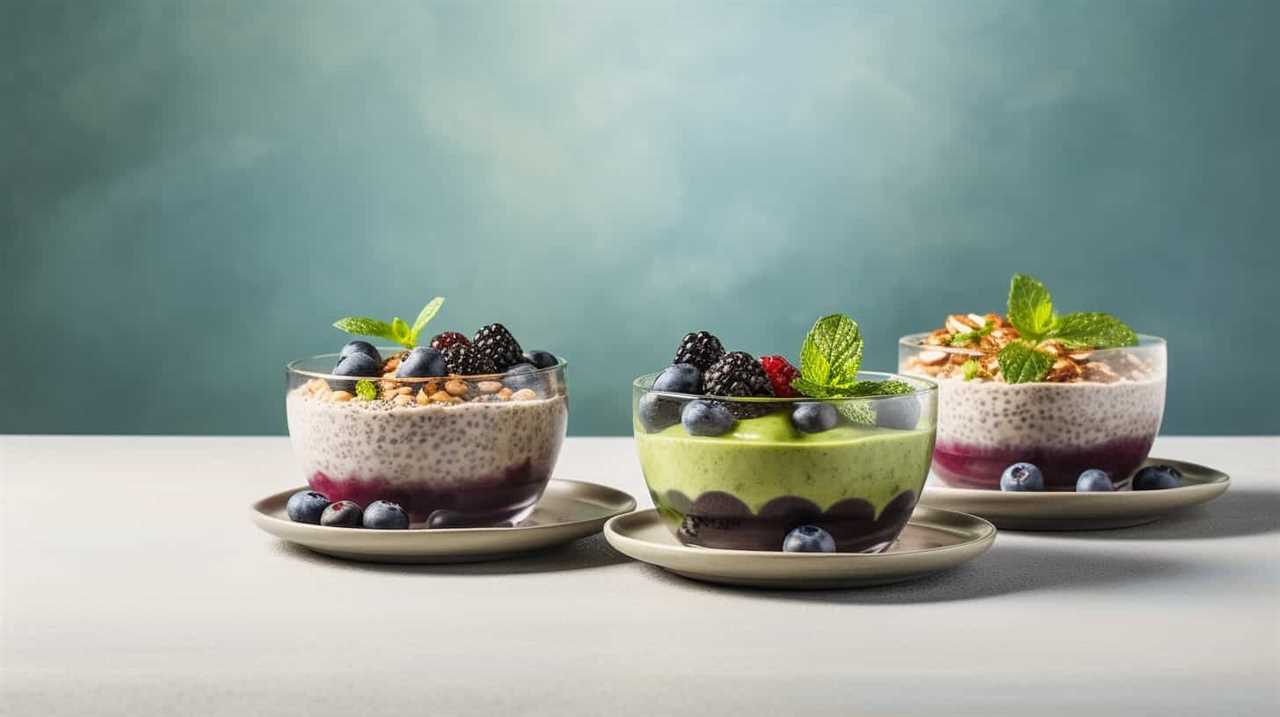
Beyond their vitamin content, chia seeds provide omega-3 fatty acids, fiber, and minerals like magnesium and calcium, making them a well-rounded superfood. Their versatility allows you to add them to smoothies, yogurt, oatmeal, or baked goods effortlessly. As you incorporate these seeds into your diet, you’re not only benefiting from their vitamin varieties but also enhancing your overall nutritional profile. This combination of nutrients can improve digestion, boost your immune system, and support healthy skin and bones. Utilizing vertical storage solutions can help keep your pantry organized and make it easier to incorporate chia seeds into your daily routine.
Frequently Asked Questions
Do Chia Seeds Contain Any Vitamin D?
Chia seeds do not contain vitamin D, making their vitamin profile limited in this nutrient. When you compare their nutritional profile to other foods, you’ll find they’re rich in omega-3s, fiber, and minerals but lack vitamin D. If you’re seeking this vitamin, consider adding fatty fish or fortified foods to your diet. Chia seeds excel in other areas, but for vitamin D, you’ll need to look elsewhere for adequate intake.
Are There Any B Vitamins in Chia Seeds?
Imagine a tiny treasure chest bursting with health—yes, chia seeds contain B vitamins that fuel your energy and boost your mood. These small wonders also pack chia seed antioxidants and Omega 3 benefits, supporting your body’s defenses and brain function. When you include chia seeds in your diet, you’re tapping into nature’s gift of vibrant vigor, helping you feel energized and resilient every day.
How Much Vitamin C Is in a Typical Serving?
A typical serving of chia seeds contains about 0.2 milligrams of vitamin C, which is quite low. While chia seed nutrition offers many benefits, vitamin C isn’t one of its strong points. If you’re looking to boost your vitamin C intake, consider adding fruits like oranges or strawberries to your diet. Chia seeds mainly provide fiber, omega-3s, and minerals rather than significant amounts of vitamin C.
Do Chia Seeds Provide Essential Minerals Alongside Vitamins?
While chia seeds are often praised for their vitamins, they also provide essential minerals like calcium, magnesium, and phosphorus. This mineral synergy supports your overall health and promotes nutrient absorption. Unlike vitamins, these minerals help build strong bones and improve muscle function. You get a well-rounded nutritional boost from chia seeds, making them a smart addition to your diet for both vitamins and crucial minerals.
Are Vitamin Levels in Chia Seeds Affected by Processing?
Yes, vitamin levels in chia seeds can be affected by processing. Processing impact often reduces nutrient stability, especially with heat, light, or moisture exposure. When you process chia seeds, such as roasting or grinding, you might lose some vitamins. To maximize nutrient retention, opt for minimal processing methods like soaking or adding whole seeds to your meals. This helps preserve the vitamins and maintains their nutritional benefits.
Conclusion
Now that you know what’s inside chia seeds, you’ll see they pack a punch when it comes to vitamins. Incorporating them into your diet can give you a boost of essential nutrients without much fuss. Remember, it’s the little things that add up over time, so don’t overlook this tiny superfood. Keep an open mind and enjoy exploring new ways to enjoy chia seeds—after all, good things come in small packages!