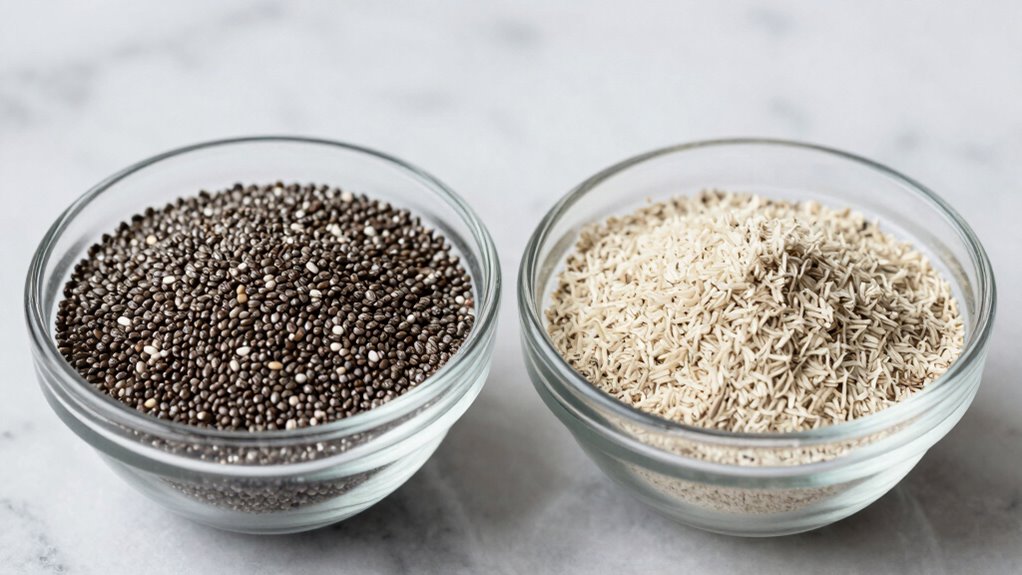

If you want a nutrient-dense option that’s easy to add to your daily meals, chia seeds are a great choice because they’re rich in omega-3s, fiber, and protein, and can be sprinkled into many dishes. Psyllium, however, mainly provides soluble fiber and works best as a digestive aid or thickener in recipes like gluten-free bread. To discover which suits your needs best and learn versatile ways to incorporate them, keep exploring your options.

Get garden gear delivered free — and shop member deals
- Fast, free delivery on millions of items
- Access to Prime Big Deal Days deals on October 6–7
- Prime Video, Amazon Music and more included
Key Takeaways
- Chia seeds are more nutrient-dense and versatile, suitable for daily meals, while psyllium is mainly used as a fiber supplement.
- Chia can be added directly to foods, whereas psyllium requires mixing with liquids to prevent choking.
- Chia provides omega-3s, protein, and antioxidants, supporting overall health; psyllium primarily benefits digestion.
- Chia’s mild flavor and gel-forming texture make it easier to incorporate into various dishes daily.
- Psyllium is ideal for targeted digestive health but less flexible for everyday culinary use.
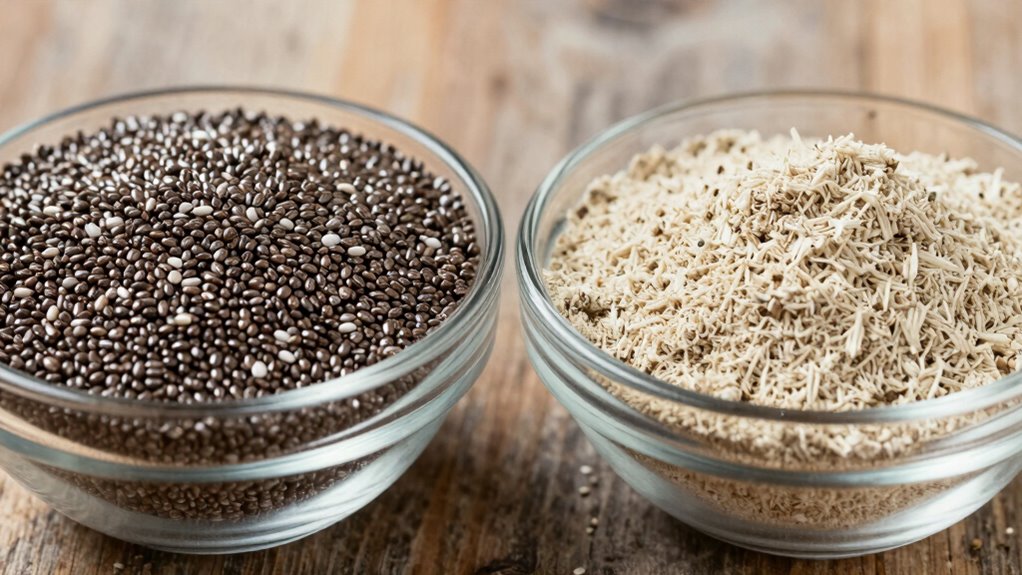
When choosing between chia seeds and psyllium for daily use, understanding their differences can help you make an informed decision. Both are popular for their health benefits, but they offer distinct nutritional content and culinary versatility. Chia seeds pack a punch with a rich array of nutrients, including omega-3 fatty acids, fiber, protein, antioxidants, and various minerals like calcium and magnesium. These nutrients make chia a versatile addition to your diet, whether you sprinkle them over oatmeal, blend them into smoothies, or incorporate them into baked goods. Their mild, nutty flavor and gel-like texture when soaked give you flexibility in how you use them, making them suitable for both sweet and savory dishes.
Chia seeds are nutrient-dense, versatile, and easy to incorporate into various meals, offering health benefits and culinary flexibility.
Psyllium, on the other hand, is primarily valued for its soluble fiber content, which is highly effective for digestive health. It contains minimal calories and nutrients beyond fiber, but its high fiber content makes it a powerful natural laxative and a helpful tool for managing cholesterol levels. Unlike chia, psyllium’s culinary versatility is somewhat limited. It’s generally used as a thickening agent or supplement, often in recipes like gluten-free bread or as a fiber supplement in drinks. Its neutral taste allows it to blend seamlessly into recipes, but it doesn’t add much flavor or texture on its own. While chia seeds can be eaten whole or ground, psyllium is usually used in powdered form, which dissolves easily in liquids. Additionally, the contrast ratio of a projector can significantly impact how well visuals are rendered in dark scenes, highlighting the importance of choosing quality equipment for an optimal viewing experience. Incorporating fiber supplements like psyllium into your routine can also help support overall health and wellness, especially if you have specific dietary needs.
In terms of daily use, chia seeds are easier to incorporate into a variety of meals due to their texture and flavor. You can add them directly to yogurt, cereal, or smoothies without much preparation. They also absorb liquids and swell, creating a gel that’s satisfying and helps with hydration. Psyllium, however, requires mixing with plenty of water or other liquids to prevent choking or digestive discomfort, which can make it less convenient for some people. Its primary role is to support digestive health and regulate bowel movements rather than provide a broad spectrum of nutrients.
Ultimately, your choice depends on your health goals and culinary preferences. Chia seeds offer a nutrient-dense, versatile option that can enhance many dishes, while psyllium is a specialized fiber supplement focused on digestive health. Both can fit into a balanced diet, but understanding their differences helps you decide which aligns better with your daily routine.
organic chia seeds for smoothies
As an affiliate, we earn on qualifying purchases.
As an affiliate, we earn on qualifying purchases.
Frequently Asked Questions
Are Chia Seeds Suitable for People With Nut Allergies?
If you have a nut allergy, chia seeds are generally safe, but be cautious with seed allergy considerations. They’re not nuts, so they’re suitable as nut allergy alternatives. However, some people with seed allergies might react. Always check for cross-contamination and consult your healthcare provider before introducing new seeds into your diet. Monitoring your body’s response is essential, especially if you have sensitivities or multiple allergies.
Can Psyllium Be Used as a Gluten-Free Flour Substitute?
They say “necessity is the mother of invention,” and in gluten-free baking, psyllium can be a game-changer. You can definitely use psyllium as a flour alternative, as it acts like a binder and adds elasticity to dough. While it doesn’t replace traditional flour entirely, mixing it with other gluten-free flours creates a more workable, resilient batter or dough. Just remember to adjust your recipes accordingly for best results.
Do Chia Seeds Provide More Protein Than Psyllium?
Chia seeds provide more protein than psyllium, with about 4 grams per tablespoon compared to psyllium’s negligible amount. Their nutritional content also includes healthy fats, fiber, and antioxidants, offering extra nutritional value. While psyllium mainly supports digestive benefits by promoting regularity, chia seeds contribute to overall health and sustained energy. Incorporating chia seeds into your diet enhances both your protein intake and digestive health, making them a versatile, nutritious option.
How Do Chia Seeds Affect Blood Sugar Levels?
You’ll be surprised to learn that chia seeds can considerably aid blood sugar regulation by slowing digestion and improving insulin response. Studies show that adding chia to your diet helps keep blood sugar levels steady after meals, reducing spikes. Their high fiber content forms a gel-like substance in your stomach, which helps control glucose absorption, making chia seeds a smart choice for managing blood sugar levels naturally and effectively.
Is Psyllium Better for Weight Loss Than Chia Seeds?
Psyllium is often better for weight loss because of its high fiber content, which promotes feelings of fullness and supports digestion. The psyllium fiber benefits include aiding appetite control and maintaining steady blood sugar levels. Chia seed nutrients, like omega-3s and protein, are great for overall health, but they don’t have the same rapid satiety effect as psyllium. If weight loss is your goal, incorporating psyllium might be more effective.
As an affiliate, we earn on qualifying purchases.
Conclusion
In daily use, both chia seeds and psyllium offer unique benefits, but did you know that just one tablespoon of chia seeds provides about 5 grams of fiber, nearly half the daily recommended intake? While chia seeds boost omega-3s and antioxidants, psyllium shines with its remarkable ability to absorb water and promote regularity. Choosing between them depends on your health goals, but incorporating either can considerably improve your digestive health and overall wellness.
chia seed nutritional supplement
As an affiliate, we earn on qualifying purchases.
As an affiliate, we earn on qualifying purchases.
As an affiliate, we earn on qualifying purchases.
Fall yard work Picks
leaf blowers
As an affiliate, we earn on qualifying purchases.