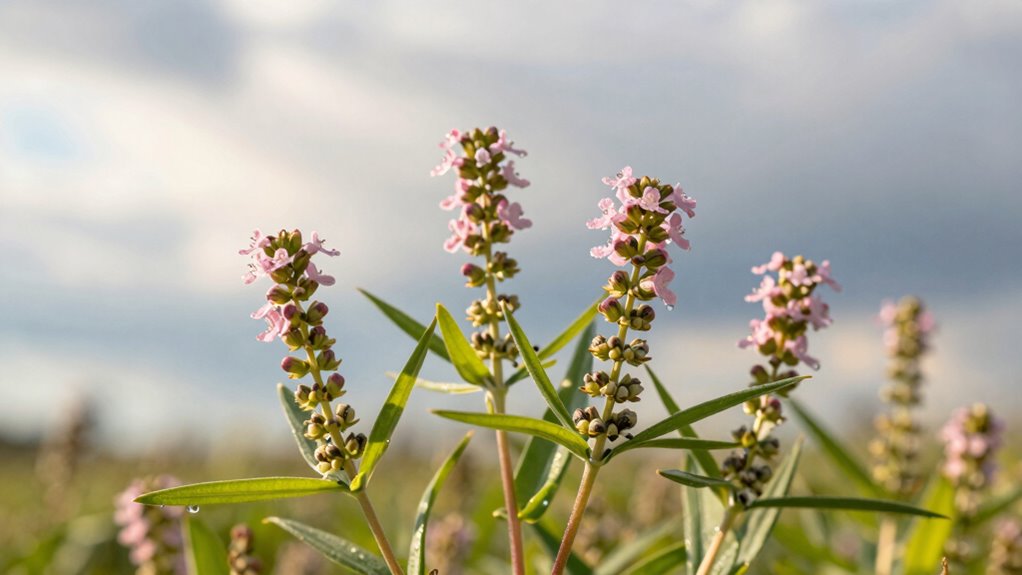

Climate plays a vital role in chia flowering and seed production. Warmer temperatures, without excessive heat, promote steady flowering, while cooler weather can slow growth. Consistent rainfall and proper soil moisture help plants develop seeds successfully. However, unpredictable climate patterns and drought stress may delay or reduce flowering and seed set. Managing environmental conditions carefully can optimize yields. Stay with us to uncover more insights on how evolving climate impacts chia cultivation and how to adapt.

Get garden gear delivered free with Prime
- Fast, free delivery on millions of items
- Prime Video, Amazon Music and more included
- Member-only deals all year
Key Takeaways
- Optimal flowering occurs in warm, moderate temperatures; excessive heat or cold can delay or inhibit seed production.
- Consistent soil moisture and rainfall support healthy flowering and seed set, while drought or overwatering impair development.
- Climate variability and unpredictable weather patterns can disrupt flowering timing and reduce seed yield.
- Cooler temperatures slow growth, potentially delaying flowering and decreasing seed set success.
- Healthy soil conditions enhance plant resilience to climate stresses, promoting better flowering and seed development.
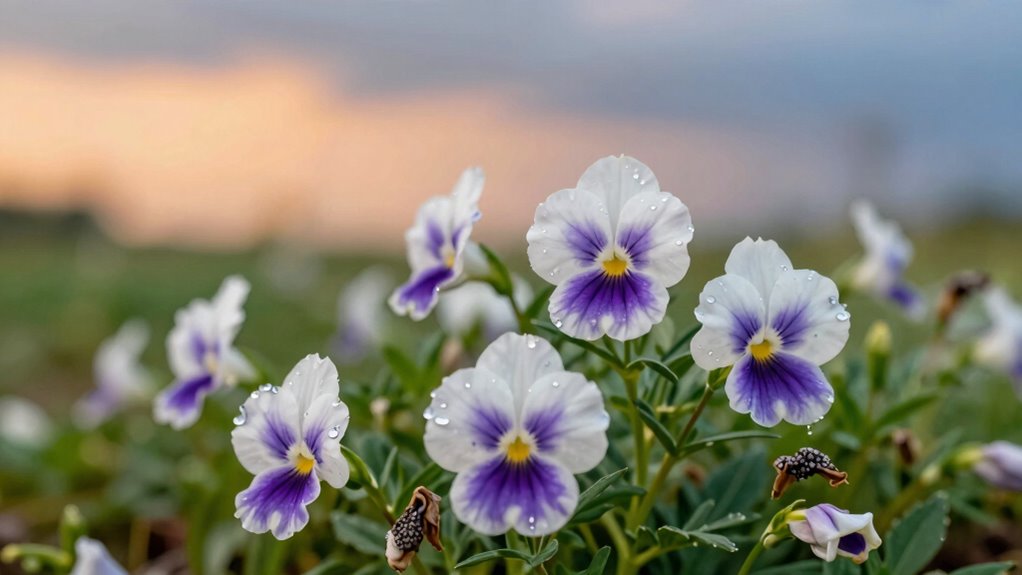
Climate plays a crucial role in determining when chia plants bloom, as their flowering is highly sensitive to environmental conditions. You’ll find that temperature, humidity, and rainfall directly influence the timing and success of flowering and seed set. When the weather is warm but not excessively hot, chia plants tend to flower more consistently. Too much heat can cause stress, leading to delayed blooming or poor seed development, while cooler temperatures may slow growth altogether. Consistent, moderate rainfall helps maintain ideal soil moisture, which is essential during the flowering period. If the soil becomes too dry, your chia plants can become stressed, reducing flowering potential and seed quality. Conversely, overly saturated soil can lead to root rot and other diseases, hampering overall plant health and seed production. Additionally, understanding environmental responsiveness of chia can help optimize cultivation practices for better yields.
Soil moisture, in particular, plays a key role in the flowering process. You want to keep the soil evenly moist but not waterlogged, ensuring that the plants have a steady supply of water to support flowering and seed development. Proper irrigation practices become necessary here—watering too little can cause drought stress, while overwatering invites pests and disease. Maintaining the right soil moisture balance encourages robust flowering and helps the plant allocate energy toward seed production. It’s also important to evaluate that fluctuating soil moisture levels can disrupt flowering timing, so regular monitoring and adjustment of watering schedules are important. Environmental factors such as climate variability can further influence the consistency of flowering periods, emphasizing the need for tailored cultivation practices. In addition, climate change can lead to unpredictable weather patterns, making adaptive management even more critical for successful chia cultivation. Furthermore, soil health plays a vital role, as healthy soil supports better water retention and nutrient availability for optimal flowering. A well-maintained soil ecosystem also contributes to pest management by fostering beneficial organisms that naturally control pest populations.
As an affiliate, we earn on qualifying purchases.
Frequently Asked Questions
How Does Soil Type Influence Chia Flowering?
Soil type influences chia flowering mainly through soil pH and organic matter levels. You want a well-draining soil with a pH between 6.0 and 8.0 to promote healthy flowering. Adding organic matter improves soil fertility, providing essential nutrients that support seed production. If your soil is too acidic or lacks organic content, chia plants may experience delayed flowering or reduced seed set, so adjusting these factors helps guarantee ideal growth.
Can Irrigation Timing Impact Chia Seed Set?
Yes, irrigation timing can considerably impact chia seed set. Proper irrigation scheduling guarantees plants receive water when needed most, promoting healthy flowering and seed development. Effective water management prevents stress that could hinder seed formation. If you water too early or too late, it may disrupt flowering stages, reducing seed yield. Consistent, well-timed irrigation helps optimize conditions for chia plants to produce a plentiful seed set.
What Pests Affect Chia Flowering Stages?
During chia flowering stages, pests like aphids, spider mites, and beetles can cause damage. To safeguard your crop, focus on pest resistance by choosing resistant varieties and encouraging natural predators like ladybugs and predatory mites. These natural enemies help keep pest populations in check, reducing the need for chemical control. Regular monitoring and integrated pest management strategies ensure healthy flowering and ideal seed set for your chia plants.
How Do Altitude Changes Alter Chia Flowering Patterns?
Altitude changes influence your chia plants by affecting their flowering patterns through altitude adaptation. As you move to higher elevations, temperature variation increases, which can delay flowering or reduce seed production. You might notice slower growth and extended flowering periods. To guarantee successful seed set, you should adjust your planting schedule accordingly and monitor temperature fluctuations closely, helping your chia adapt better to the altitude-specific climate conditions.
Does Plant Age Affect Chia’s Response to Climate?
Yes, plant age influences chia’s response to climate. Younger plants with higher genetic variability adapt better to changing conditions, affecting their flowering and seed production. As chia matures, photosynthesis efficiency may decline, making older plants less resilient to climate fluctuations. You’ll notice that ideal flowering and seed set depend on the plant’s age, as it impacts genetic diversity and how effectively it utilizes available sunlight during different growth stages.
soil moisture meter for gardening
As an affiliate, we earn on qualifying purchases.
As an affiliate, we earn on qualifying purchases.
Conclusion
As you observe the delicate dance between climate and chia flowering, it’s clear that even small changes in temperature or rainfall can considerably impact seed production. Coincidentally, the very weather patterns that challenge chia growth also highlight nature’s resilience and adaptability. By understanding these connections, you can better anticipate and support healthy chia crops, realizing that in every season’s shift, there’s an opportunity to learn and grow alongside this resilient plant.
garden irrigation system for chia
As an affiliate, we earn on qualifying purchases.
As an affiliate, we earn on qualifying purchases.
climate control greenhouse accessories
As an affiliate, we earn on qualifying purchases.
As an affiliate, we earn on qualifying purchases.
Halloween Picks
halloween
As an affiliate, we earn on qualifying purchases.