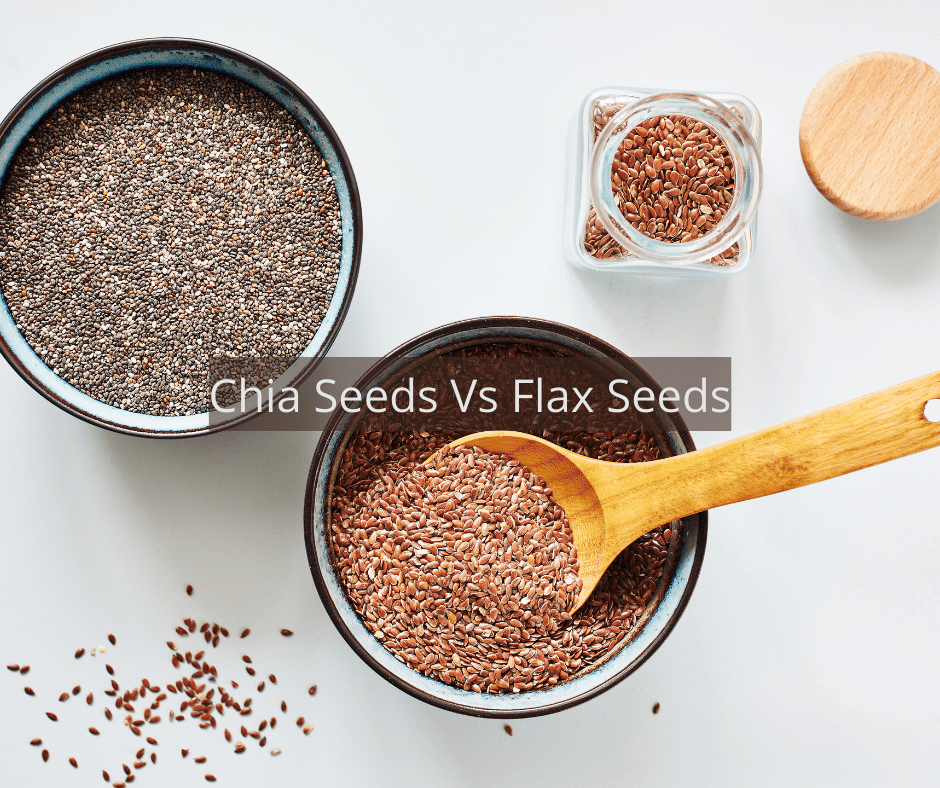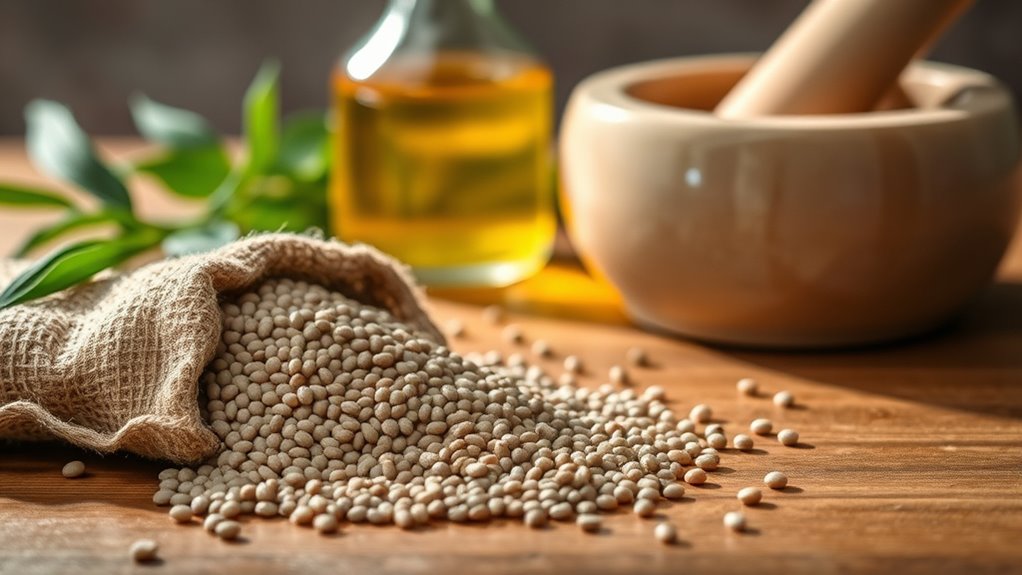

The journey of cold-pressed chia oil starts with thoroughly cleaned chia seeds, which are then mechanically pressed at low temperatures using hydraulic or screw presses. This gentle process preserves the oil’s delicate nutrients, including omega-3s, antioxidants, and bioactive compounds. The result is a pure, high-quality oil with a mild flavor and vibrant color. To discover how this method guarantees maximum nutrition and purity, explore further into the extraction process.
Key Takeaways
- Cold-pressed chia oil is extracted mechanically without heat or chemicals, preserving nutrients from chia seeds.
- Seeds are thoroughly cleaned before pressing to ensure high-quality, pure oil production.
- Hydraulic or screw presses gently extract oil, maintaining antioxidants and bioactive compounds.
- The resulting oil retains a mild flavor, golden color, and maximum nutritional benefits like omega-3 fatty acids.
- This process produces a pure, high-quality supplement rich in essential nutrients, supporting overall health.
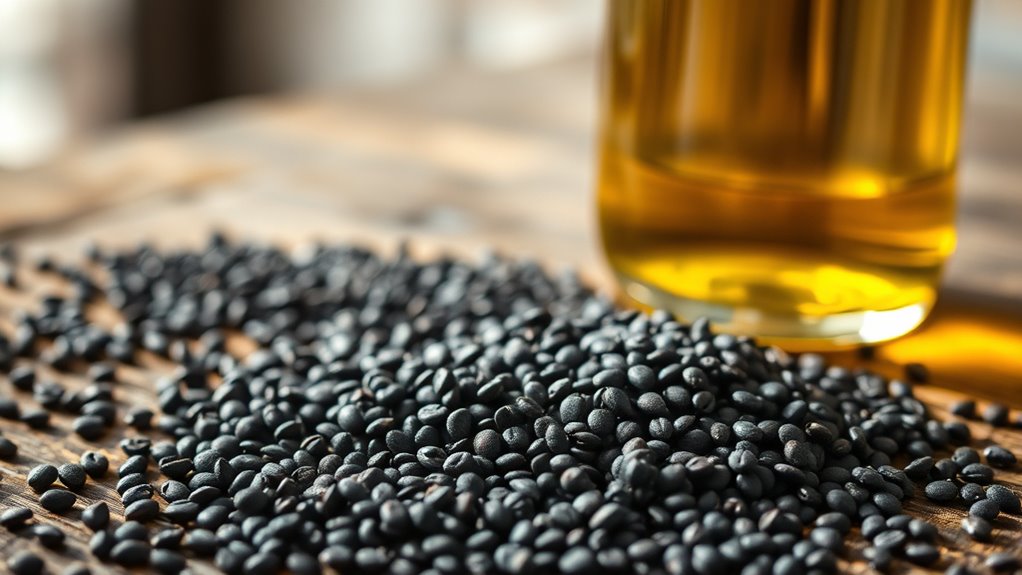
Cold-pressed chia oil has become a popular health supplement thanks to its rich nutrient profile and natural extraction process. When you choose cold-pressed chia oil, you’re tapping into a product that retains its maximum nutritional benefits because the extraction process preserves delicate oils and nutrients. Unlike solvent-based methods, cold-pressing involves mechanically pressing the chia seeds at low temperatures, ensuring that essential antioxidants, omega-3 fatty acids, and other bioactive compounds stay intact. This gentle process not only maintains the purity of the oil but also guarantees that you’re getting a product free from chemicals or heat damage, which can degrade nutritional quality. As a result, cold-pressed chia oil is prized for its high nutritional benefits, including its rich content of alpha-linolenic acid (ALA), fiber, protein, and essential minerals. These nutrients support heart health, improve digestion, and contribute to overall wellness.
You might wonder how the extraction process influences the quality of the oil. With cold-pressing, the seeds are first cleaned thoroughly to remove dirt and debris. Then, they are mechanically pressed using a hydraulic or screw press, applying pressure without heat. This method prevents oxidation and preserves heat-sensitive nutrients, unlike other extraction methods that use heat or chemicals, which can compromise the oil’s purity and nutritional content. Because of this careful process, cold-pressed chia oil is often considered superior in retaining the original health benefits found in the seeds. You’ll notice that the oil has a mild, nutty flavor and a clear, golden hue, which reflects its freshness and purity.
When you incorporate cold-pressed chia oil into your diet, you’re benefiting from a product that offers more than just flavor—it’s a concentrated source of nutrition. The extraction process ensures that you receive the maximum amount of omega-3 fatty acids, antioxidants, and phytochemicals that are naturally present in chia seeds. This makes the oil a versatile addition to salads, smoothies, and even baked goods, providing a convenient way to boost your intake of essential nutrients. By understanding the extraction process and emphasizing the nutritional benefits, you can make informed choices that support your health goals. Essentially, the journey from seed to supplement highlights how careful processing elevates a simple seed into a potent, nutrient-dense oil that can enhance your well-being.
Frequently Asked Questions
How Long Does Cold-Pressed Chia Oil Last Before Spoiling?
Cold-pressed chia oil typically lasts about 1 to 2 months once opened if stored properly. Its shelf life depends on storage tips like keeping it in a cool, dark place and sealing the bottle tightly. Avoid exposing it to heat or light, which can cause spoilage. By following these tips, you can maximize freshness and prevent the oil from spoiling too quickly.
Are There Any Health Risks Associated With Consuming Chia Oil?
You might wonder if chia oil poses health risks. While it’s generally safe, some people could experience allergic reactions, like skin irritation or swelling. If you’re on blood-thinning medications, consult your doctor, as chia oil may enhance blood thinning effects. Always start with small amounts to monitor your body’s response, and choose high-quality, cold-pressed varieties to maximize safety and health benefits.
Can Cold-Pressed Chia Oil Be Used for Cooking at High Temperatures?
You might wonder if cold-pressed chia oil can handle high-heat cooking. Generally, its heat stability is limited, making it unsuitable for high temperatures like frying or sautéing. Its cooking limitations mean you should use it for drizzling or adding to dishes after cooking. For best results, keep in mind cold-pressed chia oil’s delicate nature and avoid exposing it to excessive heat to preserve its nutrients.
Is Cold-Pressed Chia Oil Suitable for All Skin Types?
You might wonder if cold-pressed chia oil suits all skin types. Generally, it’s skin-compatible because it’s rich in omega-3s and absorbs easily. However, if you have sensitive or acne-prone skin, do a patch test first to confirm it doesn’t cause irritation. Its lightweight oil absorption makes it suitable for most skin types, but individual reactions can vary. Always listen to your skin’s response.
How Does the Environmental Impact of Chia Oil Production Compare to Other Oils?
Imagine choosing a meal knowing it’s cooked with eco-friendly ingredients—you’re making a difference. Chia oil production generally has a lower environmental impact compared to other oils due to sustainable farming practices and the use of renewable energy. Unlike palm oil, which often causes deforestation, chia farming promotes soil health and biodiversity. By selecting chia oil, you support eco-conscious choices that help protect our planet’s delicate balance.
Conclusion
As you embrace cold-pressed chia oil, remember it’s more than just a supplement—it’s a symbol of nature’s quiet resilience. Like a seed breaking through the earth’s surface, each drop embodies growth, patience, and transformation. When you incorporate it into your life, you’re nurturing a cycle of vigor rooted in the earth’s silent strength. Let this oil remind you that true wellness blooms from the quiet perseverance of nature’s most humble beginnings.