TL;DR

Get garden gear delivered free — and shop member deals
- Fast, free delivery on millions of items
- Access to Prime Big Deal Days deals on October 6–7
- Prime Video, Amazon Music and more included
Researchers at Suntory Global Innovation Center in Japan genetically engineered roses that flower color charts rate as violet blue, using four inserted genes that produce both blue pigments and helper co-pigment molecules. The results were announced August 25 at the 32nd International Horticultural Congress in Kyoto.
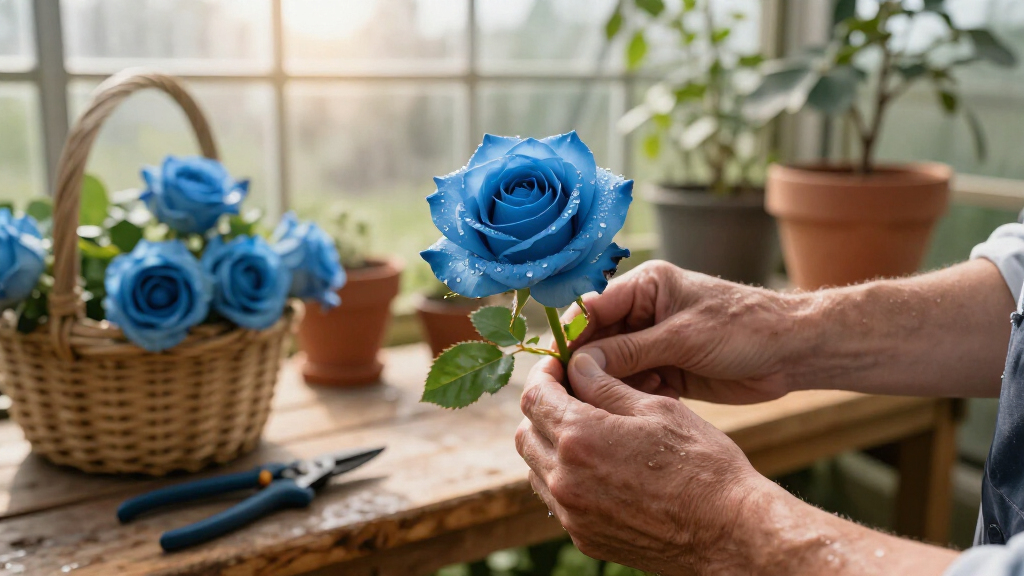
Researchers at the Suntory Global Innovation Center in Kyoto, Japan, have genetically engineered a rose whose flowers are rated violet blue on a standard flower color chart — solving a longstanding challenge in plant science that once seemed impossible. The team announced the results on August 25 at the 32nd International Horticultural Congress in Kyoto, according to a report by Science News.
Roses naturally produce red and yellow pigments but lack the enzyme needed to make blue pigments. In 2004, Suntory researchers genetically modified a rose to produce a blue pigment called delphinidin by inserting the gene for that enzyme. But those earlier flowers came out purplish, suggesting that blue pigment alone is not enough to produce a blue flower.
The new work targeted a second missing piece. Naturally blue flowers such as irises produce blue pigments like delphinidin, but they also rely on nearly colorless co-pigment molecules called flavone C-glycosides. These helper molecules stabilize pigments and make them appear deeper blue. Roses lack the genes to make these co-pigments.
This time, the researchers inserted four genes from other blue-flowering species into a light pink rose, according to Science News. A gene from Canterbury bells (Campanula medium) allowed the engineered roses to produce multiple blue pigments, while two genes from wishbone flowers (Torenia x hybrida) and one from clustered gentian (Gentiana triflora) produced enzymes that make the colorless helper molecules. The researchers found that the higher the level of co-pigments in the petals, the bluer the flowers appeared. The combination of the blue pigment malvidin with a helper molecule called isoorientin produced bluer flowers than roses making only delphinidin. The rose bushes continued producing blue flowers for seven years in greenhouse tests in Japan and three years in field trials in Colombia.
Why Co-Pigments Cracked the Blue Rose
The result matters because it demonstrates that flower color depends on more than pigment alone — the pigment-plus-co-pigment strategy explains why two decades of earlier attempts fell short. The 2004 delphinidin roses were a milestone, but their purplish tone showed that simply giving roses a blue pigment was insufficient. The new findings show that helper molecules, which are nearly colorless on their own, play a decisive role in shifting petal color toward true blue.
The durability of the trait also matters. Seven years of greenhouse flowering in Japan and three years in Colombian fields, as reported by Science News, indicate the engineering is stable over repeated bloom cycles and in different growing conditions — a key question for any eventual commercial or horticultural use. For plant science more broadly, the work provides a template for engineering colors in other flowers that lack the required pigment and co-pigment machinery.
Two Decades of Blue Rose Engineering
The quest for a blue rose has run for decades. Roses make red and yellow pigments naturally but have no enzyme for blue pigments, which is why true blue roses were long considered unattainable through conventional breeding. Suntory’s 2004 breakthrough inserted a gene enabling production of delphinidin, the blue pigment found in flowers like irises, but the resulting blooms registered as purple rather than blue.
The missing factor, identified through study of naturally blue flowers, was the flavone C-glycoside co-pigments that stabilize pigments and deepen their blue appearance. By drawing genes from three separate blue-flowering species — Canterbury bells, wishbone flowers, and clustered gentian — the new work assembled both the pigment pathway and the co-pigment pathway in a single rose. The announcement was made at the 32nd International Horticultural Congress, held in Kyoto.
“Researchers in Japan genetically engineered a rose to be blue. It took more than just blue pigment to achieve the violet blue hue.”
— Science News report
Limits of the Current Blue Hue
Several points remain open. The roses are rated violet blue on a flower color chart, not a pure spectral blue, and the team itself hopes to further enhance the hue, indicating the current color is not considered final. It is not yet clear from the announcement how the color varies across petal regions, bloom stages, or a wider range of climates beyond the Japanese greenhouses and Colombian field sites tested.
The announcement was made at a conference and by the company; detailed peer-reviewed data, including pigment quantification and genetic construct specifics, were not described in the Science News report. No timeline or plans for commercial release have been stated.
Deepening the Blue
The research team hopes to further enhance the hue, according to Science News, suggesting continued work on boosting co-pigment levels or adjusting pigment combinations to push the color closer to a purer blue. Scientific publication of the full results would allow other researchers to evaluate and build on the four-gene strategy.
Longer term, the co-pigment approach could be applied to other flower species that lack the helper molecules needed for blue coloration. Any path from laboratory greenhouse to consumer markets would also depend on regulatory review of genetically modified ornamentals in the countries where such roses might be sold — a process for which no details have been announced.
Key Questions
Is this the first true blue rose?
According to the Science News report, the engineered roses are rated violet blue on a flower color chart, which is bluer than earlier attempts but still not a pure blue. The researchers say they hope to further enhance the hue.
Why were earlier blue roses only purple?
The 2004 Suntory roses produced the blue pigment delphinidin but lacked co-pigment molecules that stabilize pigments and deepen blue tones. Without those helpers, the flowers appeared purplish.
What genes were added to create the blue color?
Four genes from other blue-flowering species: one from Canterbury bells for multiple blue pigments, two from wishbone flowers, and one from clustered gentian — the latter three producing enzymes that make the colorless co-pigment helper molecules.
Is the blue color stable over time?
According to Science News, the rose bushes produced blue flowers for seven years in greenhouse tests in Japan and three years in field trials in Colombia, indicating the trait is durable across repeated blooms.
Can I buy a blue rose?
No commercial release plans or timeline have been announced. The results were presented at a scientific conference, and any commercialization would likely require regulatory review of the genetically modified plants.
Source: hn
Fall yard work Picks
leaf blowers
As an affiliate, we earn on qualifying purchases.