TL;DR

Get garden gear delivered free with Prime
- Fast, free delivery on millions of items
- Prime Video, Amazon Music and more included
- Member-only deals all year
A Country Living gardening report advises harvesting tender herbs before freezing weather and preserving them by drying or freezing. Basil is especially frost-sensitive; hardier herbs such as thyme, oregano and sage can tolerate light frost, but may be difficult to gather once snow arrives. The report does not provide a publication date or a specific harvest calendar.
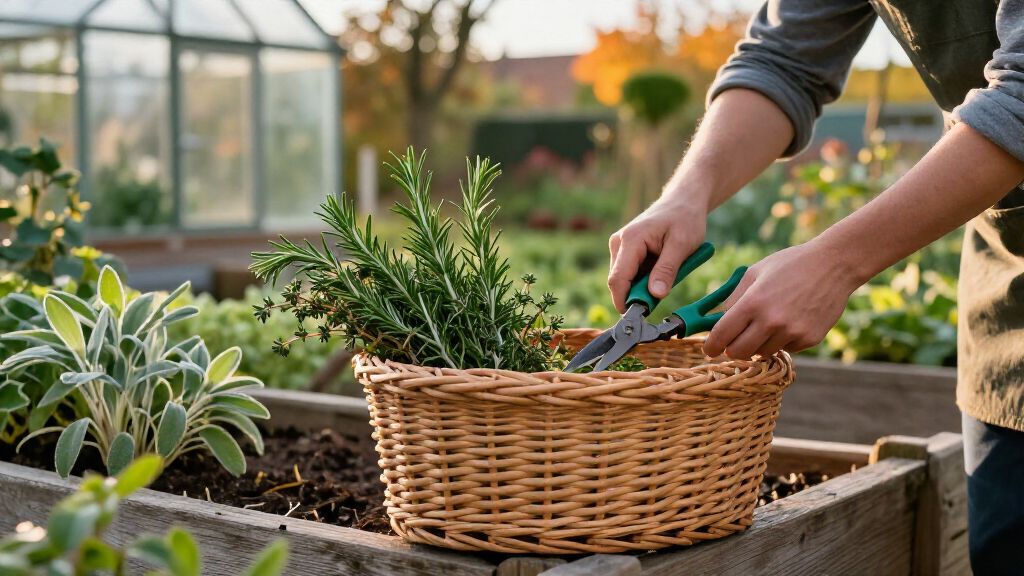
A Country Living gardening report recommends harvesting tender herbs before the first hard frost and preserving them by drying or freezing for winter cooking. It names nine herbs, from frost-sensitive basil to hardier thyme and sage, and describes ways to store each for use when fresh garden growth is unavailable.
Basil is the most vulnerable of the herbs covered, according to the report, which says it does not tolerate temperatures in the 40s. Rather than drying it, the report suggests blending basil with a little water and freezing the purée in ice cube trays. The cubes can be added to soups or sauces, and the report says this method tends to retain the herb’s color better than drying.
Chives, parsley and lemon verbena should also be gathered ahead of colder weather, though their frost tolerance differs. Chives may withstand some cold but can turn mushy after a freeze; the report advises cutting and finely snipping them before oven-drying. Parsley can survive light frost, but should be harvested before a hard freeze, then oven-dried and crumbled into jars. Lemon verbena will not survive a hard freeze; its leaves can be picked individually or stems air-dried in bunches.
The report also recommends preserving lemon balm, mint, thyme, oregano and sage. Lemon balm and mint can be dried as leaves or in bunches of stems, while thyme, oregano and sage can be air-dried in bunches or oven-dried, depending on the herb. It says drying intensifies the flavor of thyme and oregano and notes that sage is commonly used in winter cooking, including Thanksgiving dishes.
Preserving Herbs for Winter Meals
Harvesting before frost can preserve herbs that would otherwise be damaged or become inaccessible during winter. The difference between light frost and a hard freeze matters: some plants can withstand a brief cold snap, while tender leaves may be ruined by freezing conditions. Having stored herbs on hand gives cooks options for flavoring soups, sauces and other winter dishes without relying on fresh garden growth.
The methods also vary by herb. Freezing basil in small portions offers a different option from drying leaves or stems, while air-drying bunches can be practical for several woody or leafy herbs. These are general recommendations, not a guarantee of results: local weather, growing conditions and storage practices can affect both harvest timing and quality.
As an affiliate, we earn on qualifying purchases.
Frost Tolerance Varies by Herb
The report distinguishes herbs that are particularly vulnerable from those that can remain outdoors through some cold. It describes basil as highly frost-sensitive, says chives can turn mushy after the first freeze, and notes that parsley can survive light frost but not a hard freeze. Lemon verbena also will not survive a hard freeze.
Some perennial herbs may return in later seasons but still lose their aboveground growth in winter. The report says lemon balm and mint are perennial to USDA Zone 3, while thyme is typically hardy to Zone 5 and oregano and sage to Zone 4. Even where plants survive, harvesting before snow can make them easier to gather. The source does not provide local frost dates, so gardeners need to use conditions in their own area.
“Basil is the most frost-sensitive, as in, it won’t even tolerate temperatures into the 40s.”
— Country Living report
As an affiliate, we earn on qualifying purchases.
Local Frost Dates Remain Key
The source gives no publication date, location-specific forecast or first-frost calendar, so it does not establish when any particular gardener should harvest. Frost timing varies by location and year. The report also does not specify oven temperatures, drying times, storage life or detailed food-safety guidance for dried herbs.
Its statements about cold tolerance and preservation are general guidance attributed to the report, not guarantees for every garden or climate. Gardeners should check local forecasts and account for their plants’ condition; the source does not compare the methods through testing or provide measured shelf-life results.
As an affiliate, we earn on qualifying purchases.
Check Forecasts and Prepare Storage
Gardeners can use local forecasts to identify the approaching risk of frost, then prioritize basil, lemon verbena and other tender growth before colder conditions arrive. Herbs that tolerate light frost may have more time, but waiting through a hard freeze risks damage; snow can also make hardy varieties harder to harvest.
After cutting, choose the preservation method the report lists for each herb: freeze basil purée in cubes, or dry suitable leaves and stems before storing them. The source offers no single schedule or processing specifications, so harvest timing should follow local conditions and drying should be carried out with care.
As an affiliate, we earn on qualifying purchases.
Key Questions
Which herb should be harvested first?
Basil is described as the most frost-sensitive herb in the report. It says basil does not tolerate temperatures into the 40s, so harvest it before those conditions arrive.
Can herbs be harvested after a light frost?
Some can. The report says parsley and thyme can survive a light frost, but advises harvesting parsley before a hard freeze. Chives may tolerate some cold but can become mushy after the first freeze.
How does the report recommend preserving basil?
Blend basil with a little water, purée it, and freeze the mixture in ice cube trays. The report suggests adding the cubes to soups and sauces.
Which herbs can be air-dried?
The report recommends air-drying bunches of stems for lemon verbena, lemon balm, thyme, oregano and sage. It also lists oven-drying as an option for several of these herbs.
When is the first frost in my area?
The report does not give local frost dates. Check a local forecast and use conditions in your area to decide when to harvest.
Source: rss
Halloween Picks
halloween
As an affiliate, we earn on qualifying purchases.