TL;DR

Get garden gear delivered free with Prime
- Fast, free delivery on millions of items
- Prime Video, Amazon Music and more included
- Member-only deals all year
Gardening Know How reports that fall grass seed can take from about a week to nearly a month to emerge, depending on the grass type and conditions. It recommends improving seed-to-soil contact, keeping the seedbed consistently moist and applying a thin compost top dressing; these steps support germination but do not guarantee faster growth.
Grass seed can take anywhere from about a week to nearly a month to sprout, so bare patches two weeks after fall seeding do not necessarily mean the seed has failed. Gardening Know How says grass type, soil temperature, moisture and contact with the soil all affect emergence, and outlines three practices that can help create better conditions: preparing the surface, watering lightly and often, and adding a thin compost cover.
The report says perennial ryegrass may emerge in five to 10 days, while tall fescue generally takes one to two weeks. Kentucky bluegrass is slower, often taking at least two weeks and sometimes closer to a month. A lawn seed blend containing multiple grasses can therefore appear uneven as the faster varieties come up before the slower ones.
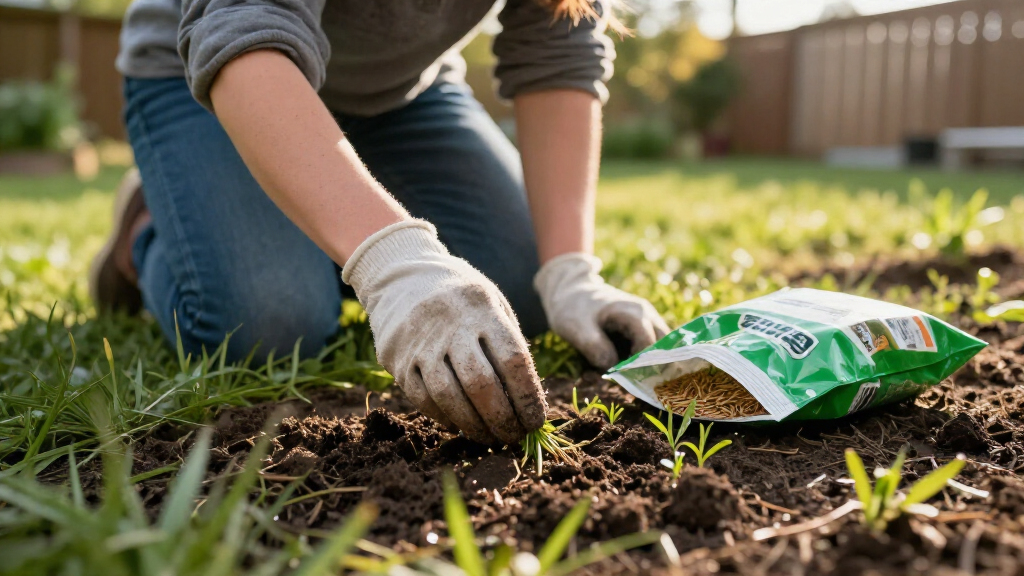
For better seed-to-soil contact, the report recommends mowing existing grass to about 1½ to 2 inches, raking away loose debris and lightly roughing up the surface to expose soil. After spreading seed, rake it into roughly the top ⅛ to ¼ inch of soil or press it down gently. Seed resting on thatch or leaves may dry out or fail to root into the ground.
The seedbed should stay damp, not muddy. Short, light watering once or twice a day may help keep the top inch of soil moist, with an extra session on dry, windy days. A screened-compost top dressing can slow surface drying and shield seed from heavy rain, but the report advises limiting it to about ¼ inch so seed and soil remain visible.
Why Uneven Fall Growth Happens
Knowing the expected germination range can help homeowners distinguish slow-growing varieties from a failed seeding. A patch of Kentucky bluegrass may remain bare after faster ryegrass elsewhere has sprouted, even when both were sown at the same time. The report also cautions that visible green growth is not the same as an established lawn: new grass needs additional weeks to develop roots.
Timing can affect whether seedlings have enough time to establish before freezing weather. Gardening Know How says the fall seeding window is often mid-August to mid-September in northern areas, while parts of the South, including Tennessee, may allow seeding into mid-October. Late sowing leaves less time before a hard freeze, and the suitable dates vary by region and conditions.
Products Worth Considering

Le Creuset Signature 6.5-Quart Deep Round Dutch Oven with Light Gold Crucible Knob, Enameled Cast Iron, Bleu Riviera

Instant Pot Pro Plus 6 Qt 10-in-1 Electric Pressure Cooker, Black

De’Longhi Classic Matte Black Espresso Machine with Milk Frother
As an affiliate, we earn on qualifying purchases.
Grass Type Sets the Schedule
Cool-season grasses are commonly seeded in fall because soil can retain summer warmth while air temperatures cool and rainfall may increase. According to the report, these seeds generally need soil temperatures above about 50°F to germinate. Colder ground can delay growth, potentially until spring. A soil thermometer can help gardeners check conditions rather than relying only on the calendar.
The advice applies to cool-season lawns such as ryegrass, fescue and Kentucky bluegrass. Warm-season grasses, including Bermuda, zoysia and bahiagrass, are generally seeded in late spring or early summer after the soil warms. The report describes ryegrass as a faster option for quick fall color, fescue as suited to areas with hot summers, and Kentucky bluegrass as slower to emerge but able to spread through underground rhizomes once established.
What Can Delay Germination
The report gives typical germination ranges, not a guaranteed timetable for every lawn. Exact emergence depends on local soil temperature, weather, seed condition and care; the source does not provide controlled test results showing how many days each of the three techniques saves. It is also not possible to diagnose a particular bare patch without knowing when it was seeded, which grass varieties were used and whether the seedbed stayed moist.
The source notes that seed can remain dormant in soil that is too cold, but does not say when a specific lawn will sprout or whether late-fall seed will survive winter. Gardeners should check the seed packaging and local growing conditions. The suggested watering schedule is a general guide, not a fixed requirement for every soil or climate.
Check Conditions Before Reseeding
Gardeners waiting on a newly seeded lawn can first check the bag for the grass varieties and compare their expected germination times. They can also inspect whether seed is touching soil, measure soil temperature and check that the surface remains moist without becoming waterlogged. Reseeding immediately may be unnecessary if the lawn contains slower-germinating grass or conditions have been cool.
Once seedlings have rooted, the report recommends watering less often but more deeply. Homeowners deciding whether to reseed should consider the remaining time before a hard freeze and follow the seed supplier’s directions for their grass type and location. The source does not specify a universal deadline for waiting before reseeding.
Key Questions
How long should grass seed take to sprout?
It depends on the grass. The report gives a range from five to 10 days for perennial ryegrass to as long as about a month for Kentucky bluegrass. Weather and soil conditions can change the timing.
Does no growth after two weeks mean the seed has failed?
Not necessarily. Kentucky bluegrass can take longer than two weeks, and cold soil or poor seed-to-soil contact can delay emergence. Check the seed type and growing conditions before deciding whether to reseed.
How often should I water newly sown grass seed?
The report suggests short, light watering once or twice a day to keep the top inch of soil damp, with an additional session on dry, windy days. Avoid saturating the area; conditions and soil type affect how often watering is needed.
How much compost should cover the seed?
Apply a light layer of screened compost, no more than about ¼ inch deep, according to the report. A thicker layer can cover seed too heavily; some seed and soil should remain visible.
When is fall too late to sow grass seed?
The suitable window varies by region. The report says northern areas often reach the end of the window by October, while parts of the South may allow seeding into mid-October. Late sowing leaves seedlings less time to establish before a hard freeze; check local guidance and the seed label.
Source: gardeningknowhow.com