
TL;DR

Get garden gear delivered free with Prime
- Fast, free delivery on millions of items
- Prime Video, Amazon Music and more included
- Member-only deals all year
An Amateur Gardening report advises gardeners to improve soil with organic matter such as homemade compost, leaf mould and well-rotted manure. It also suggests reusing old container compost, leaving pea and bean roots in place, collecting leaves and encouraging healthy soil fungi and microorganisms.
Amateur Gardening has published advice urging gardeners to improve soil with compost, leaf mould and other organic matter, rather than waiting for plants to struggle before applying commercial fertiliser. The report says organic materials can improve soil structure and support organisms that help roots grow, although it does not provide a controlled comparison or quantify results.
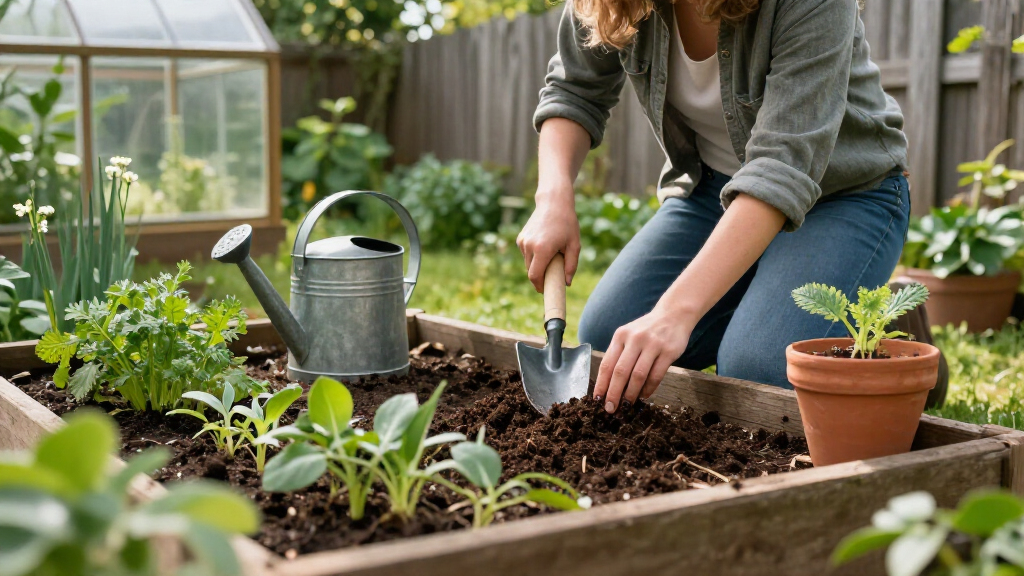
The report’s author describes using homemade compost made from kitchen peelings, prunings, clippings and grass cuttings, alongside well-rotted leaf mould and manure. These materials can act as soil conditioners: the article says they help improve thin soil and open up heavy clay. As the organic matter decomposes, worms and other soil organisms help incorporate it into the ground.
The article links soil health with worm activity and soil-dwelling microorganisms, including mycorrhizal fungi. It says these organisms support root development and growth. The author argues that feeding soil in this way can nourish plants over time, rather than relying on a short-term application of commercial fertiliser. That is advice from the article, not a guarantee that every garden will need no fertiliser.
Its four suggested steps are to reuse old container or grow-bag compost as a soil conditioner; leave pea and bean roots in the ground or grow green manures; collect fallen leaves for compost or leaf mould, while mowing leaves on lawns; and encourage healthy fungi and microorganisms. The report says legume roots and green manures can add nitrogen as they break down, but gives no specific planting instructions or timelines.
Building Soil Health Over Time
For gardeners, the main practical point is to treat soil as an ongoing part of plant care, rather than responding only when growth looks poor. Adding organic material can address soil structure as well as provide nutrients, while making use of garden and kitchen waste that might otherwise be discarded. The advice may be especially relevant to people managing thin or heavy clay soils, which the report identifies as conditions that organic matter can help improve.
The approach is not presented with measured results, costs or a comparison against particular fertilisers. Outcomes depend on the soil, the materials used and how they are applied. Still, the article offers low-tech options—including a small compost bin or wormery—and encourages gardeners to make use of available green waste. The practical implication is to build soil condition gradually, rather than assume a single product will address every plant problem.
Products Worth Considering

Traeger Westwood Wood Pellet Grill and Smoker, 653 sq. in., WiFIRE

Weber Searwood XL 600 Wood Pellet Smoker Grill, 36 inches, Black

Ninja French Door Premier Air Fry Oven, 10-in-1, 20.3 Qt, Stainless Steel, FO101
As an affiliate, we earn on qualifying purchases.
From Plant Feeding to Soil Care
The Amateur Gardening report frames soil improvement as an alternative to what it calls a quick-fix response: adding commercial fertiliser after plants fail to thrive. Its author draws on experience in a garden with chalky soil, noting that different areas may need different care and that places receiving fallen leaves can benefit from them. This is personal experience, not a claim that all chalky gardens behave alike.
The advice focuses on organic materials that are available to many household gardeners. Homemade compost, leaf mould, manure and reused growing compost are presented as conditioners, while pea and bean roots and green manures are suggested as ways to return nutrients to the ground. The article does not prescribe application amounts, identify a best product for every soil type or replace soil testing where a gardener needs a diagnosis.
“feed the soil, not the plant”
— Amateur Gardening report
Results Depend on Garden Conditions
The report is practical gardening advice, not a study measuring how much compost improves yields or how quickly soil changes. It does not state the quantities or frequency for applying compost, leaf mould or manure, and it offers no soil-test results for the author’s garden. The degree of benefit will depend on the existing soil and the material used.
It is also unclear whether organic matter alone would meet the needs of a particular garden or plant. The article’s suggestion that gardeners may not need commercial fertilisers is the author’s conclusion, not a universal rule. Readers with persistent plant problems are not given a diagnostic process to distinguish nutrient shortages from other causes.
Seasonal Steps for Gardeners
The author says they plan to spend the following week spreading homemade compost where it is most needed. For readers following the article’s guidance, the immediate options include collecting leaves, making compost or leaf mould, and using suitable old container compost as a conditioner. Pea and bean roots can be left in the soil after harvest, or gardeners can consider growing green manures.
The report gives no follow-up schedule or planned measurements of soil or plant performance. Gardeners will need to observe how their own soil responds over time and seek locally appropriate guidance where they are unsure about a product or application.
Key Questions
What does “feed the soil, not the plant” mean?
It means adding organic materials such as compost, leaf mould or well-rotted manure to improve soil and support soil organisms, rather than relying only on fertiliser applied to plants. The report presents this as general advice, not a rule for every garden.
Can old container compost be reused?
The article says old container or grow-bag compost may have lost some of its growing strength but can still be used as a soil conditioner. It does not give a recommended amount or advise using it as the sole growing medium for new plants.
Why does the article recommend leaving pea and bean roots in the soil?
The report says pea and bean roots, like green manures, can fix nitrogen and release it as they break down. It does not provide instructions for particular crops or soil conditions.
Does this advice mean commercial fertiliser is never needed?
No. The article argues that organic matter can reduce reliance on commercial fertilisers, but it does not establish that fertiliser is unnecessary in every garden. Soil conditions, plant needs and the cause of poor growth can vary.
Source: amateurgardening.com