To grow chia organically, focus on enriching your soil with compost made from kitchen scraps and yard waste to boost nutrients and microbial health. Use natural pest controls like beneficial insects, neem oil, or insecticidal soap, and prevent pests by maintaining good air circulation and removing debris. Regularly inspect your plants for early signs of trouble, and support a balanced ecosystem to keep pests at bay. Keep exploring to discover more tips for thriving, healthy chia plants.

Get garden gear delivered free with Prime
- Fast, free delivery on millions of items
- Prime Video, Amazon Music and more included
- Member-only deals all year
Key Takeaways
- Use organic compost to enrich soil, improve plant health, and strengthen chia plants against pests.
- Implement natural pest control methods like beneficial insects, neem oil, and physical barriers.
- Select garden sites with good airflow and sunlight to reduce pest attraction and promote healthy growth.
- Regularly inspect plants for early pest detection and apply organic solutions promptly.
- Foster a balanced ecosystem with pollinators and soil microbes to naturally suppress pest populations.
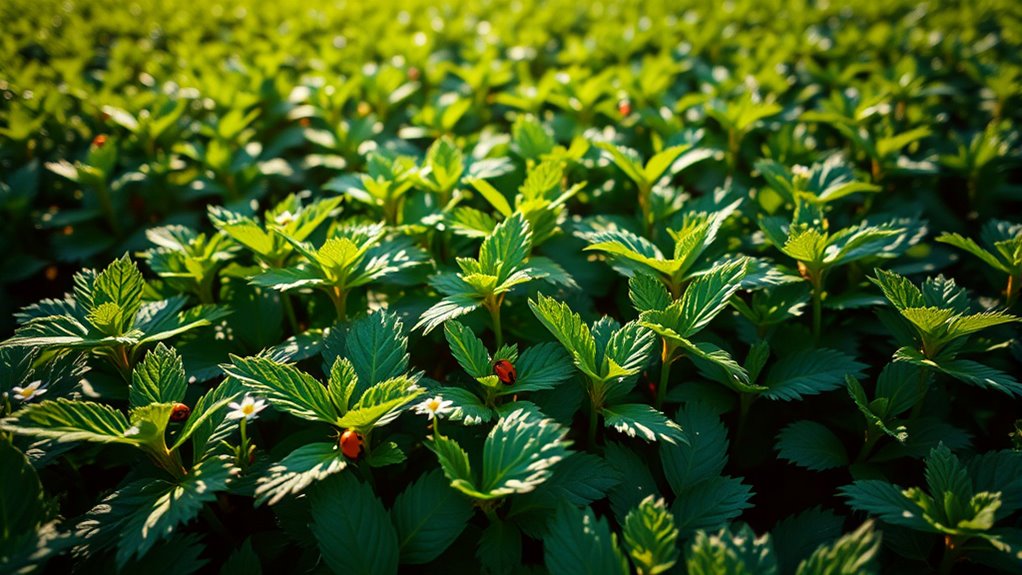
Have you ever wondered how to grow chia organically? The good news is that you can cultivate healthy, nutrient-rich chia seeds without relying on synthetic fertilizers or pesticides. The key lies in understanding natural methods like organic composting and pest management, which work hand-in-hand to create a thriving, sustainable garden. When you focus on building healthy soil through organic composting, you’re providing your chia plants with the essential nutrients they need to grow strong and resilient. Composting kitchen scraps, yard waste, and other organic materials transforms waste into rich humus that improves soil structure, boosts microbial activity, and enhances water retention. This natural fertilizer supplies nitrogen, phosphorus, and potassium, promoting vigorous plant growth without the risk of chemical buildup. Plus, compost encourages beneficial insects and microorganisms that help fend off pests naturally. Incorporating soil health practices further enhances the resilience of your chia plants by fostering a balanced ecosystem underground.
Speaking of pest management, you’ll want to adopt strategies that protect your chia plants without harmful chemicals. Start by choosing the right location—ideally, a spot with good air circulation and plenty of sunlight, which helps prevent many common pests and diseases. Keep your garden clean by removing weeds and plant debris that can harbor pests or disease organisms. You can also introduce beneficial insects like ladybugs or lacewings, which prey on pests such as aphids or spider mites. Using natural barriers like row covers or insect netting can physically block pests from reaching your chia plants, especially during their vulnerable early stages. If pests do appear, opt for organic solutions like neem oil or insecticidal soap, which are effective yet gentle on your plants and the environment.
Maintaining healthy soil through organic composting not only provides nutrients but also strengthens your plants’ natural defenses against pests. When your chia plants are well-nourished and healthy, they’re less likely to suffer damage from pests or diseases. Regularly inspecting your plants allows you to catch any issues early, and applying organic pest controls prevents infestations from escalating. Remember, a balanced ecosystem in your garden is the best defense—encourage pollinators, beneficial insects, and soil microbes to keep your chia crop thriving naturally. By combining organic composting with thoughtful pest management, you create an eco-friendly, resilient garden where chia can flourish without synthetic inputs, giving you a plentiful, pure harvest.
Frequently Asked Questions
How Do I Start Chia Seeds From Organic Sprouts?
To start chia seeds from organic sprouts, first make certain proper seed germination by soaking the seeds in water for 10-15 minutes. Then, plant them in moist, well-draining soil and keep the soil consistently moist. During sprout care, provide ample sunlight and avoid overwatering. Watch for healthy sprouts to emerge within a week, and continue to care for them as they grow into strong, organic chia plants.
What Are Common Pests That Attack Chia Plants?
A stitch in time saves nine, so knowing your pests helps you act early. Common pests attacking chia plants include aphids, spider mites, and caterpillars. To prevent these, practice pest prevention with organic pest control methods like introducing beneficial insects or applying neem oil. Staying vigilant lets you catch problems early, keeping your chia healthy and thriving without harmful chemicals. Always monitor your plants regularly for signs of these pests.
Can I Grow Chia Without Any Fertilizers?
You can grow chia without fertilizers by focusing on healthy, organic soil amendments like compost and manure. While natural pest repellents help keep pests at bay, they don’t replace the need for nutrients. To guarantee your chia thrives, maintain soil richness and proper watering. This approach supports strong plant growth naturally, reducing the need for chemical inputs and promoting a sustainable, organic chia crop.
How Often Should I Water Organic Chia Plants?
A stitch in time saves nine, so proper moisture management is key. You should water your organic chia plants about once a week, adjusting for weather and soil conditions. Keep the soil consistently moist but not waterlogged. Check the top inch of soil regularly; if it feels dry, give your plants a thorough watering. This ensures healthy growth without overwatering, fostering strong, resilient chia plants.
Are There Specific Organic Compost Recipes for Chia?
You can create a simple organic compost recipe for chia by combining compost tea and worm castings. Mix one part worm castings with two parts mature compost, then steep in water for a day to make compost tea. Use this nutrient-rich mixture to feed your chia plants regularly, providing essential nutrients and promoting healthy growth. This natural approach keeps your chia organically healthy and productive.
Conclusion
By using natural pest control and organic fertilizers, you can successfully grow chia sustainably. Imagine a small farmer who switched to composting and companion planting; her chia crop thrived without chemical inputs, yielding a healthier harvest. This approach not only protects your soil and environment but also enhances your crop’s quality. Embrace organic methods, and you’ll enjoy a bountiful, eco-friendly chia harvest that benefits both your land and your health.
Fall Picks
fall essentials
As an affiliate, we earn on qualifying purchases.