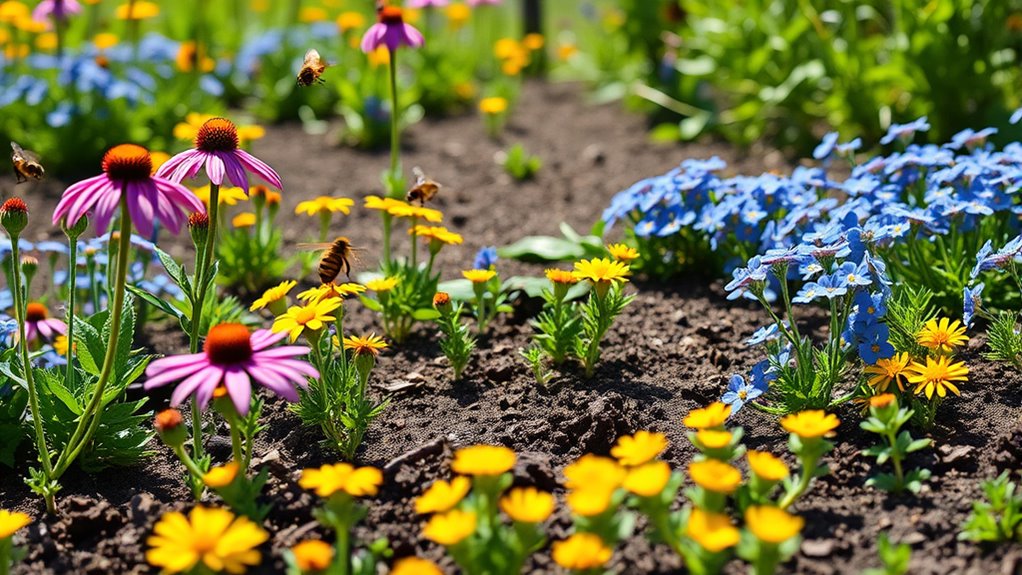

To create a pollinator-friendly garden from seed, start by choosing native plants that bloom at different times for continuous food sources. Arrange taller plants at the back and shorter ones in front, clustering species together. Include shallow water sources and bare soil for nesting. Use diverse, pest-resistant native wildflowers and avoid chemicals. Keep an eye on maintenance and habitat features, and you’ll be amazed at the vibrant pollinator activity you can foster with just a few simple steps.
Key Takeaways
- Select and sow native plant seeds that bloom at different times to provide continuous nectar and pollen sources.
- Design the garden layout with layered plantings, clustering similar species, and placing taller plants at the back.
- Incorporate shallow water sources and bare soil patches to support hydration and nesting for pollinators.
- Avoid pesticides, choose pest-resistant native seeds, and maintain diverse plant species to promote healthy pollinator habitats.
- Monitor and maintain seedings, water sources, and plant health regularly to ensure ongoing pollinator support and garden success.
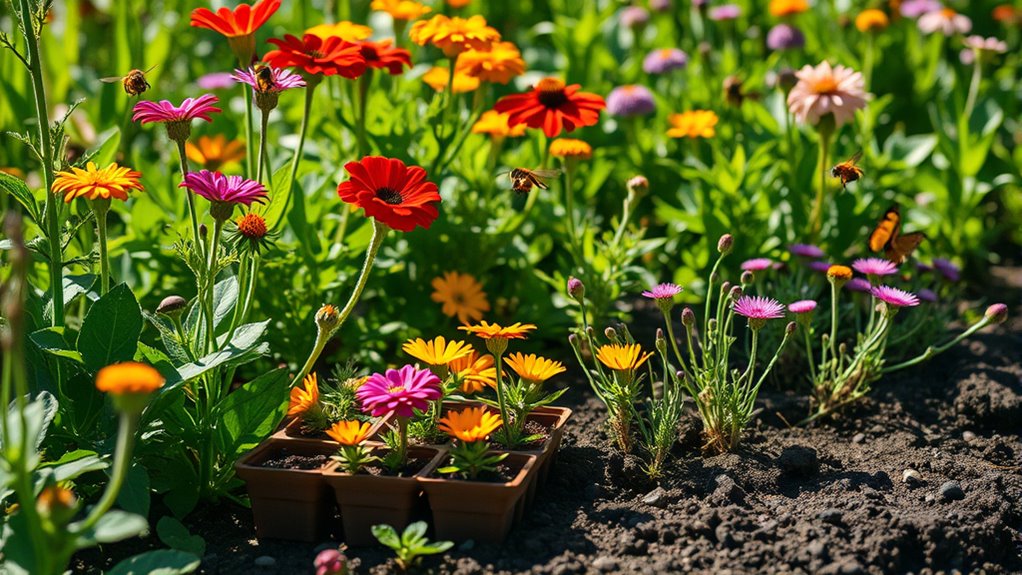
Creating a pollinator-friendly garden is one of the most rewarding ways to support local ecosystems and enjoy vibrant, lively blooms throughout the season. To start, focusing on native plant selection is essential. Native plants are naturally adapted to your region’s climate and soil, making them more resilient and easier to grow from seed. They also provide the most suitable nectar and pollen sources for local pollinators like bees, butterflies, and hummingbirds. When choosing seeds, look for native species that bloom at different times of the year, ensuring a continuous food source for pollinators. Incorporate a variety of plants with diverse flower shapes, sizes, and colors to attract a wide range of species. Native wildflowers, milkweed, goldenrod, and wild asters are excellent options that support native pollinators and thrive with minimal intervention.
Next, consider your garden layout design carefully. A thoughtfully designed layout not only enhances the visual appeal but also maximizes pollinator activity. Place taller plants towards the back of your garden bed and shorter ones in front, creating accessible flowering areas for pollinators of all sizes. Cluster plants of the same species together in groups, which makes it easier for pollinators to find and efficiently gather nectar and pollen. Incorporate layered plantings—ground covers, mid-height plants, and taller blooms—to create a diverse habitat that offers shelter and food at different levels. Avoid using pesticides and herbicides, as these chemicals can harm pollinators. Instead, design your garden with native plants that are naturally pest-resistant, reducing the need for chemical intervention.
Water sources are also essential for supporting pollinators. Include shallow dishes with clean water or create small mud puddles in your garden, as many pollinators rely on water for hydration and nesting. Make sure your garden layout leaves open sunny areas that attract pollinators, since most are more active in warm, sunny conditions. Additionally, leaving some areas undisturbed with natural debris or bare soil can provide nesting sites for ground-nesting bees. When planning your garden, think about accessibility and maintenance—easy access to different zones allows you to monitor plant health, collect seeds, and make adjustments as the season progresses.

Camas- Pollinator Wildflower Seed Packets – (20) Party Favors to Attract Bees, Butterflies, and Hummingbirds to Your Plant and Flower Garden-Annual Wildflower Mix
Wild flower seed packets include a beautiful selection of 11 flowers seeds including; Bachelor Button, Cornflower, Calendula, Cosmos,…
As an affiliate, we earn on qualifying purchases.
As an affiliate, we earn on qualifying purchases.
Frequently Asked Questions
Which Native Plants Attract the Most Pollinators?
When choosing native plants to attract pollinators, focus on native plant selection that aligns with pollinator preferences. Flowers like coneflowers, bee balm, and milkweed are highly attractive to bees, butterflies, and hummingbirds. You should plant a variety of species that bloom at different times to sustain pollinators year-round. By understanding these preferences, you’ll create a vibrant, pollinator-friendly garden that supports local ecosystems and promotes healthy pollinator populations.
How Do I Prevent Pests in My Pollinator Garden?
Pests and pollinators share the same space, but you can keep them balanced with smart strategies. You should practice companion planting, pairing plants that repel pests naturally with your pollinator favorites. Use natural repellents like neem oil or insecticidal soap sparingly, focusing on affected areas. By fostering a diverse garden, you’ll discourage pests while supporting pollinators, creating a thriving, balanced ecosystem that benefits your entire garden.
What Soil Type Is Best for Pollinator-Friendly Seeds?
For pollinator-friendly seeds, you want well-draining soil with good fertility. You should consider adding a soil amendment like compost to improve nutrient content and structure. If your seeds require seed stratification, guarantee you mimic natural conditions by chilling them if needed. This preparation helps seeds germinate successfully, giving your pollinator garden a healthy start. Choose a loamy soil mix for ideal growth and better support for pollinators.
How Often Should I Water Newly Planted Seeds?
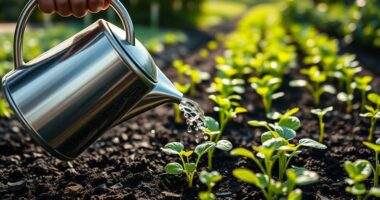
Your garden’s future depends on your watering schedule—think of it as the heartbeat of seed germination! For newly planted seeds, keep the soil consistently moist but not soaked. Water lightly once a day or every other day, depending on weather conditions, to encourage steady growth. Too much water can drown seeds, while too little stalls germination. Stay attentive, and your seeds will flourish into vibrant pollinator magnets!
Can I Grow a Pollinator Garden in a Small Urban Space?
Yes, you can definitely grow a pollinator garden in a small urban space. Container gardening and rooftop planting are perfect options, allowing you to create a vibrant habitat even in limited areas. Use pots or raised beds filled with native flowers, herbs, and flowering plants that attract pollinators. Keep the soil healthy, water regularly, and position your containers where pollinators can easily access them for a thriving, eco-friendly garden.

4 Pack Bee Watering Station with Anti Drowning Island, Double Layers Flower Design Metal Pollinator Water Feeder, Colorful Butterfly Drinking Bath for Outdoor Garden Yard Decor(Red,Blue,Yellow,Green)
{DURABLE METAL CONSTRUCTION} – Made from rust-resistant metal, these watering stations are built to last through all seasons…
As an affiliate, we earn on qualifying purchases.
As an affiliate, we earn on qualifying purchases.
Conclusion
Remember, a garden is like a handshake—what you put in determines what you get out. By choosing native plants, avoiding pesticides, and planting diverse flowers from seed, you’ll attract pollinators and support their essential role. Patience is key; a thriving, pollinator-friendly garden doesn’t happen overnight. Stick with it, and you’ll enjoy a vibrant, buzzing oasis that benefits all. As the saying goes, “Good things come to those who wait”—and your garden will be proof of that.

Fruivity 4000+ Bee Balm Seeds for Planting, Color Mix Native Wildflower Seeds, Heirloom & Open Pollinated Perennial Flower Seeds to Plant Outside Flower Herb Garden
Premium Flower Seeds: 4000+ Premium bulk package of bee balm seeds to establish a garden filled with purple,…
As an affiliate, we earn on qualifying purchases.
As an affiliate, we earn on qualifying purchases.

BeeQuestify Mason Bee Tubes 300 Pack – Kraft Paper Bee Nesting Tubes for Mason Bees, 5/16" x 6" Size, Ideal for Filling Mason Bee Houses and Garden Pollination
Boost Garden Pollination with Mason Bees: Attract friendly mason bees to your outdoor space, enhancing flower and crop…
As an affiliate, we earn on qualifying purchases.
As an affiliate, we earn on qualifying purchases.