TL;DR

Get garden gear delivered free with Prime
- Fast, free delivery on millions of items
- Prime Video, Amazon Music and more included
- Member-only deals all year
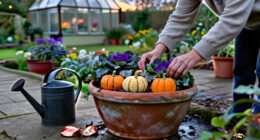
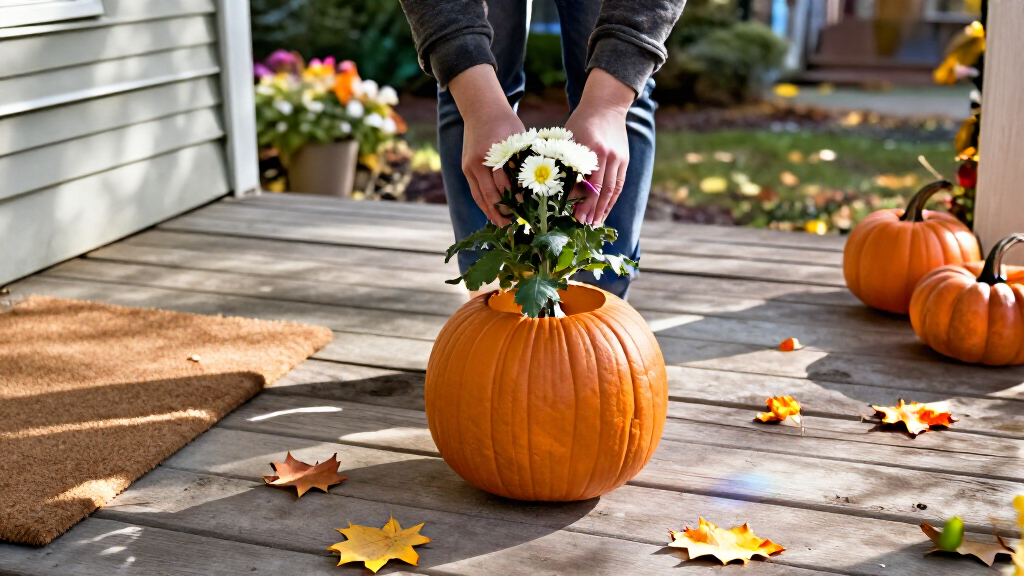
A Homes & Gardens report describes a DIY fall decoration that uses a hollowed pumpkin as a planter for chrysanthemums and other seasonal flowers. The project calls for drainage holes and a pumpkin large enough for the plant’s roots; the pumpkin is a temporary container that can be composted when the display ends.
A DIY pumpkin planter is gaining attention as a fall porch decoration, with a Homes & Gardens report showing how to hollow out a pumpkin and use it to display chrysanthemums and other seasonal flowers. The idea combines a traditional autumn decoration with container planting, but the pumpkin is a temporary vessel, and drainage holes are needed to help prevent waterlogged soil.
The process described by Homes & Gardens starts by cutting a lid from a pumpkin, scooping out its seeds and pulp, then drilling one to three holes in the bottom. The pumpkin is partly filled with potting soil before the flowers are added and secured with more soil. The report recommends choosing a pumpkin with enough depth and width for the selected plants’ roots and growth.
The writer says the project took about 20 minutes and cost less than $5 in her own trial. Those figures are her account, not a published price survey or a guaranteed cost for other gardeners. Her example used red chrysanthemums; the report also names celosia and marigolds as possible choices for an autumn display.
For a fuller arrangement, the report suggests grouping planters of different sizes or combining a planted pumpkin with decorative pumpkins and other seasonal porch decorations. It also describes using taller plants toward the back and shorter ones toward the front when planting more than one flower. These are styling suggestions, rather than requirements for the project.
A Seasonal Display With a Short Lifespan
The idea offers a way to bring flowers into a fall porch display without relying only on carved or decorative pumpkins. It also reuses a seasonal item as a planter, giving homeowners a small-scale, hands-on decorating project that can be adapted to the flowers and colors they already have.
The container’s limits matter. Unlike a durable pot, a carved pumpkin will break down, so the project is better understood as temporary seasonal decor than a long-term planting solution. Homes & Gardens says the pumpkin can be composted after the display is taken down, though the source does not provide a timeline for how long any individual pumpkin will remain usable outdoors.
The report also says pumpkin flesh retains moisture and may help keep plants hydrated. That is the source’s gardening claim, not a reason to skip checking soil or watering needs: outdoor conditions, rainfall, plant type and the pumpkin’s condition can all affect moisture. The proposed drainage holes address one risk, but the article does not report a controlled test of plant growth in pumpkin containers.
As an affiliate, we earn on qualifying purchases.
From Carving Pumpkin to Flower Pot
Pumpkins are familiar fall porch decorations, and the report positions this idea as an alternative to the classic carved display. Its example draws on a TikTok video from @jeffandlaurenshow, which shows the basic approach of carving a pumpkin, adding drainage and using it to hold a plant. Homes & Gardens then describes the writer’s own version with chrysanthemums.
The project needs a pumpkin, carving tools, a drill, potting soil and flowers. The source advises working somewhere easy to clean because scooping out the pumpkin can be messy. It also recommends cutting the lid at an angle so it can be lifted, and setting aside the pulp and seeds rather than leaving them in the planter.
For gardeners seeking a more lasting version of the same look, the report points to commercially available pumpkin-shaped planters. It does not compare their materials, prices or performance with a real pumpkin, so the two options should not be treated as equivalent beyond their appearance.
““The bigger the pumpkin, the more layered the planting opportunities.””
— Homes & Gardens report
As an affiliate, we earn on qualifying purchases.
How Long the Pumpkin Will Hold Up
The report does not say how many days or weeks a carved pumpkin planter can last, or how its lifespan changes with temperature, rain and exposure. It also does not provide test results for the claim that pumpkin flesh helps keep plants hydrated, or explain whether that effect differs across flowers and growing conditions.
The 20-minute, less-than-$5 estimate comes from one writer’s project; the source does not itemize materials or say whether the figure includes tools, plants or soil already on hand. Readers should treat it as an individual example, not a standard cost. The report does not address food-safety or composting guidance for pumpkins that have been treated with decorative products.
As an affiliate, we earn on qualifying purchases.
Check the Planter as Fall Progresses
Anyone trying the project will need to monitor the pumpkin and the plants as the season continues. Check that the soil is draining, inspect the pumpkin for softening or decay, and water according to the flowers’ needs and local weather rather than assuming the pumpkin supplies enough moisture. Once the display is no longer usable, the report suggests composting the pumpkin.
The source offers no scheduled follow-up or broader survey of how widely the trend is being adopted. For now, the development is a reported DIY decorating idea, with its durability, actual costs and gardening results dependent on the individual setup.
As an affiliate, we earn on qualifying purchases.
Key Questions
How do you make a pumpkin planter?
Cut and remove a lid, scoop out the pulp and seeds, and drill one to three holes in the bottom. Add potting soil, place flowers in the pumpkin, then use more soil to secure them.
What flowers can go in a pumpkin planter?
The Homes & Gardens example uses chrysanthemums and also suggests celosia and marigolds. Choose a pumpkin with enough room for the plants’ roots and growth.
Does a pumpkin planter need drainage holes?
Yes. The report recommends drainage holes so excess water can leave the container and the soil is less likely to stay soggy. The planter still needs to be checked for moisture and the pumpkin’s condition.
How long does a pumpkin planter last?
The source does not give a lifespan. Durability will depend on conditions such as weather and the pumpkin’s state, so it should be treated as temporary fall decor and checked regularly.
Can the pumpkin be composted afterward?
Homes & Gardens says the pumpkin can be composted when the display is taken down. The report does not specify how to handle pumpkins that have been painted or treated with other decorative products.
Source: rss
Fall Picks
fall essentials
As an affiliate, we earn on qualifying purchases.