
TL;DR

Get garden gear delivered free with Prime
- Fast, free delivery on millions of items
- Prime Video, Amazon Music and more included
- Member-only deals all year
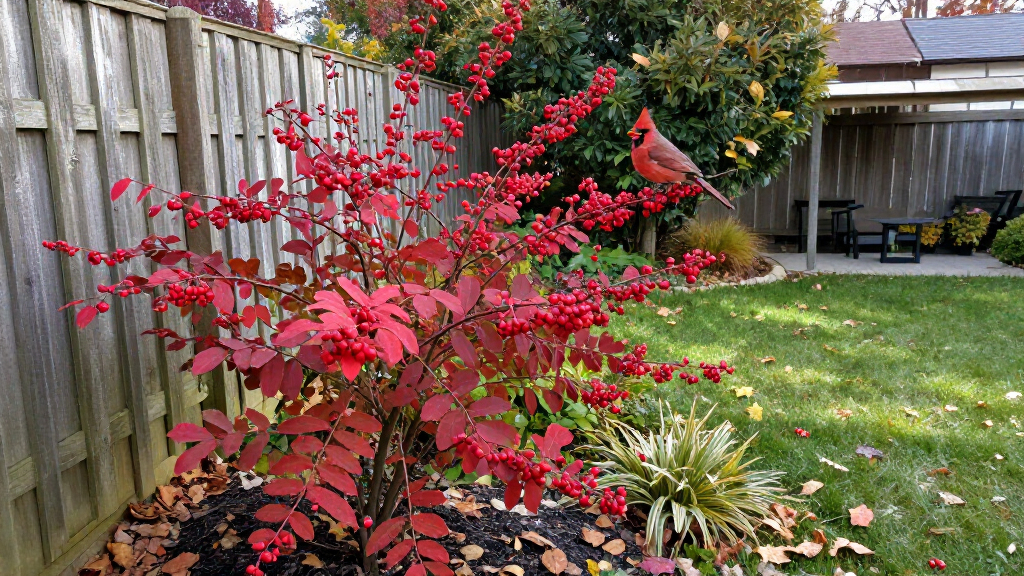
Gardening Know How recommends black chokeberry (Aronia melanocarpa) as a native shrub with crimson-to-burgundy fall foliage, white flowers and dark berries. The eastern North American shrub can suit gardens from USDA zones 3 to 8, while burning bush is considered invasive in many states. The report says chokeberry berries attract birds, including cardinals.
Black chokeberry (Aronia melanocarpa), a shrub native to eastern North America, is being recommended as a fall-color alternative to burning bush, which is considered invasive in many states. Gardening Know How’s report says chokeberry combines crimson-to-burgundy foliage with white flowers and berries that can attract birds, including cardinals, giving gardeners a native option with more than seasonal leaf color.
The report says black chokeberry typically grows about 3 to 6 feet tall and wide. That size may make it suitable for a mixed border, a native shrub planting or a wildlife-friendly garden where a larger shrub or small tree would not fit. Its foliage turns red to burgundy in autumn, while its white flowers appear earlier in the growing season and its dark berries provide another feature.
According to Gardening Know How, the flowers can draw pollinators and other small insects, and the berries attract birds such as cardinals, waxwings, finches and robins. The article describes the plant as adaptable to full sun or partial shade and a range of soil conditions. It gives a general hardiness range of USDA zones 3 to 8, while advising readers to check the needs of a specific cultivar and its fit with local conditions.
The report says established plants generally need limited intervention in a suitable location. Pruning can be done as needed to maintain shape, using the “Three Ds” approach—removing dead, damaged or diseased growth. It also mentions named cultivars, including Viking, but does not provide comparative trial results or detailed cultivar-by-cultivar performance information.
A Native Shrub With More Than Fall Color
The recommendation matters to gardeners weighing ornamental appeal against potential effects on nearby natural areas. The report says burning bush is considered invasive in many states because it can escape cultivation and spread. That status is not necessarily the same in every location, so gardeners should check local guidance before planting or removing a shrub.
Black chokeberry offers a different mix of garden functions: autumn foliage, flowers and fruit. For readers who want to support birds and pollinators while choosing a shrub native to eastern North America, it may be a practical alternative to a plant grown mainly for its foliage. The report presents this as a gardening recommendation, not as evidence that chokeberry will perform identically to burning bush in every garden or provide the same wildlife benefits in all settings.
black chokeberry Aronia melanocarpa live shrub plant
As an affiliate, we earn on qualifying purchases.
As an affiliate, we earn on qualifying purchases.
Burning Bush and Native Alternatives
The Gardening Know How article starts from burning bush’s widely admired autumn color, then argues that its visual appeal should be weighed against its invasive status in many states. It proposes black chokeberry as a native substitute for gardeners seeking vivid fall leaves without selecting a shrub the report says can spread into natural areas.
Black chokeberry is identified as a species native to eastern North America. The article names several commercial selections, including Viking and Low Scape Mound, but its main recommendation concerns the species’ general garden characteristics. It does not offer a region-by-region planting map or establish that every cultivar is suitable across the full stated hardiness range.
““burning bush is considered invasive in many states””
— Gardening Know How
Viking black chokeberry shrub live plant
As an affiliate, we earn on qualifying purchases.
As an affiliate, we earn on qualifying purchases.
Local Suitability Still Needs Checking
The source does not give a publication date, detailed regional planting guidance or evidence from comparative trials measuring black chokeberry against burning bush for fall color. Its USDA zones 3 to 8 range is presented as a general guide; the article says cultivar requirements and local climate should be checked. It also does not specify how much fruit individual plants produce, how reliably birds use them in different regions, or whether each named cultivar shares the same traits.
The report’s statement that burning bush is invasive applies to many states, but it does not identify every affected jurisdiction. Readers should consult local extension services or invasive-species authorities for guidance on the plant’s status and recommended alternatives where they live.
black chokeberry native shrub seeds
As an affiliate, we earn on qualifying purchases.
As an affiliate, we earn on qualifying purchases.
Check Cultivars Before Planting
Gardeners considering black chokeberry should compare a cultivar’s mature size and growing requirements with the conditions in their yard, then confirm its suitability for their local climate and USDA zone. Those interested in replacing burning bush can also check state or local invasive-plant guidance before making a decision.
The report offers no announced follow-up research or policy change. The next practical step for readers is local verification: confirm which plant is appropriate for the site, and seek region-specific advice on planting and care before buying.
As an affiliate, we earn on qualifying purchases.
Key Questions
What shrub does the report recommend instead of burning bush?
It recommends black chokeberry (Aronia melanocarpa), a shrub native to eastern North America, as an alternative for fall color.
Does black chokeberry attract cardinals?
Gardening Know How says its berries attract birds including cardinals, as well as waxwings, finches and robins. The report does not quantify bird visits or berry production.
How large does black chokeberry grow?
The article gives a typical size of about 3 to 6 feet tall and wide. Actual size can vary, so check the details for the cultivar being considered.
Where can black chokeberry grow?
The report says it grows in full sun to partial shade, tolerates a range of soils and is generally hardy in USDA zones 3 to 8. It recommends checking cultivar needs and local climate before planting.
Is burning bush invasive everywhere?
The source says burning bush is considered invasive in many states; it does not say that it is invasive everywhere. Check local invasive-species guidance for its status in your area.
Source: rss
Fall Picks
fall essentials
As an affiliate, we earn on qualifying purchases.