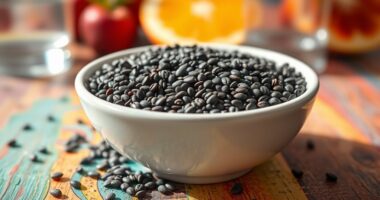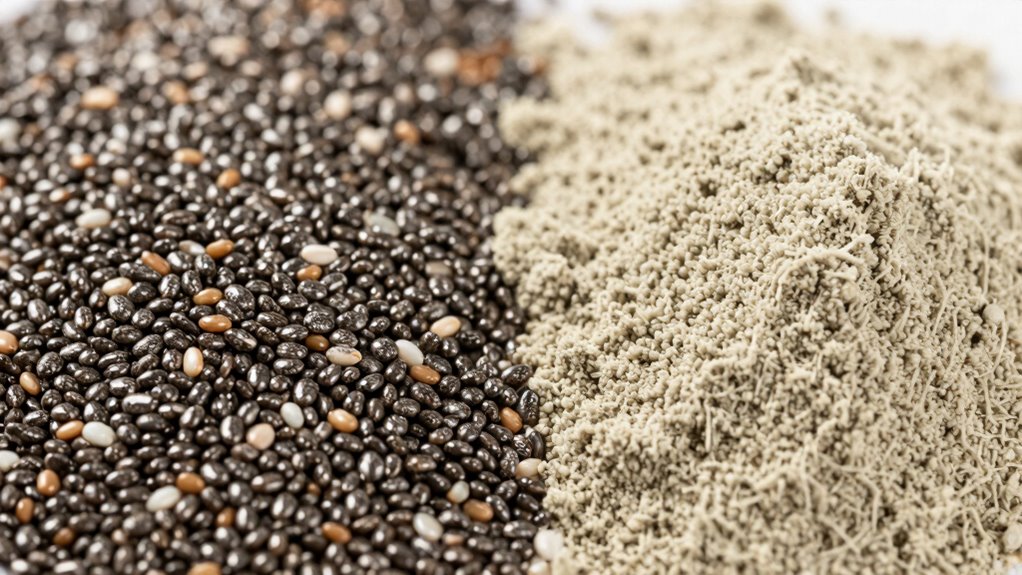

Whole chia seeds are tiny, oval-shaped, and offer a chewy texture with a mild, nutty flavor, while ground chia is a smooth powder that blends seamlessly into recipes. Whole seeds provide a textured addition and longer shelf life, but your body may not absorb all nutrients unless soaked. Ground chia maximizes nutrient intake and works well as a thickener or egg substitute. Want to discover how to choose and use them effectively? Keep exploring for more details.

Get garden gear delivered free — and shop member deals
- Fast, free delivery on millions of items
- Access to Prime Big Deal Days deals on October 6–7
- Prime Video, Amazon Music and more included
Key Takeaways
- Whole chia seeds are tiny, oval, and chewy, while ground chia is a fine powder with a smooth texture.
- Grinding chia enhances nutrient absorption, especially omega-3s and antioxidants, compared to whole seeds.
- Whole chia is ideal for toppings and soaking, whereas ground chia is better for blending into recipes.
- Whole seeds have a longer shelf life and are less prone to spoilage than ground chia.
- Ground chia acts as a thickener and egg substitute, making it more versatile in cooking and baking.
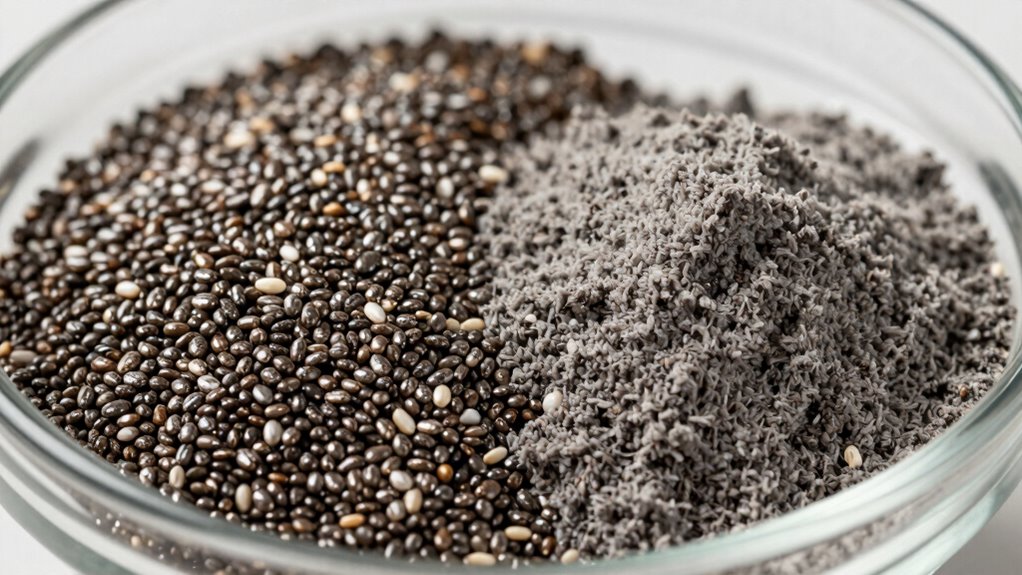
Have you ever wondered whether whole or ground chia seeds are better for your diet? The answer depends on what you’re aiming to achieve with your nutrition and how you plan to incorporate them into your meals. Both forms pack a punch when it comes to nutritional benefits, but they serve different culinary uses that might influence your choice. Whole chia seeds are tiny, oval-shaped, and have a chewy texture with a mild, nutty flavor. They’re rich in fiber, omega-3 fatty acids, protein, and various micronutrients, making them a powerful addition to your diet. However, because they have a tough outer shell, your body may not fully absorb all the nutrients unless they’re ground. Ground chia, also called chia meal or powder, is simply whole seeds that have been processed into a fine consistency. This form has a few distinct advantages and considerations.
When it comes to nutritional benefits, ground chia seeds are often more advantageous because grinding breaks down the seed’s shell, making it easier for your body to absorb nutrients like omega-3s, antioxidants, and minerals. If you want to maximize nutrient intake, ground chia can be your go-to. On the other hand, whole chia seeds are excellent if you prefer a more textured addition to your food or want to avoid pre-processing. They are also less prone to spoilage and have a longer shelf life when kept dry and sealed. Both forms are versatile, but they differ in culinary uses. Whole chia seeds work well as a topping for yogurt, oatmeal, or salads, adding crunch and visual appeal. They can also be soaked to create a gel, which is useful in smoothies or baked goods. Ground chia, however, blends seamlessly into recipes, making it a popular egg substitute in vegan baking or a thickener for puddings and smoothies. Because ground chia absorbs liquids and swells, it can help improve the texture and moisture content of baked goods, as well as boost the nutritional profile. Additionally, understanding the nutritional differences can help you choose the best form for your dietary needs.
As an affiliate, we earn on qualifying purchases.
Frequently Asked Questions
How Long Does Whole Chia Last Compared to Ground Chia?
Whole chia seeds last longer, typically up to 2-3 years, thanks to better preservation when stored properly. Ground chia, however, usually stays fresh for only 1-2 months because the grinding process exposes oils to air, leading to quicker spoilage. To maximize shelf life, store both in airtight containers in a cool, dark place. Proper storage methods are essential for maintaining freshness and preventing rancidity in your chia seeds.
Can I Substitute Whole Chia for Ground in Recipes?
You can substitute whole chia for ground in recipes, but keep in mind it’s like comparing apples and oranges. Whole chia offers better chia freshness and a milder flavor profile, while ground chia blends smoothly and releases more nutrients. If you’re after texture and absorption, ground works better. If you prefer crunch and a subtle taste, whole chia is fine. Adjust your recipe accordingly to get the best results.
Does Ground Chia Digest Faster Than Whole Chia?
Yes, ground chia digests faster than whole chia because it’s broken down into smaller particles, making nutrients more accessible. When you consume ground chia, your body absorbs more nutrients like chia oil and antioxidants quickly. Whole chia takes longer to digest, often absorbing more water—like chia water—before releasing nutrients. So, if faster digestion is your goal, ground chia is the way to go.
Are There Any Taste Differences Between Whole and Ground Chia?
Yes, there are taste differences between whole and ground chia. Whole chia has a mild, nutty flavor with a slightly crunchy texture, while ground chia offers a more pronounced nutty taste and a smoother, gel-like texture when soaked. The flavor profiles are similar, but the texture differences can influence how you enjoy them in recipes. Ground chia blends more easily into smoothies and baked goods, enhancing both flavor and consistency.
Is One Form of Chia More Suitable for Baking Purposes?
Ground chia is more suitable for baking because its fine texture mixes easily into batters and doughs, creating a smoother consistency. Whole chia, with its crunchy texture, works better as a topping or for added texture in recipes. For most culinary uses, especially baking, ground chia helps incorporate nutrients seamlessly, while whole chia provides a unique crunch. Choose based on the desired chia texture and your recipe’s culinary needs.
As an affiliate, we earn on qualifying purchases.
Conclusion
Whether you prefer whole chia or ground chia, both offer valuable health benefits, both add texture and nutrition to your meals, and both can easily be incorporated into your diet. The choice depends on your preferences and your specific needs—whether you want the crunch of whole seeds or the easier digestibility of ground chia. Ultimately, both types serve as versatile, nutritious options that can enhance your health, your recipes, and your daily routine.
As an affiliate, we earn on qualifying purchases.
As an affiliate, we earn on qualifying purchases.
Fall Picks
fall essentials
As an affiliate, we earn on qualifying purchases.