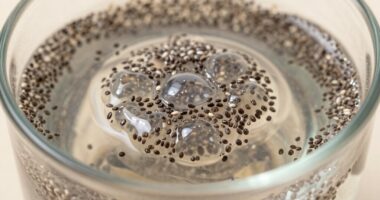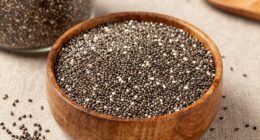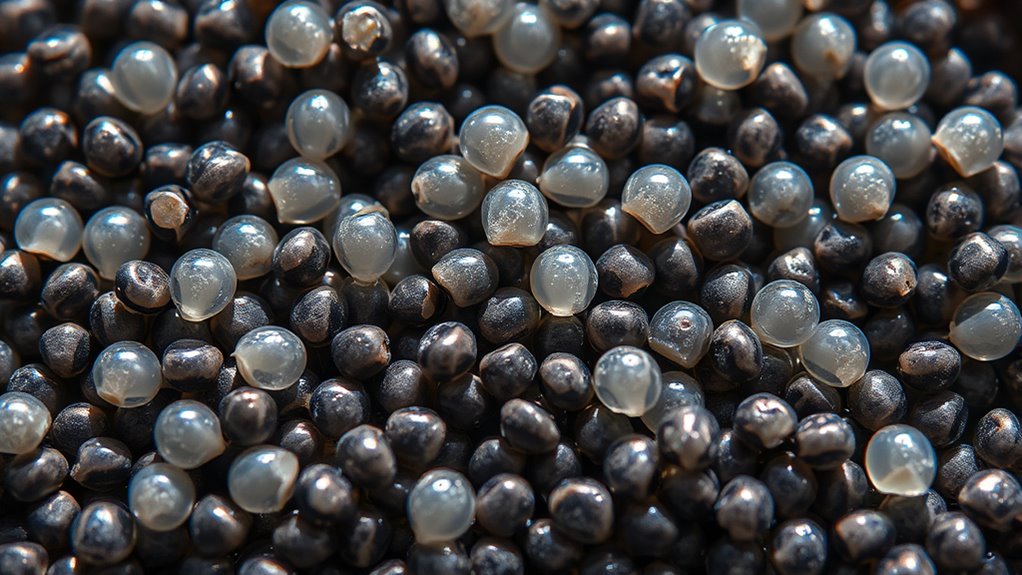
When you add chia seeds to liquid, they quickly absorb water through tiny pores in their seed coats, causing them to swell and form a gel-like texture. This process starts almost instantly and usually takes about 10-15 minutes to fully develop. The gel not only enhances the seed’s texture but also boosts hydration and fiber content. If you want to understand the science behind this transformation, there’s more to explore beyond this quick overview.
Key Takeaways
- Chia seeds rapidly absorb water through tiny pores in their seed coats, initiating gel formation.
- Water penetrates the seeds, causing the outer shell to swell and develop a mucilaginous, slimy layer.
- The gel-like consistency results from soluble fiber in the seeds, creating a smooth, jelly-like texture.
- Temperature and liquid-to-seed ratio influence how quickly and thickly the gel forms.
- Full gel formation typically takes 10-15 minutes, resulting in a textured, hydrated seed ready for culinary use.
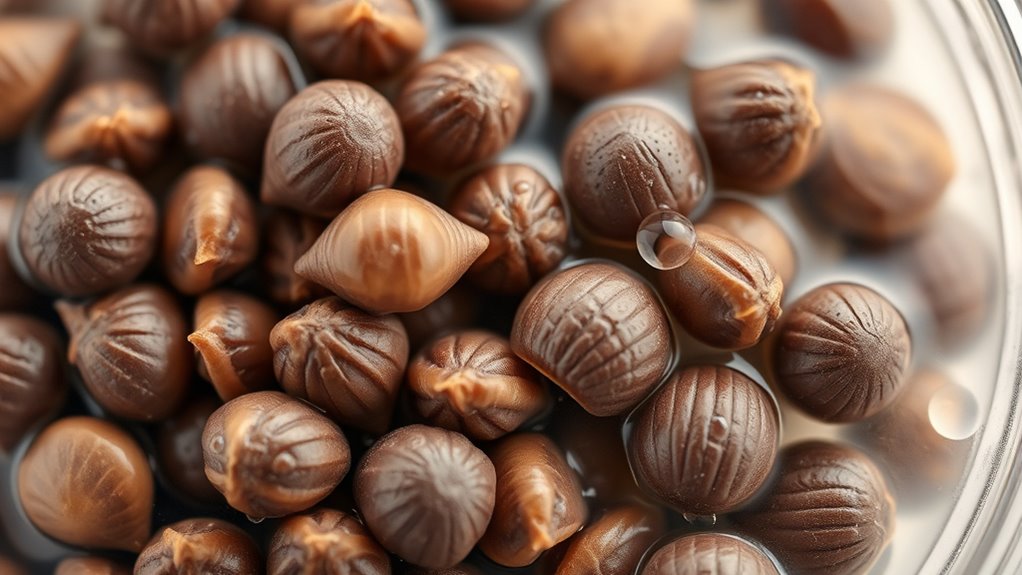
Chia seeds are well known for their remarkable ability to absorb water, which transforms them into a gel-like consistency. When you add them to liquid, they undergo a process called gel formation, which is central to their unique texture. This transformation begins almost immediately, as the seeds start to soak up the surrounding liquid during the hydration process. As water surrounds each seed, tiny pores within the seed coat allow the liquid to seep inside, initiating a chain reaction that results in the gel-like coating. Tuning techniques can influence the rate at which chia seeds hydrate, as factors like temperature and liquid type play a role in the process.
The hydration process is straightforward but fascinating. As the chia seeds absorb water, their outer shell swells and expands, creating a smooth, mucilaginous layer around each seed. This gel, which is rich in soluble fiber, gives the seeds their characteristic slimy texture. The more water you add, the more pronounced this gel formation becomes. Typically, it takes about 10 to 15 minutes for the seeds to reach full gel consistency, but this can vary depending on the amount of liquid and the size of the seeds. During this time, the seeds remain intact but develop a jelly-like exterior that is quite distinct from their original dry form.
This gel formation isn’t just about texture; it also plays a crucial role in hydration. As the seeds soak up water, they become a concentrated source of hydration that can help maintain fluid balance in your body. When you consume soaked chia seeds, the gel slows down digestion, allowing for a steady release of nutrients and hydration over time. This makes chia seeds an excellent addition to smoothies, puddings, or even water, especially when you’re looking for a way to stay hydrated and feel full longer.
The process of gel formation is also influenced by factors like temperature and the ratio of water to seeds. Warm liquids tend to speed up hydration, while colder liquids slow down the process slightly. If you want a thicker gel, add more seeds to a smaller amount of liquid; for a thinner coating, increase the liquid volume. The beauty of this process is that it’s highly adaptable to your preferences and needs. Whether you prefer a firm gel or a more runny consistency, controlling the hydration process is simple.
Ultimately, understanding how chia seeds absorb water and create texture gives you a new appreciation for their versatility. The gel formation is not just a fun culinary trick but a natural feature that enhances their nutritional profile and makes them an easy way to boost hydration and fiber intake in your diet.

BetterBody Foods Organic Chia Seeds 2 lbs, 32 Oz, with Omega-3, Non-GMO, Gluten Free, Keto Diet Friendly, Vegan, Good Source of Fiber
- Nutrient-Rich Superfood: High in omega-3 and fiber
- Organic and Non-GMO: Gluten-free, nut-free, low-carb
- Versatile Dietary Support: Vegan, keto, paleo friendly
As an affiliate, we earn on qualifying purchases.
As an affiliate, we earn on qualifying purchases.
Frequently Asked Questions
How Long Does It Take for Chia Seeds to Fully Hydrate?
It takes about 15 to 30 minutes for chia seeds to fully hydrate and form a gel. The hydration speed depends on the amount of liquid and temperature, but generally, you’ll see the gel formation within this timeframe. To guarantee complete hydration, stir the seeds a few times during soaking. Once done, the seeds will have a thick, gel-like coating, perfect for adding texture and nutrition to your recipes.
Can Chia Seeds Absorb Water Multiple Times?
Yes, chia seeds can absorb water multiple times through hydration cycles, though each cycle causes seed expansion and water absorption to diminish slightly. Imagine adding seeds to water, letting them hydrate, then rehydrating them after they dry out. While they can undergo several hydration cycles, their ability to expand and absorb water decreases over time, so they won’t perform as well as fresh seeds with each successive cycle.
Do Soaked Chia Seeds Lose Their Nutrients?
Soaked chia seeds generally retain most of their nutrients, so nutrient retention remains high even after soaking. However, prolonged exposure to water can cause some seed degradation, which may slightly reduce vitamin levels. Still, soaking doesn’t considerably harm the seeds’ nutritional value. As long as you don’t soak them for too long, you’ll get the benefits without losing important nutrients or risking seed degradation.
What’s the Ideal Water-To-Seed Ratio?
The ideal water-to-seed ratio for chia seed expansion is about 1:6. This ratio guarantees proper hydration, allowing seeds to fully absorb water during the hydration process. You should add enough water so the seeds swell and develop a gel-like coating without becoming overly soggy. Adjust the ratio slightly if you prefer a thicker or thinner texture, but sticking to 1:6 generally yields the best seed expansion and hydration results.
How Does Temperature Affect Chia Seed Hydration?
Temperature considerably impacts chia seed hydration speed. When you use warm or hot water, the seeds hydrate faster because heat accelerates the absorption process. Conversely, colder water slows down hydration, meaning it takes longer for the seeds to fully absorb water and develop their gel-like texture. To get quicker results, opt for slightly warm water, but be cautious not to use boiling water, which can affect seed quality.
As an affiliate, we earn on qualifying purchases.
Conclusion
Now that you know how chia seeds soak up water and transform, you can harness their magic in your kitchen. Think of them as tiny sponges, ready to release a silky, pudding-like texture that elevates your recipes. With each soak, they become a little treasure chest of hydration, waiting to add a delightful crunch or creaminess. So go ahead—dive in and let these little seeds turn your dishes into a symphony of texture and health.

BBF Organic Chia Seeds 20 Oz, Omega-3 & Fiber, Pudding, Smoothies, Oatmeal
- Nutrient-Rich Superfood: High in omega-3 and fiber
- Organic and Non-GMO: Gluten-free, nut-free, low-carb
- Versatile Dietary Support: Suitable for vegan, keto, paleo
As an affiliate, we earn on qualifying purchases.
As an affiliate, we earn on qualifying purchases.
BetterBody Foods Organic Chia Seeds 2 lbs, 32 Oz, with Omega-3, Non-GMO, Gluten Free, Keto Diet Friendly, Vegan, Good Source of Fiber
- Nutrient-Rich Superfood: High in omega-3 and fiber
- Organic and Non-GMO: Gluten-free, nut-free, low-carb
- Versatile Dietary Support: Vegan, keto, paleo friendly
As an affiliate, we earn on qualifying purchases.
As an affiliate, we earn on qualifying purchases.