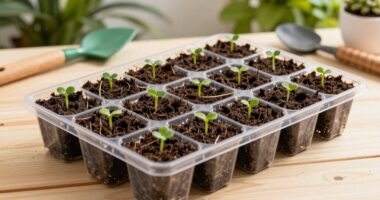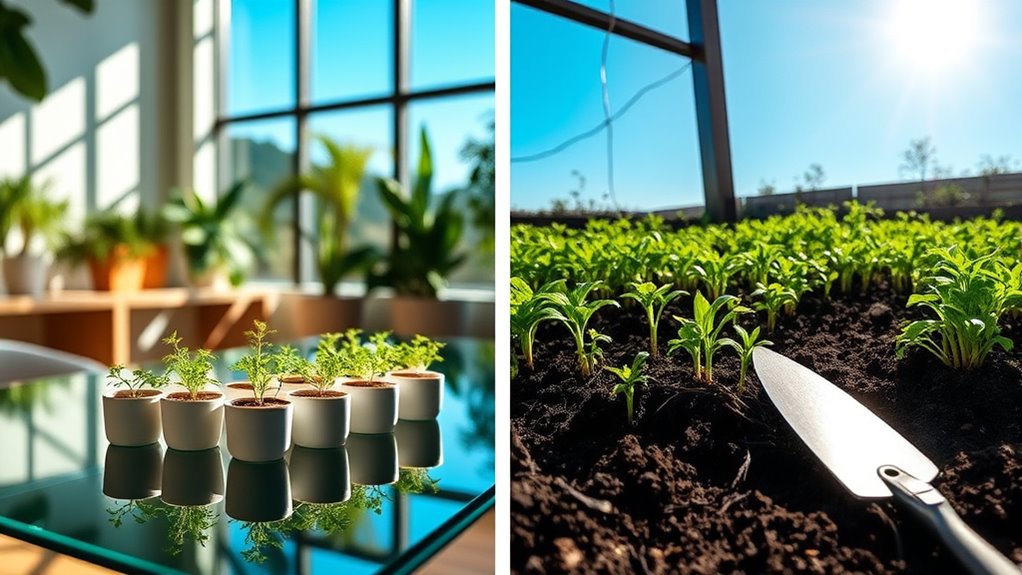
Indoor chia gardening lets you control light, temperature, and pests, making it ideal for limited sunlight and harsh seasons. It promotes healthy growth and reduces outdoor pest risks but needs artificial lighting and regular inspection. Outdoor gardening provides natural sunlight, encouraging vigorous growth, but exposes your plants to pests, weather, and disease challenges. Each method has its benefits and drawbacks—exploring these details can help you choose the best approach for your space and conditions.
Key Takeaways
- Indoor gardening offers controlled light, temperature, and humidity, ensuring consistent growth regardless of weather conditions.
- Outdoor gardening benefits from natural sunlight and vigorous growth but exposes chia plants to pests and environmental risks.
- Indoor setups require artificial grow lights, which can increase costs but reduce pest exposure and disease risk.
- Outdoor chia gardens have higher pest and disease challenges but benefit from natural light and stronger plant development.
- The choice depends on regional climate, pest management capacity, and desired control over growing conditions.

Whether you’re new to chia gardening or looking to expand your green space, choosing between indoor and outdoor cultivation can considerably impact your success. Each option offers distinct advantages and challenges, especially when it comes to light requirements and pest management. Understanding these factors helps you make the best decision for your environment and goals.
Indoor chia gardening allows you to control the light your plants receive. You can set up grow lights that mimic natural sunlight, ensuring your chia seeds get consistent illumination regardless of the weather outside. This is especially beneficial if you live in a region with limited sunlight or harsh seasons. Proper lighting not only promotes healthy germination and growth but also prevents the stretching and weak stems that can occur in low-light conditions. When managing pests indoors, you generally face fewer risks. Your plants are less exposed to common outdoor pests such as aphids, spider mites, or fungal diseases. However, pest management still remains important; you should regularly inspect your chia plants for signs of infestation and maintain a clean growing space to prevent any problems from taking hold.
Outdoor chia gardening, on the other hand, relies heavily on natural sunlight. Chia plants thrive with at least six hours of direct sunlight each day, and outdoor settings typically provide ample light without additional effort. This natural light is often more intense and consistent than artificial sources, leading to vigorous growth. However, outdoor cultivation comes with its own set of pest management challenges. Your chia plants are exposed to a wider range of pests and environmental threats, including insects, birds, and even small mammals that may nibble on your sprouts. Fungal and bacterial diseases can also be more prevalent in outdoor environments, especially during humid or rainy seasons. To successfully manage pests outdoors, you’ll need to implement strategies like physical barriers, natural predators, or organic pesticides, all while maintaining good garden hygiene.
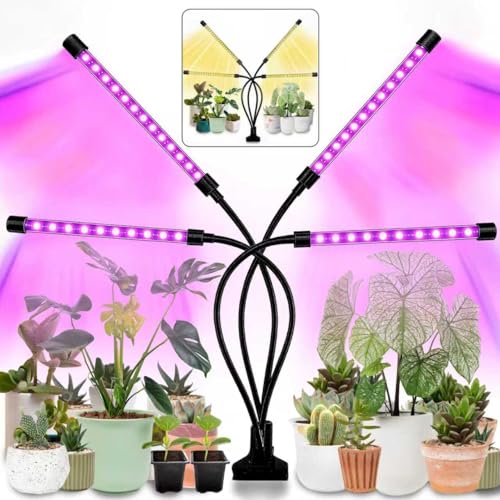
LEOTER Grow Light for Indoor Plants – Upgraded Version 80 LED Lamps with Full Spectrum & Red Blue Spectrum, 3/9/12H Timer, 10 Dimmable Level, Adjustable Gooseneck,3 Switch Modes
🌻Efficient LED Combination: This LED lamp has grow lights made up of 80 efficient growing LEDs ( 32…
As an affiliate, we earn on qualifying purchases.
As an affiliate, we earn on qualifying purchases.
Frequently Asked Questions
How Do I Prevent Pests in Indoor Chia Gardens?
To prevent pests in your indoor chia garden, start by keeping your space clean and free of debris. Use natural repellents like neem oil or introduce beneficial insects such as ladybugs. Regularly inspect your plants for early signs of pests and remove affected leaves promptly. Proper watering and good airflow also help prevent pest infestations. These proactive pest prevention methods keep your chia healthy and thriving indoors.
What Is the Optimal Humidity Level for Indoor Chia Plants?
You should aim for a humidity level around 40-50% for your indoor chia plants. Proper humidity control helps maintain ideal moisture levels, preventing your chia from drying out or developing mold. Use a hygrometer to monitor humidity, and consider using a humidifier or dehumidifier if needed. Consistent moisture levels promote healthy growth and seed sprouting, so keep an eye on environmental conditions to give your chia the best possible environment.
Can Outdoor Chia Plants Survive Winter in Colder Climates?
Think of your outdoor chia plants as brave explorers facing winter’s icy grip. In colder climates, they generally can’t survive harsh winter weather without protection. Cold weather threatens their plant survival, causing damage or death. If you want them to thrive year-round, you’ll need to bring them indoors or provide a cold frame or greenhouse. Otherwise, outdoor chia plants are best suited for milder, frost-free seasons.
How Often Should I Water Chia Plants Indoors Versus Outdoors?
You should water your chia plants indoors about once a week, ensuring the soil stays moist but not soggy, which helps with proper moisture management. Outdoors, watering frequency depends on weather; during hot, dry days, you might need to water every few days. Always check soil moisture first—if it feels dry, give your plants a gentle watering. Consistent watering keeps your chia healthy and promotes ideal growth.
Are There Specific Fertilizers Recommended for Indoor Chia Cultivation?
For indoor chia cultivation, you should use a balanced liquid fertilizer with essential nutrients like nitrogen, phosphorus, and potassium to meet their nutrient requirements. Look for fertilizer types labeled for leafy greens or herbs, as they suit chia’s needs. Apply every 2-3 weeks, ensuring the soil isn’t overly rich to prevent root issues. Regular feeding promotes healthy growth and vibrant chia sprouts indoors.

Evergreen Organics Organic Chia Seeds – Rich in Omega-3 & Supports Healthy Digestion 200GM
Nutrient-Rich Superfood – Packed with omega-3 fatty acids, fiber, protein, calcium, and antioxidants to support heart health, digestion,…
As an affiliate, we earn on qualifying purchases.
As an affiliate, we earn on qualifying purchases.
Conclusion
Whether you choose indoor or outdoor chia gardening, you’ll enjoy fresh sprouts, vibrant greenery, and a rewarding experience. Indoor gardening offers control and convenience, while outdoor gardening provides natural sunlight and space. Both paths bring growth and beauty, patience and effort, learning and satisfaction. Whichever you select, embrace the journey, nurture your chia, and watch your garden thrive. Ultimately, it’s about cultivating joy, fostering connection, and harvesting the simple pleasures of nature.

Aokrean Plant Grow Light, 48 LEDs Full Spectrum Grow Lights for Indoor Plants, Height Adjustable Small Halo Grow Light with Base, 3 Optional Spectrums, Auto Timer 3/9/12Hrs, 10 Brightness, 3 Pack
NOTE: The product stand needs to be pressed down by the flower pot to be stable. Not wireless…
As an affiliate, we earn on qualifying purchases.
As an affiliate, we earn on qualifying purchases.
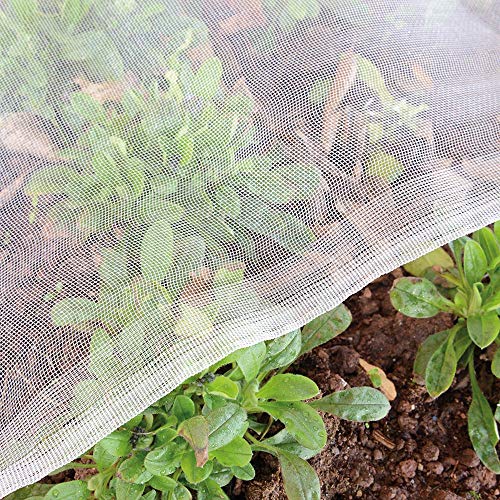
Garden Netting Pest Barrier: 4'x10' Fine Bug Netting for Garden Protection Row Cover Raised Bed Screen Mesh Greenhouse Mosquito Net, Protecting Tree Plants Vegetable Flowers Fruits
🥬Effective Bug Barrier: Protecting plants and vegetables from a wide range of pest insects and animals, such as…
As an affiliate, we earn on qualifying purchases.
As an affiliate, we earn on qualifying purchases.