
If you’re allergic to chia seeds, you might experience symptoms like itching, swelling, hives, stomach cramps, nausea, or diarrhea soon after eating them. Severe reactions can include difficulty breathing or wheezing, which may lead to anaphylaxis. To prevent reactions, start with small amounts and watch for signs of allergy—if symptoms appear, stop eating immediately. Cross reactivity with sesame or poppy seeds is possible, so talking to an allergist is wise if you have related allergies. Continue to discover how to stay safe.
Key Takeaways
- Watch for symptoms like itching, swelling, gastrointestinal issues, or skin rashes shortly after consuming chia seeds.
- Severe reactions may include difficulty breathing or wheezing, requiring immediate emergency medical attention.
- Cross-reactivity with sesame or poppy seeds can increase allergy risk; consult an allergist if sensitive to these foods.
- Introduce chia seeds gradually in small amounts, and stop consumption immediately if allergic symptoms appear.
- Confirm allergies through medical testing and keep detailed records to guide safe dietary choices and prevent reactions.
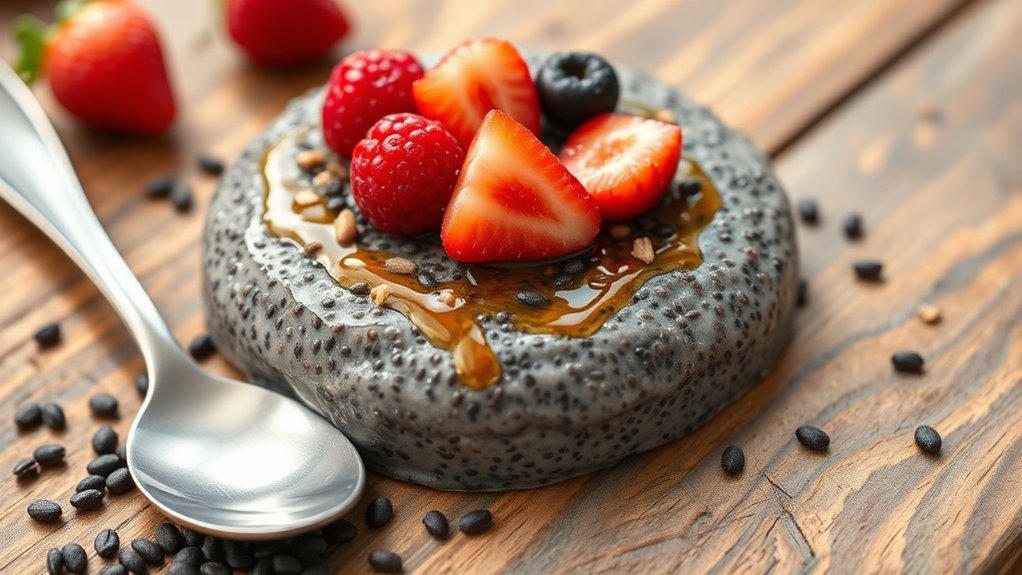
While chia seeds are widely praised for their health benefits, some individuals may experience allergic reactions. If you’re considering adding chia seeds to your diet, it’s important to be aware of the potential for a chia seed allergy. Although rare, this allergy can cause a range of symptoms, from mild discomfort to severe reactions. Recognizing these symptoms early helps you take prompt action and avoid serious health issues. Common signs include itching, swelling, hives, or skin rashes shortly after consuming chia seeds. Some people report gastrointestinal symptoms like nausea, stomach cramps, or diarrhea. In more severe cases, an allergic reaction can progress to difficulty breathing, wheezing, or anaphylaxis, which requires immediate medical attention.
Chia seed allergy symptoms include itching, swelling, hives, gastrointestinal issues, and severe reactions like difficulty breathing.
One significant concern for those with a chia seed allergy is cross reactivity. Cross reactivity occurs when your immune system reacts to proteins in chia seeds that resemble those in other allergenic foods. If you’re allergic to seeds like sesame or poppy, you might also react to chia seeds because of similar protein structures. This possibility increases the importance of cautious introduction, especially if you already have known seed allergies. You should consult an allergist before trying chia seeds if you have existing food sensitivities or allergies to related foods.
To minimize your risk, start with a small amount of chia seeds and monitor your body’s response. If you notice any allergic symptoms, stop consuming them immediately and seek medical advice. Reading ingredient labels carefully is crucial, especially since chia seeds are often included in processed foods, smoothies, or energy bars. When trying chia seeds for the first time, consider doing so in a controlled environment or under medical supervision, especially if you have a history of food allergies. Additionally, it’s helpful to understand the potential for cross reactivity and how it can affect your food choices and safety.
Prevention also involves understanding your personal allergy profile and being cautious about cross reactivity concerns. Keep a detailed record of any allergic reactions you experience and share this information with your healthcare provider. They can perform testing to confirm whether chia seeds are safe for you or if you should avoid them altogether. If you have known seed allergies, it’s safer to explore alternative sources of omega-3 fatty acids and dietary fiber. Remember, even natural foods like chia seeds can pose risks, so listening to your body and seeking professional guidance are key steps to prevent potential allergic reactions.
allergy testing kits for food allergies
As an affiliate, we earn on qualifying purchases.
As an affiliate, we earn on qualifying purchases.
Frequently Asked Questions
Can Chia Seed Allergies Develop After Multiple Exposures?
Yes, seed sensitivity can develop into an allergy after multiple exposures to chia seeds. You might not notice any issues initially, but over time, your immune system can become sensitized, leading to allergy development. Repeated exposure increases the risk, especially if you have other seed or nut allergies. It’s important to watch for symptoms like itching, swelling, or difficulty breathing, and consult a healthcare professional if you suspect an allergy.
Are Children at Higher Risk for Chia Seed Allergies?
Think of children’s immune systems as a young garden, more vulnerable to weeds like allergies. Pediatric susceptibility makes kids more prone to chia seed allergies due to developing immune responses and risk factors like family history. While not everyone is at high risk, children with other food allergies or eczema should be cautious. You should monitor them closely when introducing chia seeds, especially if they have known allergy risk factors.
Do Chia Seed Allergies Cross-React With Other Seeds?
Chia seed allergies can cross-react with other seeds due to seed cross reactivity. If you’re allergic to one seed, there’s a chance you’ll react to others, like sesame or sunflower seeds. To understand your risk, allergy testing is essential. You should consult with an allergist, who can perform specific tests to identify sensitivities and help you avoid problematic seeds, reducing your allergy symptoms and preventing severe reactions.
How Common Are Allergic Reactions to Chia Seeds?
While allergic reactions to chia seeds are quite rare, some individuals with seed sensitivity might experience mild symptoms. You can better understand your risk through allergy testing, which helps identify sensitivities early. Though uncommon, it’s wise to observe your body’s responses when trying chia for the first time. If you notice any unusual symptoms, consult a healthcare professional promptly to ensure your safety and peace of mind.
Can Cooking or Processing Reduce Allergy Risks?
Cooking methods and processing techniques can help reduce allergy risks from chia seeds, but they don’t eliminate them entirely. Roasting, boiling, or grinding chia seeds may break down some proteins that trigger allergies, making them less likely to cause reactions. However, if you’re allergic, it’s safest to avoid raw or processed chia seeds altogether and consult with a healthcare professional before trying different preparation methods.
epinephrine auto-injector for severe allergic reactions
As an affiliate, we earn on qualifying purchases.
As an affiliate, we earn on qualifying purchases.
Conclusion
While chia seeds are generally safe and nutritious, don’t overlook the possibility of allergic reactions. Pay attention to any unusual symptoms after consuming them, and consult a healthcare professional if you suspect an allergy. You never know when an unexpected response might occur, so stay vigilant. The truth about chia seeds’ safety might surprise you—are you prepared to recognize the signs before it’s too late? Stay informed and always listen to your body.
As an affiliate, we earn on qualifying purchases.
safe chia seeds for allergy sufferers
As an affiliate, we earn on qualifying purchases.
As an affiliate, we earn on qualifying purchases.