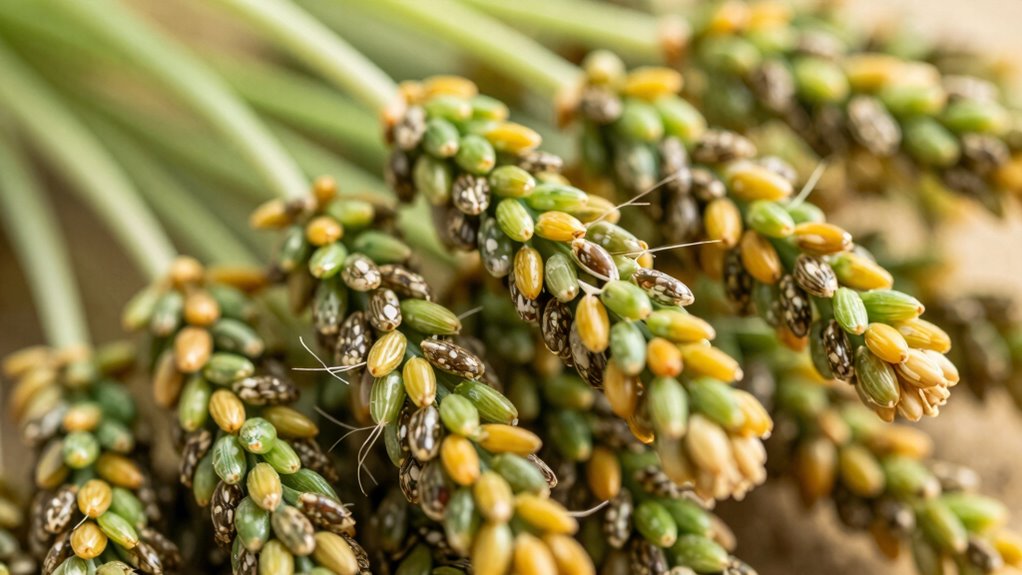

You’ll know your chia seed heads are ready to cut when they change from green to light brown or tan and look dry and brittle. The seed heads should feel dry to the touch, and the seeds inside will look fully ripened. If you shake or tap them and the seeds rattle, it’s a good sign they’re ready. Waiting too long risks seed loss, so proper timing is key—keep exploring to learn more.

Get garden gear delivered free with Prime
- Fast, free delivery on millions of items
- Prime Video, Amazon Music and more included
- Member-only deals all year
Key Takeaways
- Chia seed heads turn from green to light brown or tan, indicating maturity.
- The seed heads look dry and brittle, signaling ripeness.
- Seeds inside rattle when shaken, showing they are fully developed.
- Avoid waiting until seeds shatter naturally to prevent seed loss.
- Harvest before seed heads fully dry and shatter for optimal seed quality.
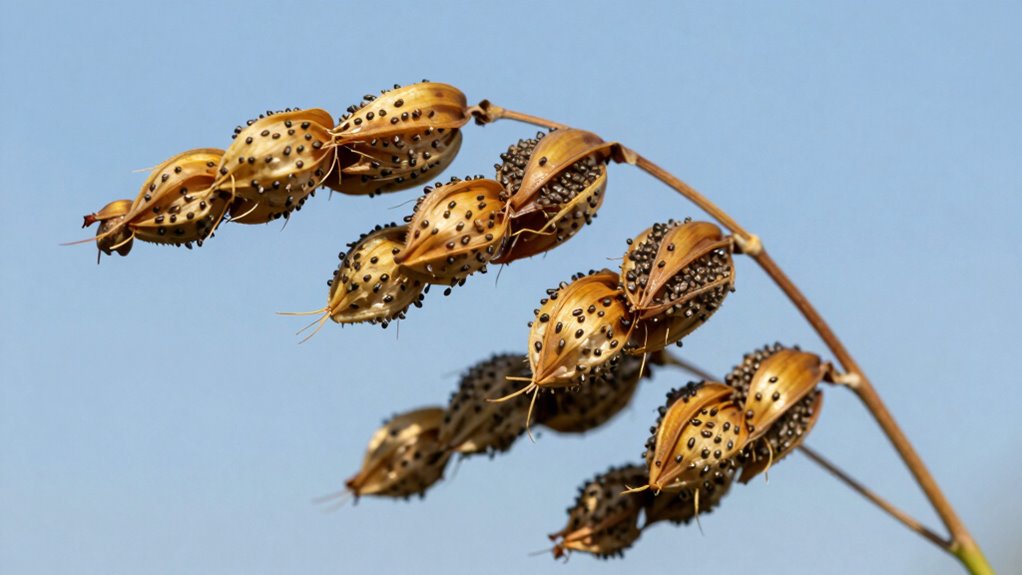
Knowing when to cut your chia seed heads is essential for harvesting the seeds at their peak ripeness. Timing your harvest correctly ensures the seeds are fully developed and easy to collect, making the entire process more efficient. One of the key indicators is the appearance of the seed heads themselves. As they mature, the green husks turn a light brown or tan, signaling that the seeds inside are ripening. When most of the seed heads have turned this color and look dry, you’re approaching the ideal harvest window. If you wait too long, the seeds can naturally shatter and scatter, making collection difficult and reducing your yield. On the other hand, harvesting too early might mean the seeds aren’t fully developed, leading to lower germination rates and less flavor.
Monitoring seed drying is crucial for proper harvest timing. When the seed heads are dry and brittle, it indicates that the seeds are mature and ready to be gathered. You can gently shake or tap the seed heads—if you hear the seeds rattling inside, that’s a good sign they’re ready. At this stage, the seeds should easily separate from the head when you rub or thresh them gently. It’s best to cut the seed heads before they completely dry out and shatter naturally, which can happen if left in the field too long. Once you cut the seed heads, hang them upside down in a warm, dry, well-ventilated space to facilitate seed drying. This step helps prevent mold or rot and ensures your seeds stay viable.
Timing your harvest carefully plays a vital role in maximizing seed quality. Harvesting too early can mean immature seeds that haven’t fully developed their nutritional content or germination potential. Waiting too long risks seed loss due to shattering or weather damage. Keep an eye on the color change and dryness of the seed heads, and don’t hesitate to check a few seeds by opening a head to see if they’re plump and fully formed. Proper seed drying after cutting is just as important as the initial harvest timing. It ensures your seeds are stored in the best condition and preserves their viability for planting or consumption. By paying close attention to these signs, you’ll be able to harvest your chia seeds at the right moment, maximizing both yield and quality.
As an affiliate, we earn on qualifying purchases.
Frequently Asked Questions
Can Chia Seed Heads Be Harvested Early?
Yes, you can harvest chia seed heads early, but it’s not ideal. Watch for the seed color—when they’re fully dark and mature, it’s best to wait. Harvest timing is essential; if you cut too soon, the seeds may not be fully developed or viable. If you harvest early, you risk losing some seeds or getting lower germination rates. Patience guarantees you get the best quality chia seeds.
What Weather Conditions Affect Seed Maturity?
You should watch for warm, dry weather, as moisture can delay seed maturity and hinder seed dispersal. Consistent sunlight and moderate temperatures help the chia plant progress toward seed ripeness, signaling that seeds are nearing plant dormancy. When seed heads turn brown and dry, it’s a good sign they’re ready to harvest, ensuring mature seeds that will disperse effectively. Avoid harvesting during wet conditions to prevent mold and poor seed quality.
How Long Do Chia Seed Heads Stay Ripe?
Chia seed heads stay ripe for about 2 to 3 weeks after seed color begins to change. You’ll notice the seed heads turn from green to a tan or brown hue, signaling harvest timing. During this period, seeds mature fully, and the seed heads become dry and brittle. Keep an eye on the color change, and when the seed heads look dry and the seeds are hard, it’s time to harvest.
Do Chia Seeds Ripen at Different Rates?
Yes, chia seeds ripen at different rates, so don’t worry if some seed heads mature faster than others. You can tell they’re ready by their seed color turning from green to a more muted hue, and the plant height reaching a stable point. Keep an eye on individual seed heads, as their ripening can vary, but overall, most are ready when seed color darkens and the plant looks mature.
Is There a Visual Difference Between Ripe and Unripe Seed Heads?
Yes, there’s a visual difference between ripe and unripe chia seed heads. When ripe, the seed heads typically change color, often turning a duller or more muted shade compared to the vibrant green or purple of unripe ones. You’ll also notice the seeds inside become firmer and harder, indicating maturity. If you gently press the seed head, ripe ones feel sturdier, while unripe ones are softer and more pliable.
seed drying racks for chia seeds
As an affiliate, we earn on qualifying purchases.
As an affiliate, we earn on qualifying purchases.
Conclusion
When the chia seed heads turn a rich, golden hue and the flowers start to fade, it’s like a signal flare—your cue to harvest. Gently shake or tap the heads to see if the tiny seeds rattle inside, confirming they’re ripe. Think of it as catching a whisper from nature, telling you it’s time to gather your bounty before the seeds escape like fleeting dreams. Harvesting at the right moment guarantees you get the most from your chia crop.
As an affiliate, we earn on qualifying purchases.
plant drying and harvesting tools
As an affiliate, we earn on qualifying purchases.
As an affiliate, we earn on qualifying purchases.
Fall yard work Picks
leaf blowers
As an affiliate, we earn on qualifying purchases.