TL;DR

Get garden gear delivered free — and shop member deals
- Fast, free delivery on millions of items
- Access to Prime Big Deal Days deals on October 6–7
- Prime Video, Amazon Music and more included
A report from Amateur Gardening, drawing on UGA Extension and Poison Control guidance, identifies nine common garden plants — including oleander, foxglove, yew, sago palm, lilies and castor bean — that can seriously poison children or pets if eaten or handled incorrectly. The report advises gardeners to learn what they are growing, wear gloves when pruning, clear fallen plant material, and contact poison centers or veterinarians immediately after suspected ingestion rather than waiting for symptoms.
A newly published guide from Amateur Gardening warns that nine plants commonly found in ordinary gardens — including oleander, foxglove, yew, sago palm and lilies — can cause serious poisoning in children or pets if eaten, and painful reactions if handled incorrectly. The report, which draws on toxicity classifications from UGA Extension and warnings from Poison Control, does not call for removing the plants, but says gardeners should know what they are growing and take precautions when planting, pruning and clearing.
The nine plants named in the report are oleander, foxglove, yew, sago palm, castor bean, lilies, autumn crocus, azaleas and rhododendrons, and poison ivy. Several are fixtures of ordinary landscaping. Yew is commonly used for hedges and formal landscaping; UGA Extension classifies both yew and oleander as plants with major toxicity. Azaleas and rhododendrons are described as among the most familiar flowering shrubs in American gardens, which the report says makes their toxicity easy to overlook.
Pets face some of the sharpest risks. Sago palm is toxic in every part, with seeds posing a particular danger to dogs and cats — the report states ingestion can cause vomiting, liver damage, seizures and potentially death. True lilies (Lilium) and daylilies (Hemerocallis) can cause acute kidney injury in cats, and even small exposures can be life-threatening; the report notes cats can ingest pollen after brushing against the flowers and grooming themselves. Castor bean seeds contain ricin, released when the seeds are chewed or crushed, and Poison Control warns that swallowing the beans can cause serious poisoning.
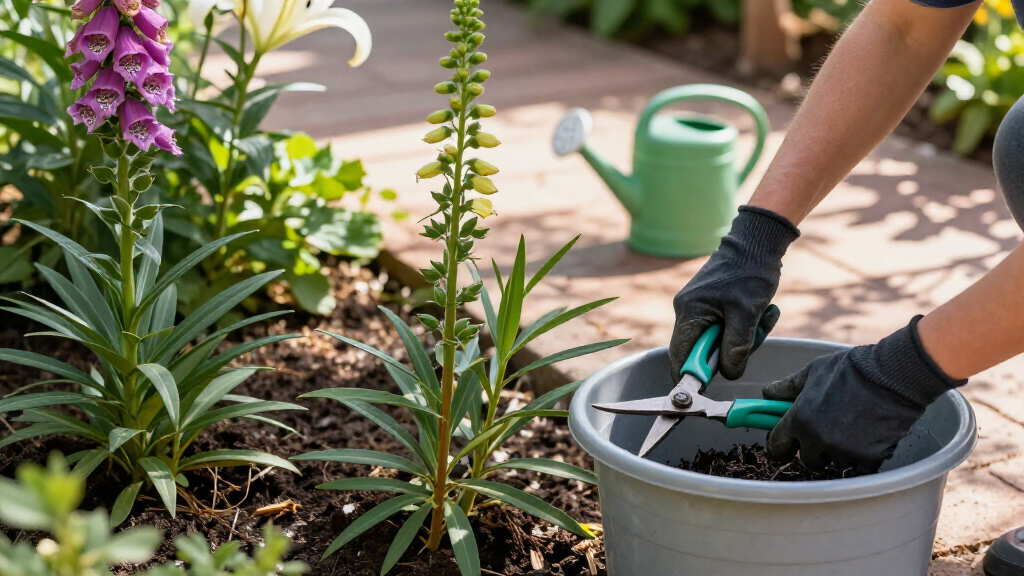
Recommended precautions are consistent across the report: wear gloves when pruning or handling toxic plants, wash hands afterward, clear fallen leaves, seeds and clippings promptly, and never leave trimmings where animals can reach them. The report also warns against burning oleander, because smoke from poisonous plants can be hazardous, and against using foxglove in homemade teas or remedies. In every suspected ingestion case, the advice is the same: contact a poison center, veterinarian or animal poison-control service immediately rather than waiting for symptoms to appear.
Why Familiar Plants Catch Families Out
The report’s core message is that the plants posing the greatest risks are not exotic or rare — they are ornamental staples chosen precisely because they are easy to grow. Yew hedges, foxgloves in cottage borders and azaleas in foundation plantings are ordinary features of many gardens, which means the hazard comes from familiarity rather than obscurity.
Children and pets are the groups most exposed, since both are more likely to handle or chew plant material. The report highlights that fallen leaves, flowers and seeds — not just the living plant — can be dangerous, so seasonal leaf litter and pruned clippings extend the risk well beyond the planting bed. For cat owners specifically, the lily warning stands out: even brushing against a flower and later grooming can amount to a dangerous exposure, which is why the report’s advice for cat owners is simply not to grow true lilies or daylilies within reach.
What Each Plant’s Risk Involves
According to the report, oleander contains compounds that can interfere with heart function when eaten. Foxglove (Digitalis purpurea) is poisonous in every part, with toxins that affect the heart. Yew (Taxus spp.) leaves and seeds contain toxic compounds that can cause serious poisoning. Autumn crocus (Colchicum autumnale) is unrelated to spring crocuses, and the entire plant is toxic; serious poisoning can affect the gastrointestinal system, heart, kidneys, liver and bone marrow. Azaleas and rhododendrons can cause gastrointestinal problems, abnormal heart rhythms and seizures in larger ingestions, particularly in pets. Poison ivy, by contrast, poses a contact risk, causing painful skin reactions rather than poisoning when eaten.
The guide explicitly frames these hazards as manageable rather than a reason to strip out established planting. Its stated position is that gardeners do not need to remove every potentially dangerous plant — the important thing is knowing what is being grown, understanding the risk, and taking sensible precautions.
“That doesn’t mean you need to remove every potentially dangerous plant. The important thing is knowing what you’re growing, understanding the risk and taking sensible precautions when planting, pruning or clearing it.”
— Amateur Gardening report
Where the Guide Stops Short
The report offers general toxicity information and handling advice but is not a substitute for case-by-case medical guidance. It does not quantify how much of each plant must be eaten to cause harm, and severity can vary with the amount ingested, the size of the child or animal, and which part of the plant was swallowed. The guide also does not cover every toxic garden plant — it presents nine notable examples rather than an exhaustive list. Plant identification itself can be a source of confusion: the report flags that common names can be misleading with lilies, and that autumn crocus can be mistaken for true crocuses when buying or dividing plants. The extent of poisoning risk from any specific exposure should be judged by a poison center, physician or veterinarian.
Practical Steps for Garden Owners
Gardeners who recognize any of the nine plants on the list can take the report’s recommended steps now: identify what is growing, move or barrier off high-risk plants where children or pets have access, wear gloves and wash hands after handling, and clear fallen seeds, leaves and clippings promptly. Cat owners are advised to check plant labels carefully before buying lilies, and anyone removing an established yew should keep children and pets away from the work area. Anyone who suspects ingestion should contact a poison center, veterinarian or animal poison-control service immediately, without waiting for symptoms to develop. Local extension services can help with identifying unfamiliar plants and assessing garden-specific risks.
Key Questions
Do I need to remove toxic plants like foxglove or yew from my garden?
No. According to the Amateur Gardening report, removal is not necessary — the safer approach is knowing what you grow, keeping children and pets away from high-risk plants, wearing gloves when handling them, and clearing fallen leaves, seeds and clippings.
Which plant on the list is most dangerous to cats?
Lilies. True lilies (Lilium) and daylilies (Hemerocallis) can cause acute kidney injury in cats, and the report states that even small exposures can be life-threatening, including pollen picked up on fur and ingested during grooming. The advice for cat owners is not to grow them where cats can reach them.
What should I do if someone eats part of a toxic plant?
Contact a poison center promptly for people, or a veterinarian or animal poison-control service for pets. The report repeatedly advises seeking help immediately rather than waiting for symptoms to appear.
Is it safe to burn oleander or other poisonous plant clippings?
No. The report warns never to burn oleander, because smoke from poisonous plants can also be hazardous. Clippings should be cleared away and disposed of where animals cannot reach them.
Are all crocuses dangerous?
No. Spring crocuses commonly grown in gardens are not the concern — the report singles out autumn crocus (Colchicum autumnale), an unrelated plant whose every part is toxic. It advises checking identification carefully when buying or dividing plants.
Source: rss
Fall Picks
fall essentials
As an affiliate, we earn on qualifying purchases.