
TL;DR

Get garden gear delivered free — and shop member deals
- Fast, free delivery on millions of items
- Access to Prime Big Deal Days deals on October 6–7
- Prime Video, Amazon Music and more included
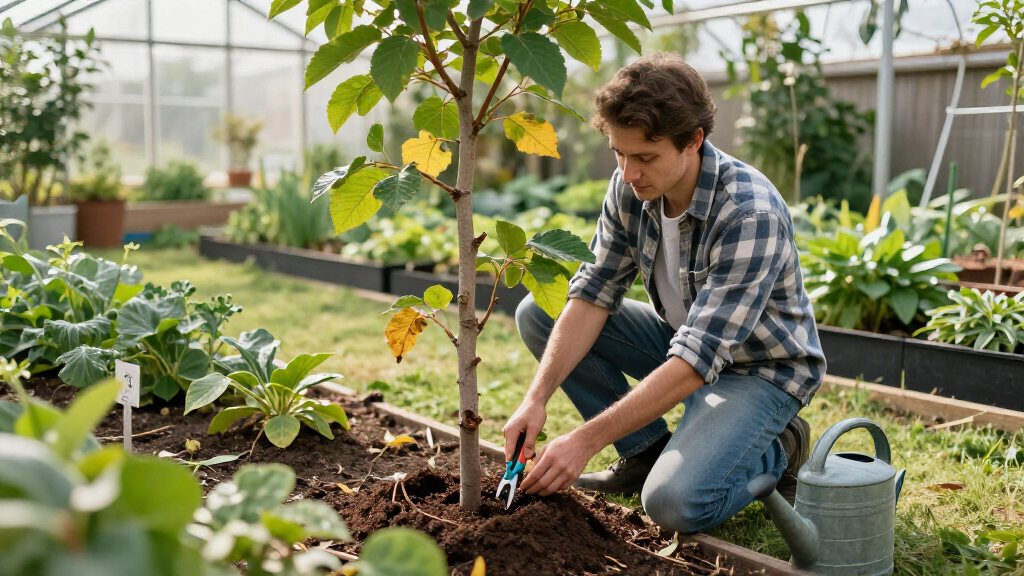
A gardening report published by Laidback Gardener on Oct. 2 answers four reader questions about tree care. Its advice is to leave ordinary squirrel damage alone, avoid digging into a decaying maple, choose replacement trees with mature size and disease risk in mind, and plant willows away from vulnerable pipes.
Laidback Gardener published a four-question tree-care report on Oct. 2, addressing squirrel-pruned oaks, a maple with trunk decay, replacement planting after black knot, and concerns about corkscrew willow roots. The advice distinguishes routine damage from situations that warrant professional inspection, while warning that tree choice and planting location can affect gardens, pipes and other property.
For mature oaks losing small branches to squirrels, the report says the occasional loss of twigs about 6–7 millimeters in diameter is generally not harmful and does not require intervention. Squirrels may cut branches to reach acorns, buds or other parts of the tree. Repellents, the report says, are often ineffective and impractical in large trees. If damage becomes unusually severe or involves larger branches, an expert examination may be appropriate.
For a maple with a rotting trunk and white grubs in the wood, the report says the larvae cannot be identified from the description alone. They may be insects living in already weakened or decaying wood, rather than the cause of the tree’s decline. It advises against removing more rotten wood, digging into the cavity, or applying wound dressing: those steps may interfere with the tree’s natural response to decay. There is no product described as a cure for wood that has already decayed.
For a tree being considered after a chokecherry with black knot, the report cautions that pin oak can eventually create dense shade and grow very large. It suggests considering smaller trees or selected thornless honey locust cultivars where light for perennials matters, while advising against Russian olive because it is invasive in many parts of North America. A different tree species can be planted immediately after removal; the report says there is no need to leave the site vacant to cleanse the soil.
Choosing Between Repair and Replacement
The answers matter because the same visible sign—broken branches, a cavity, or a disease history—does not automatically call for treatment or removal. Unnecessary pruning or wound treatment can interfere with a tree’s natural defenses, while a decaying trunk may deserve closer assessment if its failure could harm people or property.
Replacement decisions also have long-term consequences. A tree’s mature size, shade and root growth can shape a garden for years, and a species that is a poor fit may create avoidable maintenance or ecological problems. The willow guidance is similarly practical: roots are drawn to existing leaks and cracks, so distance from vulnerable infrastructure matters.
As an affiliate, we earn on qualifying purchases.
Four Questions From Tree Owners
The report, titled “Trees: Four Problems, Four Answers,” draws on questions from readers and material from Larry Hodgson’s archives. It covers four common decisions: whether to stop squirrels from cutting branches, how to respond to trunk decay, what to plant after black knot, and whether a corkscrew willow poses the same concerns as other willows.
The source describes black knot as a disease affecting certain Prunus species, including cherries and plums. Its planting advice is to avoid replacing the affected chokecherry with another susceptible Prunus, rather than waiting for the soil to be cleared. For willows, it distinguishes roots breaking sound infrastructure from roots exploiting existing defects in older pipes.
“There’s no “miracle cure.””
— Laidback Gardener report
As an affiliate, we earn on qualifying purchases.
What the Tree Descriptions Cannot Establish
The report does not identify the maple’s larvae or determine whether the tree is structurally unsafe. A description and photograph are not a site inspection, and the source recommends consulting a certified arborist if a tree’s failure could have serious consequences. It also does not establish how extensive the squirrel damage is beyond the reader’s account.
The recommendations are general rather than a property-specific diagnosis. Suitability of replacement trees and safe planting distances depend on local conditions, including available space, soil moisture and the location and condition of pipes or septic systems. The source does not provide a single distance for planting willows away from infrastructure.
As an affiliate, we earn on qualifying purchases.
When to Seek an Arborist
For the maple, the next step in a high-consequence location is an inspection by a certified arborist, rather than further excavation or applying a product to the cavity. For oak owners, the report calls for no action when twig loss remains occasional and small, but says unusually severe damage or larger broken branches merits examination.
Anyone replacing the chokecherry can plant another species after removal, while checking that its mature size and shade suit the garden and avoiding a susceptible Prunus. Those considering a corkscrew willow should check for old or damaged pipes, drains and septic systems and give the tree suitable space. The report offers no follow-up inspection findings or specific planting-distance rule.
As an affiliate, we earn on qualifying purchases.
Key Questions
Are squirrels cutting small oak branches harmful to the tree?
The report says occasional loss of small twigs around 6–7 millimeters wide is generally of little consequence for mature oaks. More severe damage or loss of larger branches may warrant an examination.
Should I remove rotten wood or apply wound dressing to a tree cavity?
The report advises against digging out more rotten wood or applying wound dressing. It says these actions may interfere with the tree’s natural ability to compartmentalize decay, and no treatment can restore wood already lost.
Can I plant a new tree right after removing a chokecherry with black knot?
Yes, according to the report, if the replacement is not a susceptible Prunus species. It says the site does not need to remain empty to cleanse the soil.
Will corkscrew willow roots damage pipes or foundations?
The report says willow roots can exploit existing cracks or leaks in older pipes, but that does not mean they spontaneously break through sound foundations or pipes. It recommends planting well away from vulnerable infrastructure.
Source: rss
Fall Picks
fall essentials
As an affiliate, we earn on qualifying purchases.