
TL;DR
Homes & Gardens advises gardeners to check climbing plants, supports and existing ties in October, ahead of winter winds. It recommends securing loose stems with soft ties in a figure-of-eight arrangement; the report does not cite research or quantify how much this reduces damage.
Homes & Gardens has advised gardeners to check climbing plants and their supports in October, tying in loose stems with soft, flexible ties before winter winds can cause them to flap, snap or pull away from a structure. The report says the task can help reduce the risk of damage to climbers such as clematis, wisteria, honeysuckle and climbing roses, but it does not cite a study measuring the advice’s effect.

Get garden gear delivered free with Prime
- Fast, free delivery on millions of items
- Prime Video, Amazon Music and more included
- Member-only deals all year
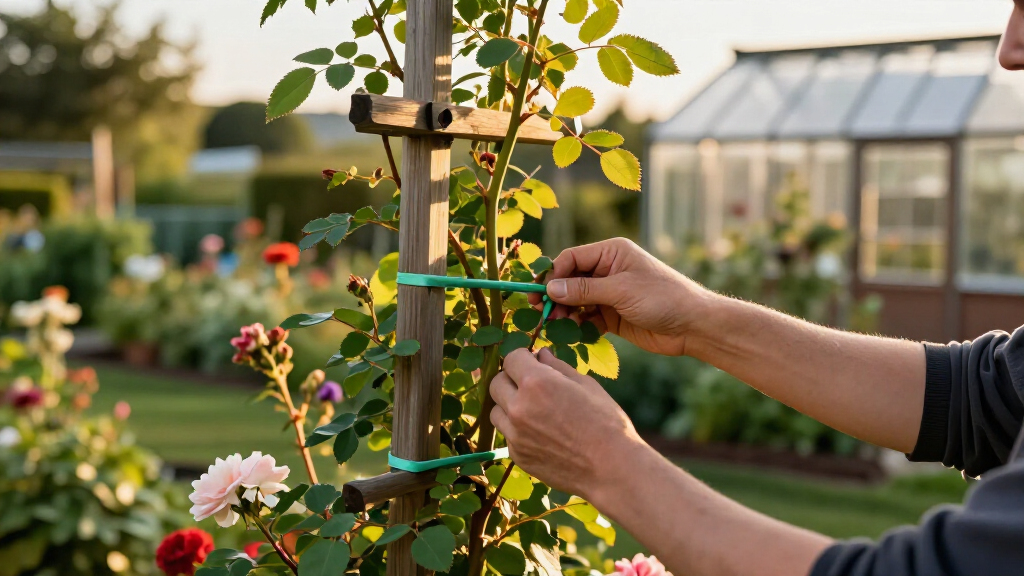
The recommended job is to inspect existing ties, replace any that are loose or unstable, and secure long or wayward stems to the support. The report also advises spacing structural stems evenly across the trellis or other structure, rather than leaving loose ends exposed to gusts. It warns that movement in loose stems can put strain on other parts of the plant and may contribute to damage.
For tying, the report recommends soft, flexible materials, including jute, flexible plastic ties, Velcro plant ties, or fabric strips cut from old T-shirts, tights or stockings. It advises against wire or metal ties, which could scrape or cut stems as they move in wind.
Its suggested method is a figure-of-eight tie: loop the tie around the stem, cross the ends, then loop them around the support and secure them with a double knot. The crossed section keeps the stem from rubbing directly against the support, while leaving some room for movement and growth, the report says.
Securing Stems Before Winter Gusts
Climbing plants rely on their supports, so damage to either can put the whole plant at risk. The report says wind can make unsecured stems whip about and can also place pressure on trellises, wires and fences. If a support fails, a plant may fall; if stems are left loose, they may break or be torn from the structure.
The advice gives gardeners a relatively simple maintenance task to do before colder, windier weather. Checking both the plant ties and the structure itself matters: securing stems will not prevent damage if a trellis is poorly anchored or already unstable. The report presents the steps as preventive guidance, not a guarantee that plants will withstand severe weather.
Products Worth Considering

Cuisinart Chef's Classic 13-Piece Stainless Steel Cookware Set

Weber Lumin Portable Electric Grill, Black

Cuisinart Chef's Classic Stainless Steel Cookware Set, 11-Piece
As an affiliate, we earn on qualifying purchases.
October Checks for Climbing Plants
The Homes & Gardens report frames October as a useful time to prepare climbers for winter. It notes that gardeners may focus on frost and snow, while strong winds can also damage plants and their supports. Its examples include climbers attached to walls, fences and trellises, all of which should be checked before winter weather sets in.
Evergreen climbers may face additional exposure because their leafy canopies catch gusts, according to the report. It recommends checking that supports are anchored to a wall or the ground, as appropriate. As an additional measure against frost, the article suggests placing a 2- to 3-inch layer of organic mulch around the plant’s base, while keeping mulch away from the main stem. This is separate from the wind-protection advice.
“The quickest way to protect them from snapping is to check and secure them sooner rather than later.”
— Homes & Gardens report
Limits of the Wind Protection Advice
The report does not identify a particular forecast, storm or documented incident prompting the advice. It also gives no experimental evidence, damage estimates or comparison showing how much tying stems reduces the chance of breakage. The guidance should be understood as practical gardening advice rather than a quantified guarantee.
Results will depend on factors the article does not assess, including the plant’s condition, the strength and placement of its support, and the severity of local winds. It does not provide species-specific instructions or a threshold for when a structure should be repaired or replaced. Gardeners should inspect supports and use their judgment if a trellis, fence or wall fixing appears unsafe.
Inspect Supports and Tie Points
Gardeners following the report’s advice can check stems, ties and supports in October, then revisit them after strong winds or as the weather changes. Replace loose ties with soft material, secure stems without constricting them, and confirm that trellises and other supports are firmly anchored. The article offers no later update or scheduled follow-up; ongoing checks are the practical next step described by its recommendations.
Key Questions
When should I secure climbing plants for winter?
The Homes & Gardens report recommends checking and tying climbers in October, before winter winds arrive. Local weather and plant conditions can affect when checks are most useful.
What ties are suitable for climbing plants?
The report recommends soft, flexible ties, such as jute, flexible plastic, Velcro or strips of fabric from old clothing. It advises against wire or metal ties because they can damage stems as they move.
How does a figure-of-eight tie work?
Loop the tie around the stem, cross the ends between the stem and support, then loop them around the support and secure with a double knot. The crossed section helps prevent direct rubbing while leaving room for some movement.
Should I check the trellis as well as the plant?
Yes. The report recommends checking that trellises, wires and fences are stable and properly anchored. Tying stems cannot protect a plant if its support is loose or at risk of falling.
Does the report prove these steps prevent wind damage?
No. It offers practical gardening recommendations but does not cite measurements or research quantifying how much the steps reduce damage. The advice may help limit risk, but it is not a guarantee in severe winds.
Source: rss