

Choosing a garden soil test kit is a choice between a low-cost color-strip test and a more convenient digital meter or reader. Both can help you spot a possible pH or nutrient issue, but neither should be treated as a substitute for a lab analysis when you need reliable numbers to guide major amendments. The practical difference is how much effort you want to spend collecting and interpreting a rough result: strips cost less and suit occasional checks, while digital tools can be easier to read and reuse. Choose a strip kit for a small garden and a tight budget; consider a digital kit if you test often or find color charts difficult to interpret.

Get garden gear delivered free with Prime
- Fast, free delivery on millions of items
- Prime Video, Amazon Music and more included
- Member-only deals all year
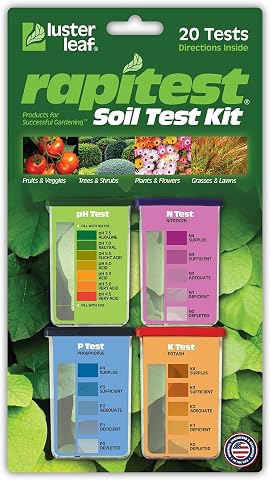
Rapitest Soil Test Kit for Gardens and Lawns
- ✔ Brand: Luster Leaf
- ✔ Model: 1602
- ✔ Tests included: 20 total: 5 each for pH, nitrogen, phosphorus, and potash

Soil Test Kit, 140 Tests for pH and Nutrient Levels
- ✔ Test parameters: pH, ammonia, nitrogen, phosphorus, and potassium
- ✔ Test count: Approximately 140
- ✔ Tests per parameter: About 40 for each parameter and about 20 for nitrogen
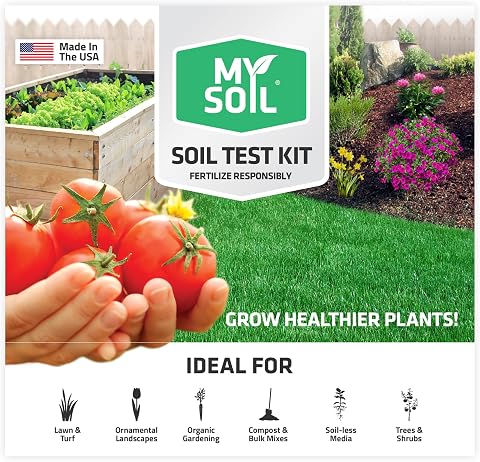
MySoil Soil Test Kit with Nutrient and pH Analysis
- ✔ Brand: MySoil
- ✔ Tested nutrients: 13 plant-available nutrient levels, including nitrogen and pH
- ✔ Results time: 6–8 days
At a Glance
| Criteria | Color-strip soil test kits | Digital soil test kits | Winner |
|---|---|---|---|
| Upfront cost | Usually the less expensive option | Often costs more, especially for multi-function devices | A |
| Ease of reading | Requires matching a color to a printed chart | Numeric display can be simpler to interpret | B |
| Repeat testing | Low-cost for occasional checks; each test uses supplies | Convenient for frequent checks; probe care and calibration may be needed | B |
| What they measure | Varies by kit; often pH and selected nutrients | Varies; some measure pH or moisture, while nutrient claims differ | Depends |
| Consistency | Sensitive to sample preparation and color interpretation | Depends on calibration, soil contact, and device quality | Depends |
| Best use | Basic screening across a few garden beds | Frequent spot checks and users who prefer a display | Depends |
Rapitest Soil Test Kit for Gardens and Lawns
Rapitest earns the top spot for balanced home use: it checks pH, nitrogen, phosphorus, and potash, covering the basic questions many gardeners ask before changing soil or fertilizer routines. Its capsule system and color comparators keep the process at home, and the included plant preference list connects readings with guidance for more than 400 plants. That context can be useful when a single pH target does not fit every crop or ornamental.The tradeoff is capacity. With five tests per variable and 20 total, it is better suited to a small garden or occasional investigation than to testing many beds repeatedly. Results also rely on judging color by eye, so lighting and careful comparison matter. The liquid kit offers far more repeat tests and an ammonia reading, while MySoil covers 13 nutrient levels through lab analysis. Rapitest sits between them: more garden interpretation support than a bare-bones check, but less scale and depth than either alternative.We would choose it when we want familiar soil measures plus a useful plant reference without mailing a sample away. If we need a large number of readings over a season, its limited allocations become a constraint; if we need a deeper nutrient profile, the lab route is more appropriate.
Pros:
- Measures pH, nitrogen, phosphorus, and potash.
- Includes 20 tests, split evenly across the four variables.
- Plant preference guidance covers more than 400 plants.
- Capsule method and color comparators support at-home interpretation.
Cons:
- Only five tests are available for each soil variable.
- Color results depend on visual comparison.
Best for: Gardeners who want a guided, at-home check of pH and the three core nutrients for a modest number of samples.
Not ideal for: People monitoring many beds frequently or seeking broad lab analysis beyond the four listed variables.
Bottom line: Rapitest is the most balanced starting point here when we want practical garden guidance and a manageable set of home tests.
“Rapitest is the most balanced starting point here when we want practical garden guidance and a manageable set of home tests.”
Soil Test Kit, 140 Tests for pH and Nutrient Levels
When our main concern is testing repeatedly, the approximately 140-test capacity changes the calculation. This liquid kit checks pH, ammonia, nitrogen, phosphorus, and potassium, so it adds ammonia to the familiar nutrient and acidity measures covered by Rapitest. It is described for gardens and lawns as well as compost and hydroponics, which may suit people checking several growing contexts with one kit.Its scale is the clear distinction: Rapitest provides 20 tests total, whereas this kit is intended for routine monitoring, though the listed allocation varies by measure—about 40 for each parameter and about 20 for nitrogen. Buyers should read that distribution carefully rather than assume every reading has identical capacity. The liquid method also depends on following the instructions correctly, so the larger test count is useful only if we are comfortable carrying out the process consistently.Compared with MySoil, this kit favors multiple home checks over a broad professional lab profile. It does not list tailored application recommendations, and its stated coverage is narrower than MySoil’s 13 plant-available nutrient levels. For gardeners who want to compare beds or repeat checks over time, however, the added volume and ammonia reading make it the most practical monitoring pick in this group.
Pros:
- Tests pH, ammonia, nitrogen, phosphorus, and potassium.
- Approximately 140 tests support repeated monitoring.
- Listed for gardens, lawns, compost, and hydroponics.
- Covers more test volume than the 20-test Rapitest kit.
Cons:
- Results depend on following the instructions correctly.
- Test counts vary by parameter, with fewer nitrogen tests listed.
Best for: Gardeners, lawn keepers, or growers who expect to test repeatedly and want several key readings in one at-home kit.
Not ideal for: Buyers who want lab analysis, tailored amendment guidance, or the simplest possible interpretation process.
Bottom line: Choose this liquid kit when repeat testing matters more than lab depth or plant-specific application recommendations.
“Choose this liquid kit when repeat testing matters more than lab depth or plant-specific application recommendations.”
MySoil Soil Test Kit with Nutrient and pH Analysis
MySoil is the depth-first choice in this comparison. Instead of asking us to match a home test color, it sends a soil sample to a professional lab for analysis of 13 plant-available nutrient levels, including nitrogen and pH. The kit includes instructions and a prepaid mailing envelope, then provides tailored organic and non-organic recommendations describing what to apply, how much, and when. That can be more helpful than a set of readings alone when we are planning a broader amendment decision.The added detail comes with less immediacy and less repeatability. Results take 6–8 days, and the kit is single-use. By comparison, Rapitest and the liquid kit let us make checks at home, with the liquid option especially suited to repeated monitoring. MySoil is therefore a poor match for quick troubleshooting or gardeners who want to sample multiple beds using the same purchase.Its stated range of suitable settings is broad, from lawns and gardens to compost, houseplants, soilless media, and hydroponics. Still, the lab report is only as useful as the sample we send and the decisions we make from its recommendations. We rank it third overall because its detailed analysis is valuable for a specific need, but the wait and single-use design make it less flexible for everyday testing than the two reusable at-home approaches.
Pros:
- Professional lab analysis covers 13 plant-available nutrient levels, including nitrogen and pH.
- Recommendations address what to apply, how much, and when.
- Offers both organic and non-organic recommendation options.
- Includes instructions and a prepaid mailing envelope.
Cons:
- The kit is single-use.
- Results take 6–8 days.
Best for: Gardeners who want a broader lab-based nutrient profile and specific application recommendations for one soil sample.
Not ideal for: Anyone needing an immediate result, multiple rounds of testing, or a low-effort home color comparison.
Bottom line: MySoil is the right specialist pick when we value detailed lab findings and tailored guidance more than speed or repeat use.
“MySoil is the right specialist pick when we value detailed lab findings and tailored guidance more than speed or repeat use.”
As an Amazon Associate we earn from qualifying purchases.
Key Differences
The core tradeoff is price versus convenience. Color-strip kits are inexpensive and can be adequate for a rough first look, but the user has to prepare a sample, follow the kit instructions, and judge a color against a chart. Digital devices can make that last step easier, particularly for pH or moisture readings, but a number on a screen does not automatically mean the result is accurate. Device quality, calibration, and how the probe meets the soil all matter.
The other important difference is what a kit can tell you. Both formats vary widely: a product may test pH, selected nutrients, or moisture, and a simple meter may not measure the full nutrient profile gardeners expect. Read the specific product claims before buying. If a plant is struggling or you plan to apply lime, sulfur, or fertilizer across a large area, a local laboratory test is usually the stronger basis for action. It can provide a more complete analysis and recommendations tied to your soil and intended crop.
Detailed Comparison
Upfront cost (Color-strip soil test kits wins — moderate)
Color-strip kits usually win on purchase price, a moderate advantage for someone who only wants to test a bed once or twice. Digital kits cost more, and more features do not necessarily mean more dependable nutrient readings. The savings from strips matter most when the goal is a basic screen; if you will test repeatedly, compare the cost of replacement reagents with the digital unit’s purchase and care costs.
Ease of reading (Digital soil test kits wins — moderate)
Digital kits generally win by a moderate margin when they show a numeric result. A strip kit depends on comparing a sample color to a chart, which can be difficult under poor lighting or when shades are close. A screen reduces that interpretation step, though it cannot correct a poor sample or an inaccurate sensor. Choose digital for readability, not as a guarantee of laboratory precision.
Repeat testing (Digital soil test kits wins — minor)
Digital devices tend to be more convenient for frequent spot checks, a minor to moderate advantage depending on the model. There is no chart to compare each time, but probes may need cleaning, storage, or calibration. Strip kits remain easy to use for occasional checks, though test reagents are consumed. For one small garden, the convenience gap may not justify a higher price.
Measurement coverage (major difference)
Neither format wins as a category: coverage depends on the particular kit, so the result is model-dependent. Some products check pH and a few nutrients, while others focus on moisture or light. Do not assume a digital meter measures nitrogen, phosphorus, and potassium just because its listing uses broad soil-testing language. Confirm each measurement and its stated range before purchase.
Consistency and confidence (major difference)
There is no universal winner, and the difference can be major when the result will drive a costly soil treatment. Strip readings depend on following the procedure and judging color; digital readings depend on sensor quality, calibration, and proper contact. Both can be affected by uneven soil samples. For a consequential decision, a lab test offers a stronger reference than either at-home format.
Best practical use (moderate difference)
Color strips are a sensible choice for a budget-conscious gardener checking a small bed or looking for a rough indication of pH. Digital tools suit users who value quick, repeatable spot readings and an easier display. This is a minor gap for casual screening, but it matters more if repeated checks are part of your routine. Neither is a replacement for a lab report when you need detailed nutrient guidance.
Color-strip soil test kits: Pros and Cons
Pros:
- Low purchase cost
- Useful for occasional screening
- No electronic probe or battery to maintain
Cons:
- Color matching can be subjective
- Each test uses reagents or strips
- Coverage and precision vary by kit
Digital soil test kits: Pros and Cons
Pros:
- Numeric displays can be easier to read
- Convenient for repeated spot checks
- Some devices combine pH or moisture readings
Cons:
- Higher upfront cost
- Calibration and probe care may be required
- A digital reading can appear more definitive than the device warrants
Who Should Choose What
Choose Color-strip soil test kits if:
- You want an inexpensive first check for a small garden
- You test soil occasionally and can follow a color chart carefully
- You want to screen before deciding whether a laboratory test is needed
Choose Digital soil test kits if:
- You expect to test often and value a quick display
- Color comparisons are difficult for you to interpret
- The exact model clearly lists the measurements you need and explains calibration
Skip both if: Skip both for a major planting problem, a large garden amendment, or a decision that depends on dependable nutrient levels; use a local soil laboratory.
Value for Money
For occasional checks, color strips are usually the better value because they keep the initial cost down and can answer a basic screening question. Paying more for a digital kit is worthwhile when you will use it regularly, need a clearer display, and have confirmed that the device measures the properties you care about. The extra price buys convenience, not automatic accuracy. If you need dependable nutrient recommendations, putting that money toward a laboratory test is often the better value.
Final Verdict
For most home gardeners who want an occasional, low-cost indication, start with a color-strip kit that clearly states what it tests and follow its instructions closely. Choose a digital kit if you will check soil regularly and its specific measurements justify the higher cost. The deciding factor is how consequential the result is: use either home format for screening, but choose a laboratory analysis before making substantial fertilizer or pH corrections.
Frequently Asked Questions
Are digital soil test kits more accurate than color-strip kits?
Not automatically. A digital display can be easier to read, but accuracy depends on the device, calibration, and sample technique. Compare the specific kit’s stated method and limits rather than assuming digital means precise.
Can a home kit tell me exactly how much fertilizer to use?
Usually not with the confidence of a laboratory report. Kits differ in which nutrients they measure, and screening results may not provide crop-specific application guidance. Use lab recommendations when the amount matters across a large area.
How should I collect soil for a test?
Follow the kit’s instructions. In general, take several small samples from the area you want to assess, mix them, and remove debris. A single scoop may not represent a whole bed.
When should I choose a laboratory soil test?
Choose a lab when plants have persistent problems, you are preparing a large garden, or you plan to make a major pH or nutrient correction. A lab can provide a more complete analysis and recommendations suited to the intended use.