TL;DR

Get garden gear delivered free with Prime
- Fast, free delivery on millions of items
- Prime Video, Amazon Music and more included
- Member-only deals all year
A Planet Natural report describes an established small bed outside Durham, North Carolina, that produced occasional lettuce, mustard greens and kale in autumn 2024. The gardener presents it as a manageable source of fresh leaves, not a substitute for household food needs, and stresses that fall planting dates depend on location and crop.
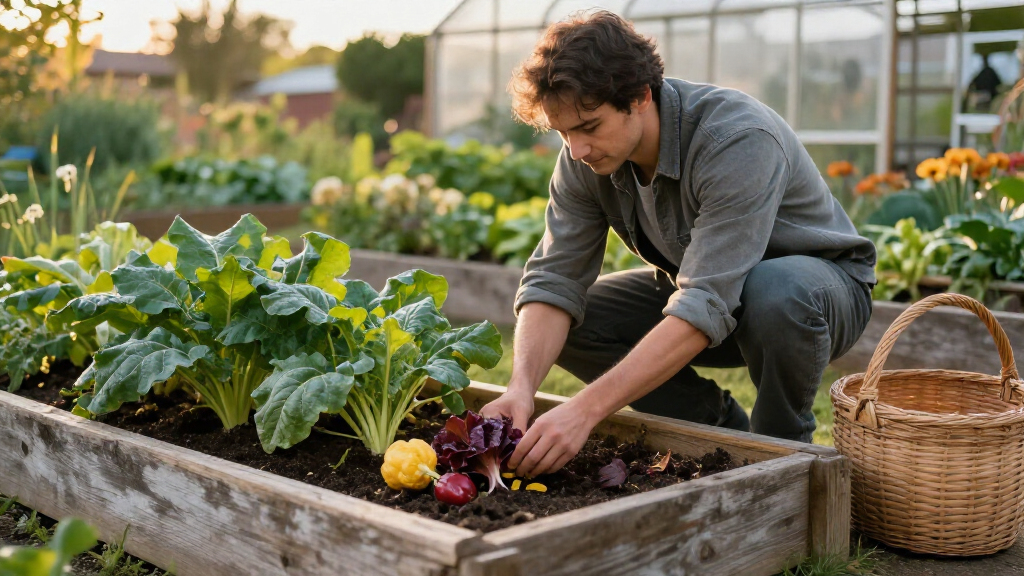
A gardener outside Durham, North Carolina, says a small bed planted with lettuce, mustard greens and kale provided occasional fresh leaves in autumn 2024, illustrating a low-demand approach to fall gardening rather than a plan to feed a household. In a Planet Natural report, the gardener says the bed was established in 2019 beside a kitchen path, where it was easy to check during the day.
The gardener, writing about a bed shared with Calvin, describes its goal as deliberately limited: produce some greens without turning the planting into another major task. The report says the plants were already established by the autumn stretch described. The bed was not expected to supply all the household’s food, and the writer does not claim that it reduced grocery costs or provided a steady winter harvest.
Its location was part of the plan. Beside a path the gardener regularly used to reach an upholstery workroom, the bed could be noticed without a separate trip. The writer says they checked soil moisture and kept expectations realistic. For leaf lettuce, the report advises picking usable outer leaves while leaving the central growing point intact; it cautions that mustard greens and kale have their own variety- and stage-specific harvest needs.
The report also emphasizes that an established bed in October is different from starting one then. It cites North Carolina State University’s Piedmont garden-management calendar, which places fall planting in August and gives mid-September as an approximate cutoff even for quick greens without season extension. Those dates are regional guidance, not a universal calendar for the South.
A Garden Sized for Daily Routines
The account offers a practical measure of success for people with limited time or space: a garden can be worthwhile even if it supplies only occasional leaves. The writer argues that a planting suited to an ordinary routine may receive more consistent attention than a larger project that depends on having an open weekend. That is the report’s experience, not a guarantee that every small bed will thrive.
Locating a garden where it is easy to see may help make routine checks more likely, but convenience does not replace suitable growing conditions. The report notes that a bed still needs appropriate light and drainage, and that water access should not make ordinary care awkward. Its central point is modest: plan for the time available, and value the harvest actually produced rather than an imagined target.
The timing discussion is relevant to gardeners considering a fall planting now or planning for a future season. A warm October afternoon does not necessarily mean there is time to sow every crop. The report’s regional example makes clear that local planting dates and crop timing matter, and that an existing planting may be more realistic to tend late in the season than to start anew.
Products Worth Considering

Instant Pot InstantChill Ice Cream Maker with Rolled Ice Cream, 2-Pint

Ninja MultiPot XL 12-in-1 Multicooker, Stone Purple

Cuisinart Belgian-Style Waffle and Pancake Maker, WAF-300NAS
As an affiliate, we earn on qualifying purchases.
Why the Durham Planting Started Earlier
The bed was established in 2019 and used for the 2024 fall mix. The report describes a gardener who enjoys a long growing season but no longer wants to spend August afternoons proving that enthusiasm through extra work. For that season, the chosen approach was lettuce, mustard greens and kale in a small bed near the kitchen path.
The author points to North Carolina State University guidance for the Piedmont: fall planting begins in August, with an approximate mid-September cutoff for quick greens that are not protected by season extension. The report also refers to Clemson guidance that lettuce benefits from even moisture and can be affected by heat and moisture stress. It cautions against transferring planting dates from South Carolina’s coastal region to a garden near Durham, since conditions vary by location and elevation.
The account concerns an established planting, not a controlled trial or a broad comparison of garden yields. It reports the writer’s experience in one household and location, with no yield totals, costs, or measured time savings supplied.
What the Report Does Not Measure
The account does not give harvest weights, the number of meals supplied, exact planting dates, or a detailed schedule of watering and other care. It therefore cannot establish how much food the bed produced or how much work it saved. The described outcome is the gardener’s report of occasional usable leaves, not a measured yield or a claim that the approach will work identically elsewhere.
It is also unclear how long the 2024 planting continued to produce or whether it provided any winter harvest. The report notes that outdoor garden activity slows in winter and does not promise uninterrupted picking. Results and planting windows can vary with local conditions, crop variety and season extension. An empty bed in October should not be treated as though the earlier fall planting window has reopened.
Planning for the Next Local Window
The report does not announce a new planting or provide a schedule for the next season. For gardeners considering a future fall bed, its advice is to check local planting guidance, choose crops they actually like to eat and plan around the appropriate planting window. Those with an existing bed can continue checking moisture and plant condition, managing weeds carefully around roots, and harvesting only what is ready and useful.
The author also suggests treating a small bed as a way to learn personal preferences before expanding the garden. The next step is not necessarily a bigger plot: it may be adjusting the crop mix, position or care routine for the next suitable season.
Key Questions
What did the small fall bed grow?
The report says the autumn 2024 bed included lettuce, mustard greens and kale. It does not give yield totals.
Was the bed meant to feed the household?
No. The gardener describes the goal as occasional fresh leaves, not a full household food supply or a measured grocery-saving plan.
Can I start a fall greens bed in October near Durham?
The cited North Carolina State University Piedmont calendar places fall planting in August and gives mid-September as an approximate cutoff even for quick greens without season extension. Check current local guidance for your location and crop; October warmth alone does not establish that it is a suitable planting time.
How should leaf lettuce be harvested?
The report recommends taking outer leaves when they are large enough to use while leaving the central growing point intact. It says harvest methods for mustard greens and kale depend on the variety, growth stage and intended use.
Does the report say the bed produced through winter?
No. It describes occasional harvests during the autumn 2024 season and makes no promise of an uninterrupted or winter-long supply.
Source: planetnatural.com