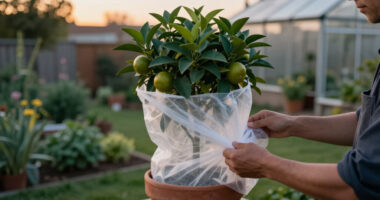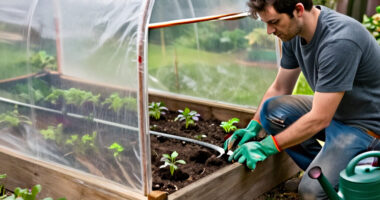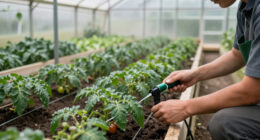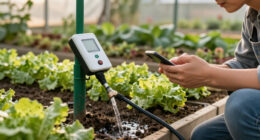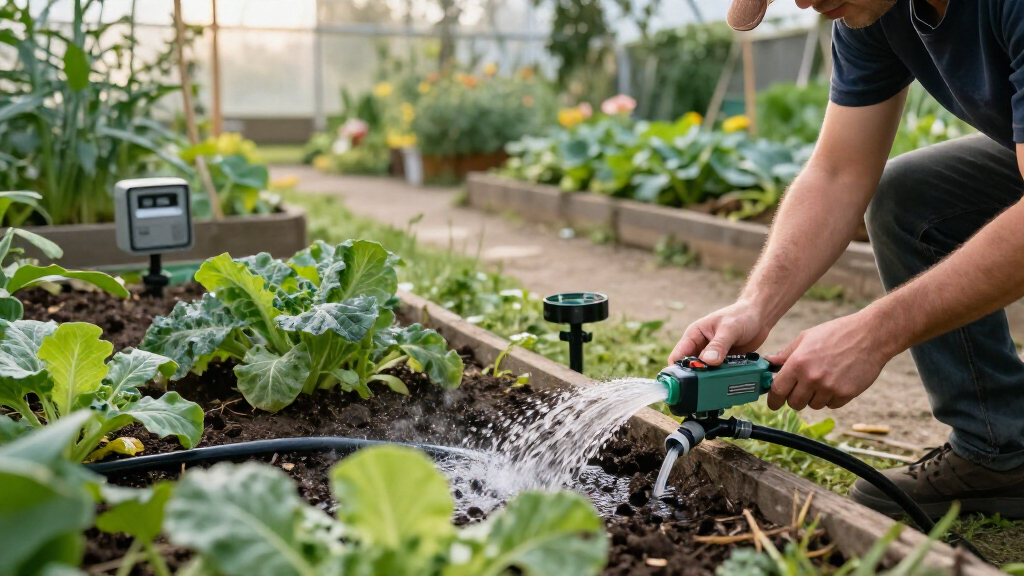

Choosing a garden automation system comes down to how much of the garden you want software to manage. Smart irrigation systems focus on watering: they control valves or a hose timer, follow schedules, and may adjust for rain or soil conditions. Full garden automation systems can add that same watering control while coordinating equipment such as pumps, lighting, greenhouse ventilation, or robotic mowers.

Get garden gear delivered free with Prime
- Fast, free delivery on millions of items
- Prime Video, Amazon Music and more included
- Member-only deals all year
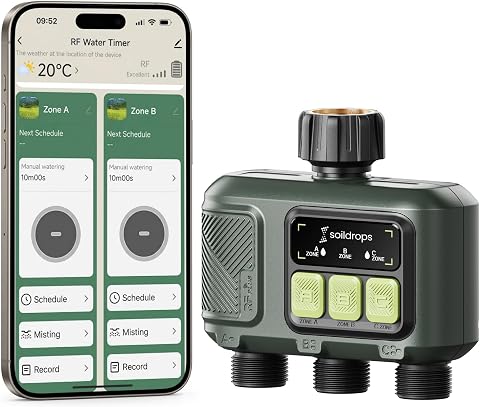
WiFi Water Timer Smart Irrigation Controller with Gateway
- ✔ Brand: Soildrops
- ✔ Model: WHT-003
- ✔ Power: Two AA batteries

GoveeLife H5901 Smart WiFi Sprinkler Timer with Gateway, 1 Outlet
- ✔ Brand and model: GoveeLife H5901+H5044
- ✔ Water outlets: 1
- ✔ Watering modes: Continuous, intermittent, custom

MOES 4 Zone Water Timer, Brass Fittings, Sequential Watering, No Wi-Fi
- ✔ Brand and model: MOES CR04
- ✔ Zones: 4
- ✔ Connectivity: No Wi-Fi
The practical difference is scope, and it affects both setup and cost. For a garden where watering is the main chore, a smart irrigation system is usually the simpler, better-value choice. A full system makes more sense when several independent tasks need coordination or when the garden has distinct zones, a greenhouse, or other equipment. The comparison below treats these as categories, since features vary by brand and individual products.
At a Glance
| Criteria | Smart irrigation systems | Full garden automation systems | Winner |
|---|---|---|---|
| Primary function | Automates irrigation schedules and, on some models, weather or soil-based adjustments | Coordinates watering with other connected garden or greenhouse equipment | Depends |
| Control across tasks | Usually limited to watering zones and related sensors | Can unite irrigation with devices such as pumps, lights, ventilation, or mowers, depending on the platform | B |
| Setup effort | Generally simpler; often a timer, controller, valves, and optional sensors | Usually more involved because devices, integrations, and automation rules must be configured | A |
| Upfront cost | Usually lower because it covers fewer devices and functions | Usually higher, with costs rising as more equipment and zones are added | A |
| Ongoing maintenance | Fewer connected devices to monitor; valves and sensors still need care | More components and integrations can mean more troubleshooting and upkeep | A |
| Best fit by garden size | Most useful for lawns, beds, containers, and gardens where watering is the main recurring job | Most useful for larger or more complex gardens with multiple automated tasks | Depends |
| Expandability | Can add zones or sensors, but broader automation may require a separate system | Broader by design, although compatibility and platform limits still matter | B |
WiFi Water Timer Smart Irrigation Controller with Gateway
The Soildrops WHT-003 is the most balanced garden automation system in this group for people who want to check and adjust watering remotely. Its gateway-based connection pairs app control with a stated 984-foot RF range, which can help when a timer sits far from the house router. Battery operation avoids wiring at the faucet, and the stated runtime of up to eight months reduces how often we need to replace the two AA batteries.For everyday scheduling, Soildrops supports daily, interval and odd/even modes, and its weather-delay feature can pause watering during rain. That makes it more automated than the no-Wi-Fi MOES, which relies on schedules and a manual rain delay. Compared with GoveeLife, Soildrops describes flexible multi-zone scheduling and longer RF range, while GoveeLife adds voice control, usage charts and a more explicitly weather-adaptive approach. The supplied details do not state how many outlets or zones a Soildrops timer itself controls, so we should confirm that before planning a multi-zone installation.The tradeoff is that this system still relies on batteries and a gateway, and the gateway limit of 64 devices may matter in a larger setup. We should choose it when remote access and broad scheduling flexibility matter more than avoiding connected equipment. If we want four specified zones on one faucet and can manage them locally, MOES is clearer about its capacity.
Pros:
- App-based remote control through a gateway.
- 984-foot stated RF range and no wiring required at the timer.
- Weather delay plus daily, interval and odd/even scheduling.
- Two AA batteries are specified to last up to eight months.
Cons:
- Requires periodic replacement of two AA batteries.
- Gateway capacity is limited to 64 devices.
- The supplied details do not specify the timer’s outlet or zone count.
Best for: Gardeners who want app-based control, rain delays and flexible schedules with a long stated RF connection between timer and gateway.
Not ideal for: Buyers who want a clearly specified four-zone faucet timer, or who prefer a system that works without a gateway and app.
Bottom line: Choose Soildrops for the strongest balance of remote garden control, flexible scheduling and weather delay, after confirming its outlet configuration fits your irrigation plan.
“Choose Soildrops for the strongest balance of remote garden control, flexible scheduling and weather delay, after confirming its outlet configuration fits your irrigation plan.”
GoveeLife H5901 Smart WiFi Sprinkler Timer with Gateway, 1 Outlet
The GoveeLife H5901 suits gardeners who want more information and hands-free control from a connected timer. Its app offers charts for watering time and volume, while Alexa and Google Assistant support provide another way to operate the system. Weather-adaptive watering uses weather and rain data to adjust schedules, a more active approach than Soildrops’ described weather-delay function.This is a single-outlet timer with up to 10 schedules and three modes: continuous, intermittent and custom. Those options can make recurring watering easier to organize, but they do not give it the four-zone capacity specified for MOES. GoveeLife’s gateway is rated for up to 1,640 feet and 64 devices, and the timer is listed with a two-year battery life. Its dual brass inlets, IP67 rating and UV-stabilized shell are useful construction details for equipment that stays outdoors.We should check compatibility before choosing it: the system uses 2.4 GHz Wi-Fi, requires water pressure within its stated operating range, and is designed for 3/4-inch threaded connections. Those limits make it less flexible for someone with a different faucet fitting or pressure outside the range. Compared with Soildrops, GoveeLife offers richer app features and a longer stated gateway range, but Soildrops highlights flexible zone scheduling and a simpler weather delay. GoveeLife is the better match when one outlet and connected features are the priority.
Pros:
- Weather-adaptive watering, three modes and up to 10 schedules.
- Alexa and Google Assistant support, plus app charts for time and volume.
- Dual brass inlets, IP67 waterproof rating and UV-stabilized shell.
- Stated gateway range up to 1,640 feet and battery life up to two years.
Cons:
- Controls one water outlet.
- Gateway connects through 2.4 GHz Wi-Fi only.
- Requires compatible water pressure and 3/4-inch threaded fittings.
Best for: Gardeners who want one connected watering outlet with weather adaptation, voice assistant support and app-based watering charts.
Not ideal for: Households needing multiple separately controlled outlets, a faucet that does not match its 3/4-inch thread, or Wi-Fi other than 2.4 GHz.
Bottom line: Pick GoveeLife when connected insights, weather adaptation and voice operation matter more than controlling several zones from one timer.
“Pick GoveeLife when connected insights, weather adaptation and voice operation matter more than controlling several zones from one timer.”
MOES 4 Zone Water Timer, Brass Fittings, Sequential Watering, No Wi-Fi
The MOES CR04 is the clear choice when the main challenge is splitting one outdoor faucet across four separately scheduled irrigation zones. Each zone can have its own schedule, while sequential watering runs zones in turn to help avoid pressure conflicts when they would otherwise start together. Its large LCD makes the programming visible at the timer, and the stated duration range reaches 23 hours and 59 minutes with intervals up to 30 days.Unlike Soildrops and GoveeLife, MOES has no Wi-Fi or app connection. That removes the need to configure a gateway or rely on remote connectivity, but it also means we cannot change a schedule from elsewhere. For simple garden automation, rain delay, manual watering and low-battery protection cover useful everyday controls. The brass and polycarbonate construction and 6.4-ounce listed weight are relevant buying details, though the product description does not give an outdoor ingress rating.MOES is more explicit than Soildrops about the number of zones, and it offers more zones than GoveeLife’s one outlet. In exchange, it has fewer connected conveniences: weather handling is a manually set rain delay rather than weather-adaptive watering, and its four AA batteries are not included. We should choose it when local control and multi-zone scheduling beat app access. If we need to make changes while away or want weather data to guide watering, either connected option is a closer fit.
Pros:
- Manages four zones from a single outdoor faucet, each with its own schedule.
- Sequential watering helps reduce pressure conflicts between zones.
- Large LCD supports detailed duration and frequency programming.
- Rain delay, manual watering and low-battery protection are included.
Cons:
- No Wi-Fi or app means no remote schedule changes.
- Requires four AA batteries, which are not included.
- No outdoor ingress rating is specified in the supplied details.
Best for: Gardeners who need four independent irrigation schedules from one faucet and are comfortable programming and adjusting the timer locally.
Not ideal for: Anyone who wants remote app control, voice commands, weather-data-based adjustments or included batteries.
Bottom line: Choose MOES when four local, independently scheduled zones matter more than remote access or weather-adaptive automation.
“Choose MOES when four local, independently scheduled zones matter more than remote access or weather-adaptive automation.”
As an Amazon Associate we earn from qualifying purchases.
Key Differences
The main distinction is how many jobs the system takes on. A smart irrigation controller solves a defined problem: it opens watering zones according to a schedule or conditions. That can reduce routine work and prevent avoidable watering, but it will not usually manage a greenhouse fan or coordinate other garden equipment. A full garden automation platform can connect these tasks, which matters when the garden has several systems that need to work together.
That wider scope comes with a higher purchase cost and more setup. Each extra device adds a connection to configure, a rule to maintain, and a possible point of failure. For a small or straightforward garden, those additions may bring little practical benefit. For a large property or greenhouse, coordinating multiple tasks in one system can save time and make it easier to manage different zones. The right choice depends on the number of recurring jobs and devices, not on the broadest feature list.
Detailed Comparison
Primary function (moderate difference)
Smart irrigation wins when the problem is watering. It offers a focused way to schedule zones and, in some products, adjust watering using weather data or sensors. The advantage is moderate for gardens with regular watering needs and minor when a hose timer already does the job. Full garden automation can handle watering too, but its additional scope may be unnecessary if irrigation is the only task to automate.
Control across tasks (Full garden automation systems wins — major)
Full garden automation wins by a major margin when the goal is to coordinate several kinds of equipment. A platform that supports irrigation, pumps, greenhouse ventilation, or lighting can bring those controls together and trigger actions across devices. Smart irrigation is usually restricted to watering, which keeps it easier to understand but leaves other tasks separate. Check device compatibility carefully: a broad platform does not necessarily work with every brand or appliance.
Setup effort (Smart irrigation systems wins — moderate)
Smart irrigation usually wins by a moderate margin. It commonly involves setting up a controller, connecting zones, and choosing schedules or sensor rules. A full system can require the same irrigation setup plus device pairing, integrations, and rules for how equipment responds to one another. That added effort is manageable for a technically confident owner, but it can outweigh the convenience for someone seeking a quick watering upgrade.
Upfront cost (Smart irrigation systems wins — major)
Smart irrigation usually wins by a major margin because the purchase can stay limited to the controller, valves, and any sensors needed. Full automation may require a hub or central controller and compatible equipment across multiple functions. Its higher cost is easier to justify when those other devices are already in use or the system will replace several separate controls. Paying more just to automate one irrigation zone rarely makes sense.
Ongoing maintenance (Smart irrigation systems wins — moderate)
Smart irrigation has a moderate advantage because a smaller system has fewer connected parts and integrations to check. Both types need attention to physical components such as valves and sensors, and network-connected equipment may need updates or troubleshooting. Full automation adds more potential failure points; a pump or ventilation rule that stops working can matter more than a missed watering alert. The difference grows as the number of devices grows.
Fit by garden size and complexity (moderate difference)
There is no universal winner. Smart irrigation is often the practical fit for a modest yard or set of beds with predictable watering needs. Full automation gains a moderate advantage when a larger garden includes distinct irrigation zones, a greenhouse, or equipment that benefits from coordinated control. Garden size alone is not enough: a large lawn may need advanced irrigation without needing a wider automation platform.
Expandability (Full garden automation systems wins — moderate)
Full garden automation wins by a moderate margin for owners who expect to add several kinds of devices. It is designed to bring supported equipment into a shared system, while a smart irrigation controller generally expands within the watering task through more zones or sensors. But future flexibility has value only if the platform supports the devices you plan to buy. Review compatibility and whether core features need a subscription before choosing on expansion alone.
Smart irrigation systems: Pros and Cons
Pros:
- Lower cost for gardens that mainly need scheduled watering
- Simpler setup and fewer integrations to maintain
- Can automate multiple irrigation zones without taking on unrelated devices
Cons:
- Usually cannot coordinate watering with other garden equipment
- Adding broader automation later may require a second controller or platform
- Weather and soil-based features vary, and sensors may add cost
Full garden automation systems: Pros and Cons
Pros:
- Can coordinate irrigation with other supported garden or greenhouse equipment
- Better suited to complex setups with several recurring tasks
- Offers room to add devices within the platform’s compatibility limits
Cons:
- Higher cost, especially when compatible equipment must also be purchased
- More demanding to install, configure, and troubleshoot
- Extra features may go unused in a garden with simple watering needs
Who Should Choose What
Choose Smart irrigation systems if:
- You mainly want to automate lawn, bed, or container watering.
- You want a lower-cost system with fewer setup steps and connected components.
- Your other garden equipment can remain on its own controls.
Choose Full garden automation systems if:
- You manage several recurring tasks across a large garden, greenhouse, or mixed setup.
- You want supported pumps, lights, ventilation, or other equipment to respond to shared rules.
- You expect to add compatible devices and will use the coordination they provide.
Skip both if: Your garden is small, watering is occasional, and a basic hose timer or manual routine already meets your needs.
Value for Money
Smart irrigation is usually the better value when watering is the only chore you want to automate. The narrower system costs less and avoids paying for controls you may never use. A full garden automation system is worth the premium when it replaces multiple separate controls or coordinates equipment in ways that save regular time or help manage a complex garden.
Count the cost of compatible devices, sensors, hubs, and any required subscriptions before comparing prices. The full system’s value depends on actual use: if its extra functions remain idle, the higher purchase price buys little. If you already own supported equipment and want it to work together, the added coordination may justify the expense.
Final Verdict
For most people whose main goal is less manual watering, choose a smart irrigation system. It addresses the common task at a lower cost and with less setup. Choose full garden automation if you have several devices or garden zones that genuinely benefit from shared control, especially in a greenhouse or a larger, more complex garden. The biggest deciding factor is whether you need to automate watering alone or coordinate several jobs. Pay more for the broader system only when you can name the equipment and routines it will manage.
Frequently Asked Questions
Is a full garden automation system worth the extra cost?
It can be if you need to coordinate irrigation with other supported equipment, such as greenhouse ventilation or pumps, and will use those controls regularly. If watering is your only target, a smart irrigation system is usually better value.
Can smart irrigation work without a full automation system?
Yes. Many smart irrigation products work as standalone controllers for schedules, zones, and compatible sensors. Features and connectivity differ by product, so check whether the controller meets your needs without an added hub or subscription.
Which option is better for a large garden?
It depends on what makes the garden large. A broad lawn with several watering zones may need only smart irrigation. A property with a greenhouse, pumps, lighting, or other tasks that benefit from coordination is a stronger fit for full garden automation.
Do these systems automatically save water?
They can help avoid unnecessary watering when schedules, weather data, or sensors are configured appropriately. Neither category guarantees savings: poor schedules, inaccurate sensors, leaks, or unsuitable settings can still waste water.