
TL;DR

Get garden gear delivered free — and shop member deals
- Fast, free delivery on millions of items
- Access to Prime Big Deal Days deals on October 6–7
- Prime Video, Amazon Music and more included
A Laidback Gardener report published Oct. 6, 2026, outlines the origins, variety and basic care of aloes, a genus of about 650 succulent species. It says most aloes do best in abundant light and should be watered after their potting mix dries; indoor flowering is uncommon.
Laidback Gardener published a report on aloe plants on Oct. 6, 2026, covering the genus’s origins, varieties and care for home growers. The article describes about 650 succulent species and says they generally prefer abundant light and watering only after their potting mix has dried.
The genus Aloe belongs to the Asphodelaceae family, and its centre of diversity is in southern Africa, according to the report. The familiar medicinal aloe, Aloe vera, probably originated on the Arabian Peninsula. It later spread widely, particularly around the Mediterranean, where it has become a familiar part of some coastal landscapes. The report says aloe’s ease of cultivation has led to it being considered invasive in some places.
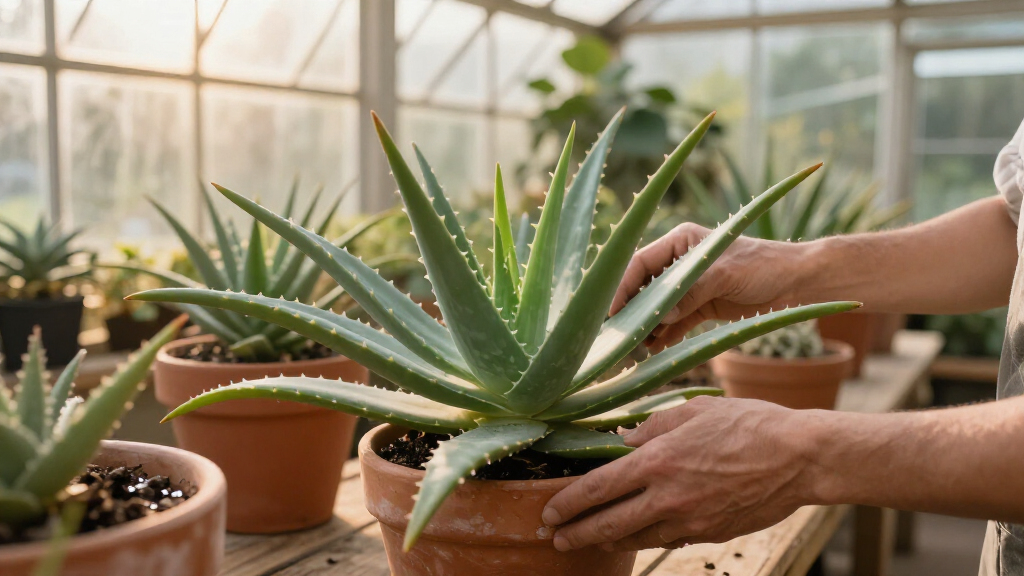
Aloes are succulents with water-storing, leathery leaves arranged in rosettes. Leaves may be sword-shaped, triangular, lance-shaped or oval, and can range from green to bluish, sometimes with white markings. While many plants appear stemless when young, some develop a visible stem with age; others, such as Aloe arborescens, can branch and form several rosettes. Species vary from miniature plants to small trees.
The report recommends giving aloes as much light as possible, including direct sun in a bright, warm window. A plant moved abruptly into stronger sunlight may develop temporary brownish discolouration, it says, so growers should increase exposure gradually. Aloes may survive low light, but growth can become pale, weak and floppy. Because they store water in their leaves, they tolerate dry conditions; the report advises watering when the potting mix is dry.
Choosing Light and Water for Aloes
For people keeping an aloe as a houseplant, the guidance addresses two common care decisions: where to place the pot and when to water. The report’s emphasis on abundant light and dry soil before watering helps explain why a plant can endure a dim room for a time without thriving there. It also cautions against treating any initial sun-related colour change as proof that the plant cannot tolerate direct light.
The range of forms also matters to shoppers and collectors. Aloe vera is only one member of a genus with varied sizes, leaf shapes and colours. The report notes that not every species is readily available in garden centres or suitable for indoor cultivation, so the needs of a particular plant may depend on its species.
As an affiliate, we earn on qualifying purchases.
From Aloe Vera to Other Species
The article places aloe within a broader group of plants that can look similar. Haworthias and gasterias are also in Asphodelaceae, and some can be crossed with aloes to produce intergeneric hybrids, described with names such as × Gasteraloe or × Haworthaloe. The multiplication sign indicates a hybrid, rather than a separate species of aloe.
Agave is not an aloe, despite the occasional common name “American aloe.” The report places agaves in the Asparagaceae family and points to a notable difference: agaves die after flowering, while aloes do not. Aloe flowers grow in dense clusters of tubular blooms on tall stalks, but the article says flowering is fairly rare indoors. It adds that a cool period can encourage flowering in some species, without presenting that as a guarantee.
The report also notes changes in aloe classification. Older books may place the genus in Xanthorrhoeaceae or associate it with Liliales, but the article says the current placement is Asphodelaceae within the order Asparagales, following classification revisions associated with the APG system.
“The centre of diversity of this large genus is in southern Africa.”
— Laidback Gardener report
As an affiliate, we earn on qualifying purchases.
Species Needs and Indoor Blooming
The report gives broad care guidance, but the supplied material does not detail how watering frequency varies with pot size, soil mix, temperature or season. It also does not provide a species-by-species list of light requirements. Since the genus includes many forms, the general advice should not be read as a full care guide for every aloe.
The source excerpt ends partway through the watering section, so further care instructions that may appear in the complete report are not included here. Indoor flowering is described as uncommon, and the article says a cool period may stimulate blooms in some species; it does not specify the needed temperatures or duration.
As an affiliate, we earn on qualifying purchases.
Care Decisions for Home Growers
Readers choosing an aloe can use the report’s guidance to start with a bright location and allow the potting mix to dry before watering. Plants moved into stronger sun should be acclimated gradually to reduce temporary discolouration. Growers should also identify their plant where possible, since the report covers a large genus rather than one uniform houseplant.
The article does not announce a follow-up, new research or a forthcoming milestone. Questions about the best watering schedule for a specific plant, and whether it will flower indoors, remain dependent on details not provided in the supplied material.
As an affiliate, we earn on qualifying purchases.
Key Questions
Where do aloe plants come from?
The report says the genus has its centre of diversity in southern Africa. Aloe vera, the familiar medicinal aloe, probably originated on the Arabian Peninsula.
How much light does an aloe need indoors?
The report recommends abundant light, including direct sun in a bright, warm window. Increase sunlight gradually if moving a plant from a dimmer position, as an abrupt change may cause temporary brownish discolouration.
When should I water an aloe?
Water when the potting mix is dry, according to the report. Aloes store water in their leaves and can tolerate drought; the supplied material does not give a fixed schedule.
Are agaves the same as aloes?
No. Despite the common name “American aloe,” agaves are a different group in the Asparagaceae family. The report says agaves die after flowering, while aloes do not.
Will an aloe flower indoors?
Flowering is described as fairly rare indoors. The report says a cool period may stimulate flowering in some species, but it does not give conditions or promise that a plant will bloom.
Source: rss
Fall yard work Picks
leaf blowers
As an affiliate, we earn on qualifying purchases.