Home freeze drying for seeds might seem simple, but it’s more complicated than it looks. You need to carefully control the drying process, including proper pre-drying, freezing, and storage conditions. Incorrect equipment calibration or skipping initial drying can reduce seed viability. Even if you do everything right, maintaining ideal storage is essential to preserve seed quality long-term. If you keep exploring, you’ll discover the key factors that can make or break your seed preservation success.
Key Takeaways
- Proper initial drying is critical; skipping it can trap moisture, leading to mold and seed deterioration.
- Calibration and maintenance of freeze drying equipment are essential for consistent, viable seed preservation.
- Freezing must be carefully managed to prevent cellular damage and ice crystal formation within seeds.
- Storage conditions post-drying, such as cool, dark, and airtight environments, are vital for long-term seed viability.
- Not all seeds respond equally; understanding seed-specific needs improves the success of home freeze drying.
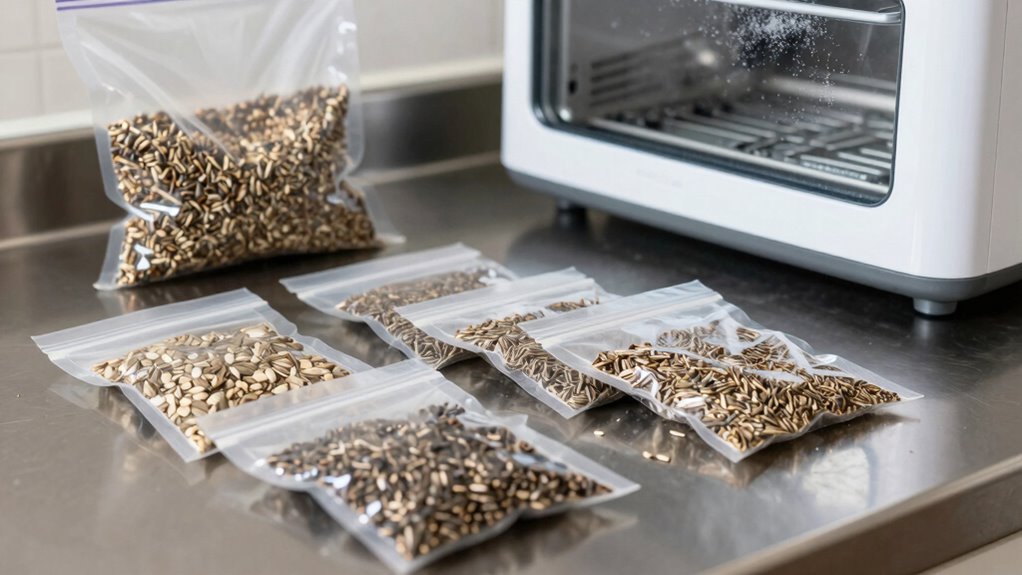
Ever wondered how to preserve your garden seeds for the long term without relying on commercial storage methods? If you’re exploring home freeze drying, you’re already on the right track. But there are some lesser-known truths you should know to guarantee your seeds stay viable over time. Seed viability can be tricky; it depends heavily on how well you dry and store your seeds. Proper drying techniques are essential because moisture is the enemy—excess moisture can cause mold or accelerate seed deterioration. Freeze drying helps eliminate this risk by removing water while maintaining seed integrity, but it’s not a magic fix. You need to understand that even with freeze drying, the initial quality of your seeds matters. If your seeds are immature or damaged before the process, freeze drying won’t turn them into viable plants later on.
Proper drying and seed quality are crucial for successful long-term preservation through home freeze drying.
When it comes to drying techniques, many people underestimate the importance of a proper pre-drying phase. Before freeze drying, seeds should be thoroughly dried using traditional methods like air drying or low-temperature oven drying. This step reduces moisture content, making the freeze drying process more effective. If you skip this, you risk trapping residual moisture inside the seeds, which can compromise seed viability after thawing. Also, not all seeds respond equally to freeze drying. Some seeds, especially those from plants with hard seed coats, may require specific handling to guarantee they survive the process intact. You’ll want to experiment with small batches first to find the right approach for each seed type. Additionally, understanding seed dormancy, which can affect germination success, is crucial when planning your seed preservation strategy. Moreover, being aware of the seed’s moisture content before processing helps optimize the drying process and improve overall viability.
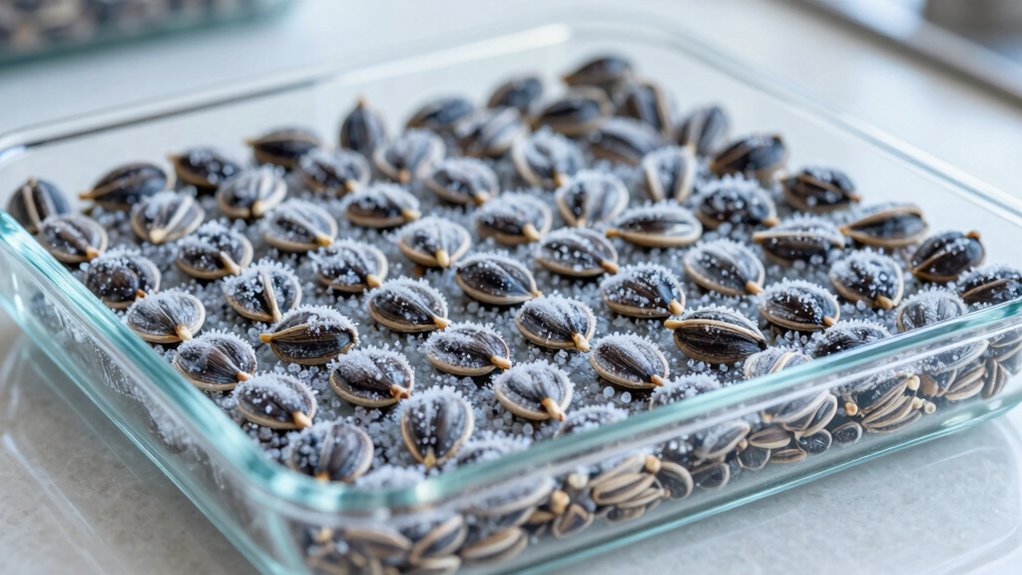
Another thing nobody tells you is that home freeze drying equipment is not foolproof. While it’s a fantastic tool for preserving nutrients and extending shelf life, it demands careful calibration and maintenance. If your machine isn’t operating at the correct temperature or vacuum levels, your seeds might not dry evenly, which could decrease their viability. Plus, the freezing step itself requires attention. Seeds should be frozen slowly to avoid damaging cellular structures, and you need to monitor the process to prevent freezer burn or ice crystal formation, which can harm seed quality. Proper storage conditions after freeze drying matter just as much as the process itself. Even perfectly dried seeds can lose viability if exposed to humidity, heat, or light. Store your seeds in airtight, moisture-proof containers in a cool, dark place. Regularly check on your seed stock—any sign of moisture or mold means it’s time to reassess your storage method. Proper handling and understanding of seed moisture levels can make a significant difference in maintaining seed viability over time. In the end, home freeze drying can be a powerful tool, but understanding these nuances is key to guaranteeing your seeds remain viable and ready to grow when you need them.

Freeze Dryer Machine For Home For Candy Snacks, Food Dehydrator Machine With Digital Adjustable Timer And Temperature Control, (Size:6 Trays) (3 Trays)
【Food Drying Process】:Compact Food Dehydrator 200W drying capacity provides efficient food drying process. It removes excess water from…
As an affiliate, we earn on qualifying purchases.
As an affiliate, we earn on qualifying purchases.
Frequently Asked Questions
How Long Do Freeze-Dried Seeds Remain Viable?
Think of freeze-dried seeds as tiny time capsules, holding their liveliness through the ages. Typically, seed viability can last 5 to 10 years with proper storage techniques, but it varies by seed type. Keep seeds in airtight containers in a cool, dark, and dry place to maximize longevity. Regular testing guarantees your precious seeds stay sprout-ready, ready to burst into life when you need them most.
Is Home Freeze Drying Cost-Effective for Seed Preservation?
Home freeze drying can be cost-effective for seed preservation if you carefully consider the cost analysis and equipment investment. While initial expenses for a freeze dryer might seem high, it saves money over time by extending seed viability and reducing the need for commercial storage. If you plan to preserve seeds regularly, the long-term savings and control over the process make it a worthwhile investment.
Can All Seed Types Be Freeze-Dried Successfully?
Not all seed types can be freeze-dried successfully. For example, delicate seeds like tomatoes may lose viability because their moisture content is hard to control. Preservation techniques like freeze drying work best with seeds that have low moisture and sturdy structures, such as beans or grains. If you attempt to use freeze drying on incompatible seeds, you risk reducing seed viability, so choose your seed types carefully for effective preservation.
What Are Common Mistakes to Avoid During Freeze Drying?
To avoid mistakes during freeze drying, focus on proper vacuum techniques and equipment calibration. Guarantee your vacuum pump creates a consistent, deep vacuum to prevent moisture retention. Regularly calibrate your equipment to maintain ideal temperature and pressure settings. Don’t rush the process or skip pre-drying steps, as this can damage seeds. By paying attention to vacuum quality and calibration, you’ll enhance seed preservation and achieve better, more reliable results.
How Should I Store Freeze-Dried Seeds for Longevity?
Did you know properly stored seeds can last up to 10 years? To maximize longevity, store your freeze-dried seeds in airtight seed packaging to prevent moisture. Keep them in a cool, dark, consistent storage temperature—ideally below 50°F (10°C)—to slow down deterioration. Avoid frequent temperature fluctuations, as they can reduce seed viability. Proper storage guarantees your seeds stay healthy and viable for future planting seasons.

60 Slots Seed Storage Organizer, Metal Seed Saving Box with Lid and Safety Locks, Seed Bin Seed Storage Container with 20 Seed Envelopes and 20 Labels, 3 Compartments, Perfect for Flower Plants Garden
RUST-PROOF METAL MATERIAL: Our seed storage is made of high-quality and durable metal with a powder coating on…
As an affiliate, we earn on qualifying purchases.
As an affiliate, we earn on qualifying purchases.
Conclusion
Home freeze drying is like giving your seeds a long, restful sleep, preserving their importance for future planting. While the process might seem intimidating at first, it’s a rewarding way to safeguard your garden’s legacy. Remember, patience is your best friend—just like tending a delicate flower, it takes time to see the magic unfold. With a little effort, you’ll keep your seeds fresh and ready to sprout new life for seasons to come.

Bonsenkitchen Vacuum Sealer Machine, Globefish Technology for Perfect Vacuum Sealing, Powerful Low-Noise Food Vacuum Sealer with Easy Handle Design, Built-in Cutter & Bag Storage, 1 Bag Roll & 10 Bags
Perfect Vacuum Sealing: With patented Globefish Technology, the vacuum sealer ensures a clear vacuum channel to effectively remove…
As an affiliate, we earn on qualifying purchases.
As an affiliate, we earn on qualifying purchases.
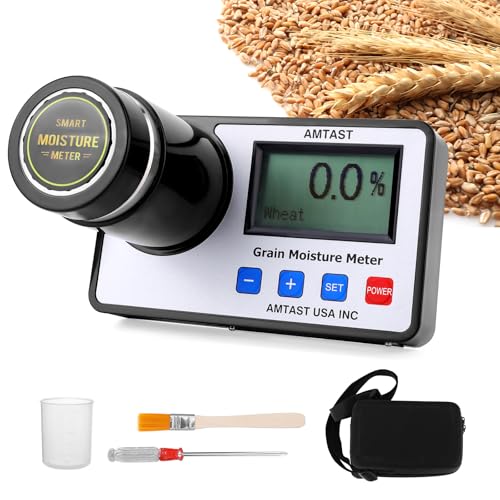
AMTAST Grain Moisture Meter High Precision Grain Moisture Tester with Temperature Compensation Portable Seed Moisture Meter for 22 Grains Including Wheat, Soybean, Coffee and More
𝟐𝟐 𝐆𝐑𝐀𝐈𝐍𝐒 𝐒𝐔𝐏𝐏𝐎𝐑𝐓 – The grain moisture meter is specifically designed to measure the moisture content of 22…
As an affiliate, we earn on qualifying purchases.
As an affiliate, we earn on qualifying purchases.